

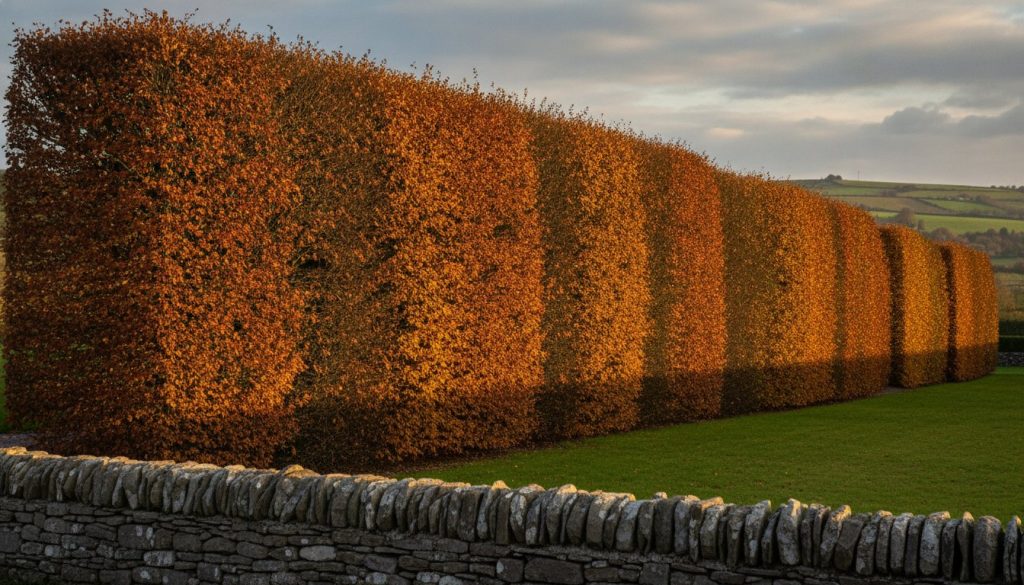
A common misconception is that a deciduous hedge leaves your garden exposed as soon as the temperature drops. In reality, copper beech hedging plants offer some of the most reliable year-round screening available; they hold onto their rich, copper-coloured leaves throughout the winter months. If you are looking for a boundary that provides a striking purple hue in summer and privacy in January, you’ve likely found that choosing between different species can be a confusing process.
We understand the frustration of trying to distinguish between beech and hornbeam, especially when you’re worried about your hedge surviving in heavier Irish soils. This guide provides a complete comparison to help you decide which plant suits your garden’s specific conditions. You’ll discover the practical differences between green and copper varieties, the best time to plant for success, and how to choose between cost-effective bare root stock and year-round potted options. By the end, you’ll have the knowledge needed to establish a vibrant, long-lasting boundary that thrives in our local climate.
Key Takeaways
- Identify the aesthetic and cost differences between copper and green beech to select the variety that fits your garden design and budget.
- Learn why drainage is the deciding factor for copper beech hedging plants and how hornbeam serves as a resilient substitute for heavy clay soils.
- Master the timing of the bare root season to secure high-quality stock at a lower cost compared to year-round potted alternatives.
- Gain insights into correct spacing and density to establish a thick boundary that provides privacy in every season.
- Understand the value of sourcing from a specialist 60-acre nursery to ensure your plants are hardy enough for the Irish climate.
What are Copper Beech Hedging Plants?
Copper beech hedging plants are a reliable choice for property owners who want a boundary that offers more than a standard green screen. Known botanically as Fagus sylvatica Purpurea, this plant is a direct relative of the European beech (Fagus sylvatica). It shares the same hardy nature and structural strength as the common beech but features a distinct, deep pigmentation in its foliage. In the Irish landscape, these plants provide a dramatic visual contrast, especially when planted amongst the lush green fields and traditional laurel hedges common in rural areas.
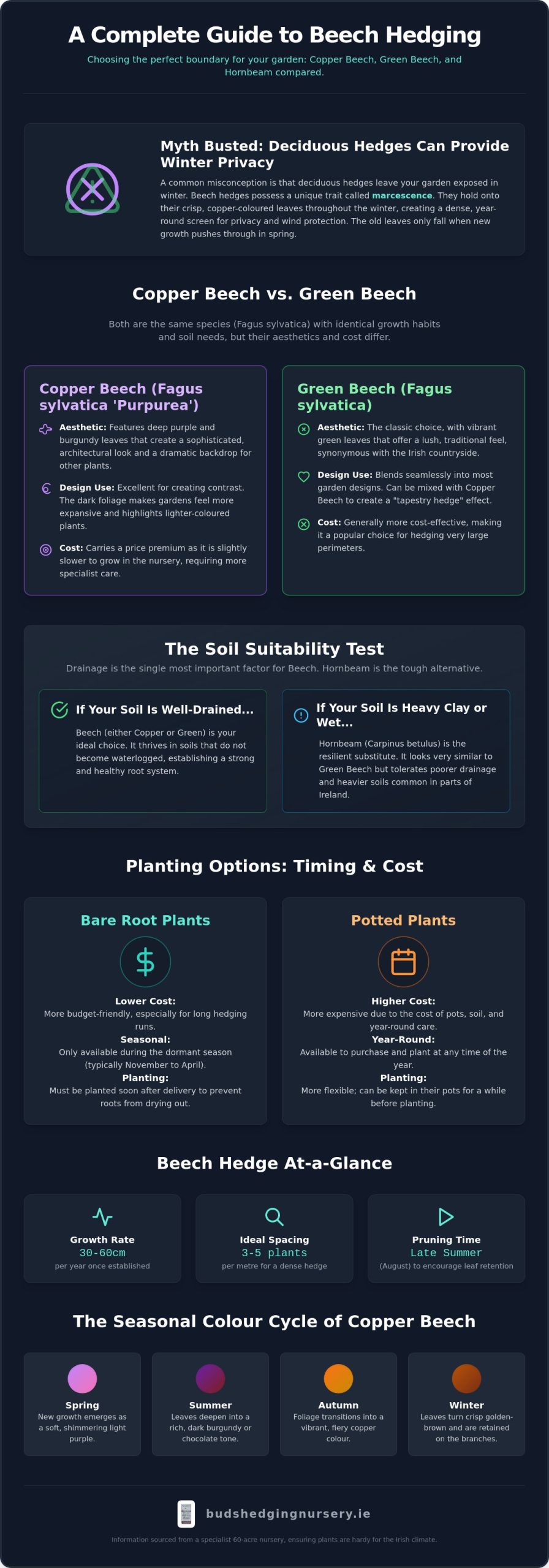
One of the most valuable characteristics of this species is a botanical trait called marcescence. While most deciduous trees shed their leaves in autumn, copper beech withers its foliage but keeps it firmly attached to the branches. These leaves turn a crisp, golden-brown and remain in place throughout the winter. They only fall when the new buds push them off in the spring. This mechanism allows the hedge to function as a “living wall,” providing a permanent visual barrier and a effective windbreak even during the dormant season. It is this year-round screening ability that makes it a premier alternative to evergreen varieties.
The Seasonal Colour Cycle of Copper Beech
The appeal of copper beech hedging plants lies in their shifting palette. In mid-to-late spring, the new growth emerges with a soft, translucent quality, often appearing as a light, shimmering purple. As the season progresses into summer, the leaves thicken and deepen into a dark burgundy or rich chocolate tone. By the time autumn arrives, the foliage transitions into a vibrant copper before settling into its iconic matte-brown winter coat. This cycle ensures the garden’s boundary is never static, offering a different texture and hue in every season.
Growth Rate and Ultimate Height
You can expect a steady growth rate of 30cm to 60cm per year once the plants are established. This pace is ideal for those who want a functional hedge within a few years without the constant maintenance required by hyper-fast growers like Leylandii. Pruning is best carried out once a year in late summer; this timing encourages the plant to hold onto its leaves for the winter. While they can be kept as low, formal borders of just 1 metre, they are equally capable of reaching heights of 5 metres or more if allowed. This versatility makes them suitable for everything from small suburban gardens to large-scale rural privacy screens.
Copper Beech vs Green Beech: Which Should You Choose?
Deciding between these two varieties usually comes down to your garden’s existing colour palette and your budget. Both are cultivars of the same species, meaning they share the same hardy characteristics and growth habits. Whilst green beech is the traditional choice for a classic Irish boundary, copper beech hedging plants offer a more architectural, premium feel that stands out amongst the typical greenery of the countryside.
Both varieties thrive in similar conditions. They require well-drained soil and plenty of sunlight to maintain their vibrant hues. If your site is prone to standing water, neither variety will perform well; in those cases, you might need to look at alternatives like hornbeam. For a deeper look at general maintenance, the RHS guide to growing beech provides excellent technical background on keeping these species healthy.
Visual Contrast and Garden Design
The dark burgundy leaves of the copper beech don’t just provide colour; they absorb light. This creates deep shadows and a sense of depth that can make a smaller garden feel more expansive. It serves as an exceptional backdrop for plants with silver or lime-green foliage, such as certain varieties of hostas or ornamental grasses. The purple tones provide a sophisticated, formal look that remains consistent throughout the summer months.
Some property owners prefer a less uniform appearance and opt for a “tapestry hedge.” This involves mixing both green and copper plants in the same row. A common approach is to plant three green beech for every one copper beech, or to alternate them one-for-one. This creates a marbled effect that is particularly striking during the autumn transition when the green leaves turn yellow and the copper leaves shift to a deep orange-brown.
Practical and Financial Considerations
From a financial perspective, copper beech typically carries a price premium over its green counterpart. This is because the purple-leafed variety is often slightly slower to reach a saleable size in the nursery, requiring more time and specialist care from the grower. If you are hedging a large perimeter, this cost difference can be significant. Many people find that a specialist nursery’s range of copper beech offers the best balance of quality and value, especially when buying in bulk.
Maintenance requirements are virtually identical for both. You won’t need different tools or fertilisers for one over the other. Both should be pruned in late summer to ensure they retain their withered leaves for winter privacy. The main difference remains purely aesthetic; you are paying for the unique, dramatic pigment that only the copper variety can provide.
Copper Beech vs Hornbeam: The Soil Suitability Test
Choosing between copper beech and hornbeam is often the most critical decision for a long-lasting boundary. Whilst these two species look remarkably similar from a distance, their tolerance for soil conditions differs significantly. Copper beech hedging plants require free-draining ground to thrive. If your garden has heavy clay or sits in a low spot where water collects after a typical Irish downpour, beech will likely struggle. This condition is often referred to as “wet feet,” and it lead to root rot and the eventual death of the hedge.
Hornbeam, or Carpinus betulus, is the practical alternative for these difficult sites. It is far more resilient in damp, heavy soils that would kill a beech hedge. According to the Missouri Botanical Garden Plant Finder, copper beech cultivars perform best in moist but well-drained loams and don’t take kindly to the compacted, waterlogged conditions found in many new-build gardens. For those dealing with challenging ground, checking our detailed guide on hornbeam hedging for sale is a sensible next step to ensure your investment survives the winter.
Identifying Your Soil Type
You can perform a simple drainage test before ordering your plants. Dig a hole about 30cm deep and fill it with water. If the water drains away within an hour, your soil is likely suitable for copper beech hedging plants. If the water is still standing after several hours, you have heavy clay or a high water table. In such cases, planting beech is a risk. You should either install land drainage or pivot to hornbeam, which provides a similar aesthetic without the risk of failure in wet ground.
Aesthetic Differences Between Beech and Hornbeam
While both species retain their leaves in winter, there are subtle visual differences to consider:
- Leaf Texture: Beech leaves are smooth, glossy, and have a wavy edge. Hornbeam leaves are deeply textured with a serrated, “toothed” edge.
- Winter Colour: Beech leaves turn a rich, vibrant copper-brown. Hornbeam leaves tend to turn a more muted, papery grey-brown.
- Screen Density: Beech generally creates a tighter, more formal screen over time. Hornbeam has a slightly more “wild” or rustic appearance but is equally effective for privacy.
If you have your heart set on the deep purple summer foliage of the copper beech but have wet soil, there are few direct substitutes that offer the same colour. It is usually better to fix the drainage issues first or accept the greener tones of the hornbeam to ensure you have a healthy, living boundary rather than a struggling one.
Bare Root vs Potted Copper Beech: Timing and Planting
Deciding between bare root and potted stock is a choice between budget and timing. Bare root copper beech hedging plants are the most economical option for those planting long boundaries, but they are only available during the dormant months. Potted plants offer the convenience of year-round planting but come with a higher price tag per unit due to the extra nursery resources required to maintain them. For large-scale projects, the savings offered by bare root stock often make it the preferred choice for Irish gardeners.
Planning for Bare Root Season
The bare root tree season Ireland runs from November to March, coinciding with the period when the plants are dormant. During this time, the roots can be lifted from our nursery soil and transported without the weight of a pot or compost. It’s vital to keep the roots covered and moist between delivery and planting; exposure to wind can dry out the delicate root hairs in minutes. If you can’t plant immediately, “heeling in” the plants in a temporary trench is a reliable way to protect them from frost and dehydration.
To prepare the site for bare root beech, dig a trench twice the width of the root system and incorporate well-rotted organic matter to improve soil structure whilst maintaining essential drainage.
Spacing and Planting Density
The number of plants you need depends on how quickly you want the hedge to knit together. For a standard single-row hedge, we recommend 3 plants per metre, which leaves roughly 33cm between each plant. This is a cost-effective way to create a boundary, though it takes a few more seasons to become fully opaque.
If you require a thicker, more immediate privacy screen, a staggered double row is more effective. This involves planting 5 plants per metre in two parallel lines set about 40cm apart. When planting, look for the soil mark on the stem; this indicates the nursery planting depth. Burying the root flare too deeply can suffocate the plant, whilst planting too shallowly leaves the roots vulnerable to frost and drying out.
Young copper beech plants need consistent moisture during their first growing season. Whilst they are hardy once established, they lack a deep root system in the first year and can’t tolerate drought. Mulching with bark chippings helps retain moisture and keeps weeds from competing for nutrients. If you’re planning a project for the upcoming dormant season, you can view our current copper beech stock to select the right size for your garden.
Sourcing Quality Copper Beech from a Specialist Nursery
Selecting the right source for copper beech hedging plants is just as important as the planting process itself. A hedge is a long-term investment in the structure and privacy of your property, so the health of the young plants determines the success of the boundary for decades to come. Sourcing directly from a specialist grower ensures that your plants have been raised with professional care and are suited to the specific demands of the Irish climate.
Stock raised in a 60-acre production site benefits from the space and resources required to develop robust root systems. At Buds Nursery Cavan, we draw on over 30 years of experience to produce hardy, resilient hedging. We understand the nuances of the dormant season and the importance of the Native Trees Scheme, ensuring our plants are handled with the expertise that only a dedicated grower can provide. This grounded, practical approach means we prioritise plant health and utility over the decorative displays often found in general retail centres.
Why Specialist Knowledge Matters
General garden centres often stock plants that have been transported multiple times or kept in pots for too long, leading to root-bound or stressed specimens. These plants frequently struggle to establish when moved into the open ground. By contrast, nursery-grown copper beech is lifted and dispatched whilst dormant, which is the most natural way to transplant deciduous species. This method preserves the integrity of the root system and results in a much higher survival rate once the spring growth begins.
Specialist nurseries also offer a wider range of maturity. Whether you need younger whips for a cost-effective rural boundary or more mature plants for an immediate visual impact, a specialist can provide consistent batches. Buying from a single source ensures that the colour and vigour of your hedge remain uniform. This consistency is difficult to achieve when piecing together stock from multiple small retailers who may source their plants from different regions.
Next Steps for Your Hedging Project
Planning a large-scale project often requires a more tailored approach than a simple retail purchase. If you are looking to secure a significant quantity of plants, requesting a bulk quote allows us to organise the logistics and ensure availability for the upcoming planting window. Many of our customers choose to create a diverse boundary by mixing copper beech with other species, such as Portuguese laurel, to introduce evergreen textures amongst the changing seasonal colours of the beech.
National delivery and logistical support are standard parts of our service for larger hedging orders. We ensure that your plants are packaged to prevent root desiccation during transit and arrive ready for immediate planting. If you prefer to see the stock before making a decision, visiting the nursery is a practical way to understand the different sizes available and select the plants that best fit your garden’s scale and soil conditions.
Establishing Your Copper Beech Boundary
Choosing the right boundary is a long-term commitment that defines your garden’s character. Copper beech hedging plants offer that rare balance of summer drama and winter privacy, but success depends on selecting the right variety for your soil and timing your planting correctly. Whether you’ve opted for a solid purple screen or a mixed tapestry hedge, using dormant stock ensures your new boundary gets the best start possible in the Irish climate.
At Buds Nursery Cavan, we rely on over 30 years of experience to grow hardy plants that are ready for the ground. With 60 acres of premium stock and a focus on specialist advice, we support your project from the initial quote through to national delivery. A well-planted hedge is a permanent structural feature; getting the fundamentals right today ensures a healthy, vibrant boundary for the years ahead.
Browse our range of Copper Beech and request a quote today
Frequently Asked Questions
How fast do copper beech hedging plants grow in Ireland?
Copper beech hedging plants typically grow between 30cm and 60cm each year once they have established their root systems. In the Irish climate, growth rates are influenced by soil quality and local shelter. You can reach a full two-metre privacy screen in roughly five to seven years if you start with standard nursery whips. Regular pruning in late summer helps to thicken the base and maintain a steady, manageable growth pace.
Is copper beech evergreen or deciduous?
Copper beech is a deciduous species, though it behaves differently from most other garden trees. It exhibits marcescence, meaning the leaves wither and turn brown in autumn but remain attached to the branches throughout the winter. This provides the year-round privacy and wind protection usually associated with evergreens. The old leaves only drop in spring when the new purple buds begin to emerge and push the old foliage away.
When is the best time of year to plant a copper beech hedge?
The ideal time to plant is during the dormant season, which runs from November to March. This window allows you to use cost-effective bare root stock, which establishes well in cold, moist soil before the spring growth begins. Whilst potted plants can go into the ground at any time of year, they require much more frequent watering and aftercare if planted during the warmer summer months.
How many copper beech plants do I need per metre?
For a standard single-row hedge, you should plant three specimens per metre. This leaves about 33cm between each plant. If you want a denser, more immediate screen, a double staggered row is the better choice. In this configuration, you use five plants per metre, arranged in two parallel lines set roughly 40cm apart. This creates a thicker boundary that blocks more light and noise from the outset.
Will copper beech grow in shade or coastal areas?
These plants thrive best in full sun, as light is essential for developing the deep purple foliage colour. They will grow in partial shade, but the leaves may appear greener than those in direct sunlight. Regarding coastal sites, copper beech is moderately hardy but doesn’t like direct salt spray or extreme wind exposure. If your garden is right on the coast, providing initial shelter is necessary for success.
Does copper beech lose its purple colour in the winter?
Yes, the vibrant purple and burgundy tones are only present during the spring and summer growing seasons. As autumn approaches, the foliage transitions into a rich copper-brown. These withered leaves stay on the hedge all winter, providing a warm, golden-brown texture until the new growth appears in April. This seasonal shift is one of the most attractive features of a beech boundary compared to static evergreen varieties.
What is the difference between copper beech and purple beech?
There is no botanical difference between copper beech and purple beech; both refer to the same species, Fagus sylvatica Purpurea. The terms are used interchangeably by nurseries and gardeners alike. Some specialist cultivars may have slightly deeper or lighter pigments, but the general characteristics of growth, soil preference, and leaf retention remain the same across both names. It is simply a matter of local terminology preference.
Can I grow copper beech in heavy clay soil?
Copper beech will not survive in heavy clay soil that remains waterlogged during the winter months. The species is highly sensitive to “wet feet,” which causes the root system to rot and the plant to fail. If your garden has poor drainage or heavy clay, you should consider planting hornbeam instead. Hornbeam looks very similar to beech and also retains its winter leaves, but it is far more resilient in damp ground.