

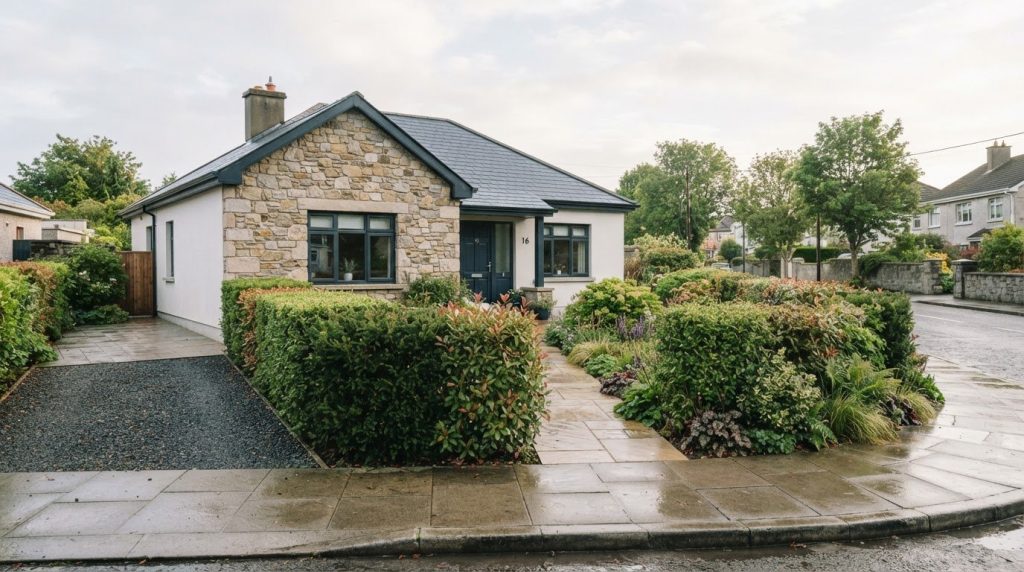
The tallest, thickest hedge isn’t always the best choice for a front garden. The best hedging for front gardens balances a clear boundary with suitable sightlines, kerb appeal and the space available. A hedge that’s too wide or tall can crowd a small frontage and become difficult to maintain.
Choosing between evergreen cover, seasonal interest and a formal outline takes more than picking a plant you like. Consider the hedge’s mature height and width, how often you’re prepared to prune it, and whether it could affect views near an entrance or driveway.
This guide compares front-garden hedging by appearance, space and upkeep, including Privet, Beech, Griselinia, Escallonia, Portuguese Laurel, Photinia Red Robin and Box. Use the practical checks to shortlist plants for your garden, balance privacy against visibility and plan the planting area. Buds Nursery Cavan offers plant selection and expert guidance on site, helping you compare options for your space and routine.
Key Takeaways
- Choose the best hedging for front gardens by considering the boundary height, planting width and space needed to reach your front door.
- Compare Green Privet, Golden Privet, Box, Escallonia and Photinia Red Robin for their appearance and care requirements.
- Decide whether you need a clear boundary or more privacy. A front hedge doesn’t always need to screen the view.
- Assess the site, set your priorities and allow for the hedge’s mature width before planting.
- Practical nursery guidance can help you narrow your shortlist to plants that suit your frontage and routine.
Best hedging for front gardens: what should you consider first?
A front hedge should mark a boundary without taking over the house or narrowing the approach to the door. Your choice depends on the hedge’s purpose, the room it has to grow and the upkeep you can manage. A plant that looks appealing when young may become a poor fit if its mature width crowds a path or its height blocks a view.
Start with the shape of the frontage, not just the plant. Measure the planting space between the boundary and path, mark gates and entrances, and check sightlines from the house and pavement. Then decide what matters most: year-round foliage, seasonal leaf change, flowers, a clipped structure or screening. A useful overview of types of hedging plants can help with terminology, but the best hedging for front gardens is the option that suits your site and the look you want.
How tall should a front-garden hedge be?
First decide whether the hedge will mark the boundary, frame a path or screen a particular view. A low hedge keeps more of the frontage visible and defines an edge without enclosing it. A medium hedge gives the boundary more presence. A taller hedge may screen more, but can make a small frontage feel enclosed or affect views from windows and the entrance. Check access, sightlines and any property requirements before choosing a height.
Evergreen or deciduous hedging for a front garden?
Evergreen hedging keeps its foliage through the year, giving the frontage a more consistent appearance and screen. Deciduous hedging changes with the seasons, but provides less cover after its leaves fall. Neither is automatically the better choice. Consider how much screening you want, which appearance you prefer and how seasonal change fits your plans. Match your choice to the space and site conditions.
A plant’s appearance at the nursery is only one part of the decision. Compare its expected mature size with your available space, and consider the site conditions before choosing. Leave room to reach the hedge for routine care without narrowing the path or making the front door awkward to approach. On-site plant-selection guidance can help you weigh up the options against your measurements.
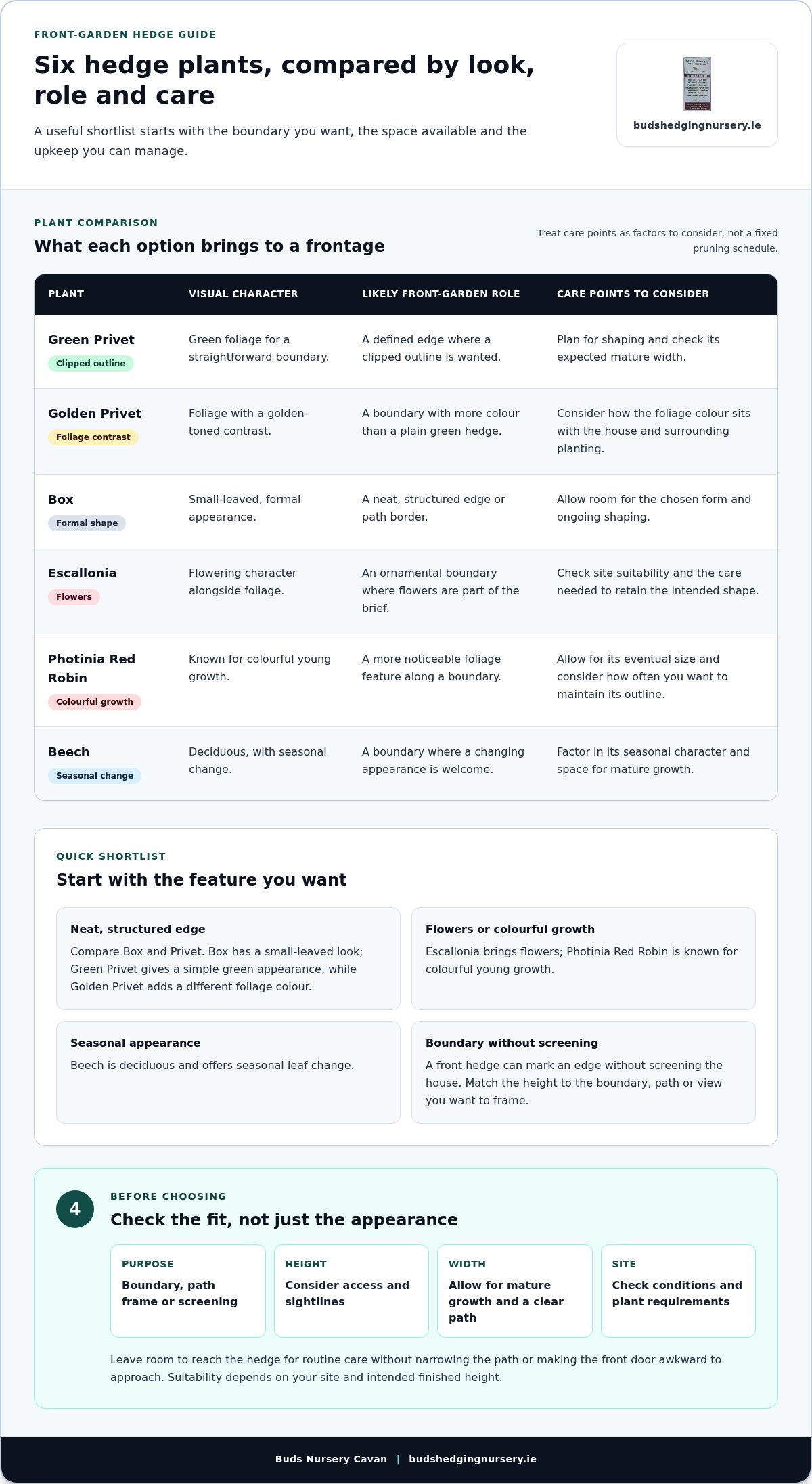
Before choosing, check four things: purpose, intended height, available width and site conditions. These checks make it easier to compare foliage, flowers, structure and screening on practical grounds, rather than choosing by appearance alone.
Which front-garden hedge plants suit different styles and priorities?
A useful shortlist matches the hedge’s appearance to the job it needs to do. The options below are among the plants available from Buds Nursery Cavan, but suitability depends on your site and intended finished height. Treat the care points as factors to consider, not a fixed pruning schedule. Allow for the plant’s mature size and check its requirements before planting.
| Plant | Visual character | Likely front-garden role | Care points to consider |
|---|---|---|---|
| Green Privet | Green foliage for a straightforward boundary | A defined edge where a clipped outline is wanted | Plan for shaping and check its expected mature width |
| Golden Privet | Foliage with a golden-toned contrast | A boundary with more colour than a plain green hedge | Consider how the foliage colour sits with the house and surrounding planting |
| Box | Small-leaved, formal appearance | A neat, structured edge or path border | Allow room for the chosen form and ongoing shaping |
| Escallonia | Flowering character alongside foliage | An ornamental boundary where flowers are part of the brief | Check site suitability and the care needed to retain the intended shape |
| Photinia Red Robin | Known for colourful young growth | A more noticeable foliage feature along a boundary | Allow for its eventual size and consider how often you want to maintain its outline |
| Beech | Deciduous, with seasonal change | A boundary where a changing appearance is welcome | Factor in its seasonal character and space for mature growth |
Options for a neat, structured front boundary
Box and Privet are worth comparing if you want a defined outline. Box has a small-leaved look, Green Privet offers a simple green appearance, and Golden Privet adds a different foliage colour. A tidy result starts with a plant suited to the available space and a realistic plan for shaping it as it grows. Don’t assume the same finished height or pruning routine suits every frontage.
Options for colour, flowers or seasonal change
Photinia Red Robin and Escallonia bring different ornamental features: colourful young growth and flowers respectively. Beech offers seasonal leaf change. If one feature appeals to you, consider how it will look against the house and whether you want that effect throughout the year or in a particular season. For more detail on this deciduous option, see the Beech hedging plants guide.
Use the table to narrow your choices, then compare each plant’s likely mature shape with the space available. Buds Nursery Cavan offers on-site plant selection and guidance to help you weigh up the options. Explore hedging plants at Buds Nursery Cavan as a starting point for your shortlist.
How do you compare front-garden hedging for privacy, upkeep and space?
A hedge can mark the front boundary without screening the house. Decide whether you need privacy or simply want a clear edge along a path or garden. Then weigh that purpose against the available space and the time you’re willing to spend on routine care. Plant suitability and maintenance are separate considerations: even a hedge that suits the site may need regular attention to keep its shape.
Use this matrix to identify the trade-off that matters most:
- Boundary, not a screen: A lower, more open hedge can define an edge while leaving views into and out of the frontage largely open. It may need less height control, though shaping can still be part of its care.
- Some screening, with space to spare: A fuller hedge can soften views across the boundary. Allow for its spread and consider whether its mature shape could affect the approach, light or views from the house.
- Privacy as the priority: A taller or denser hedge may provide more screening, but needs enough room and a plan for ongoing care. Compare evergreen and deciduous options according to how much cover you want through the year.
- Limited room or little time for pruning: Reconsider the intended height and outline before choosing. A hedge that needs frequent shaping to stay within a narrow space may not suit your routine.
No single hedge suits every frontage. Boundaries differ in space, screening needs and the time available for ongoing care.
When is a low hedge the practical choice?
Low hedging can define a path or boundary while keeping the front garden open and the house visible. Lavender or Box may suit this kind of role, depending on the intended use and site conditions. A low hedge won’t provide the same screening as a taller one, so choose it for structure rather than as a privacy barrier.
When might a taller or denser hedge suit the frontage?
A taller hedge can screen more, but may also reduce light, interrupt views and make a compact frontage feel enclosed. Evergreen choices retain foliage through the year; deciduous hedging changes seasonally and offers less cover after leaf fall. Consider the effect from both sides of the boundary, and leave space for access and care. For a fuller screening comparison, see the hedging for privacy buying guide.
Before settling on the best hedging for front gardens, picture the intended height and width in place, not just the young plant. Buds Nursery Cavan’s on-site plant guidance can help you compare options against the frontage and the routine you’re prepared to manage. Explore hedging plants and selection guidance as you refine your shortlist.
What should you check before choosing and planting a front-garden hedge?
A quick site check can prevent a promising plant choice from becoming awkward once it’s in the ground. Work through this checklist, then use your measurements and observations to build a realistic shortlist. The best hedging for front gardens needs to suit the boundary, site conditions and space needed for everyday access.
- Measure the boundary. Record its length and the planting width available. Include gates, paths, the approach to the front door and places where people need to pass or reach a meter or other service.
- Assess the conditions. Note how exposed the site is, what the soil is like and how much light the planting area receives. Check for existing services or other constraints before digging. Compare these observations with reliable information about each plant’s site tolerances.
- Set your priorities. Decide whether the hedge is for a boundary, a path frame or screening. Set a preferred finished height and consider the appearance and maintenance you’re comfortable with.
- Shortlist suitable plants. Compare options with your measurements and site notes. Allow for expected mature width as well as height, so the hedge won’t crowd a path or make access difficult.
- Plan the planting. Choose a plant format and suitable planting conditions, then follow species-specific instructions for spacing, watering and aftercare. Don’t assume one spacing plan suits every hedge.
Assess the front-garden site before buying
Measure along the boundary and across the planting strip, then mark nearby paths, entrances and access points. Note exposure and soil conditions as well. A sunny, sheltered spot and an exposed boundary may suit different plants, so use reliable information about each plant’s tolerance to guide your choice. Check for buried services or other constraints before digging, and leave enough room to reach the hedge for care.
Choose plant format and plan establishment
Bare-root plants are supplied without soil around their roots, while pot-grown plants come with their roots in a container’s growing medium. Their planting seasons and handling needs can differ, so plan around the format and suitable conditions rather than assuming they’re interchangeable. The bare-root tree season planting guide offers more seasonal detail.
Before buying, make sure your shortlist fits the site and planting plan. Base spacing, watering and aftercare on the chosen species and reliable planting guidance. Buds Nursery Cavan offers on-site plant selection and guidance to help narrow the options. Explore hedging plants and plan your shortlist.
Choose front-garden hedging with practical nursery guidance
A useful shortlist brings together four things: your preferred height, the appearance you want, the conditions in your garden and the care you can manage. This makes it easier to compare plants for the actual frontage, rather than choosing on looks alone. Buds Nursery Cavan’s hedging range includes Privet, Beech, Griselinia, Escallonia, Portuguese Laurel, Photinia Red Robin and Box.
At the nursery, you can select plants and receive expert guidance Tuesday to Saturday. Delivery options are available for larger orders. Bring clear information about your boundary to make the selection more relevant to your plans.
What to bring when selecting front-garden hedge plants
A few practical details can help narrow the choices. Bring:
- Your boundary length and the width available for planting, including space beside paths and entrances.
- A photograph of the frontage, ideally showing the house, boundary, path and nearby access points.
- Your preferred finished hedge height, along with whether you want a low boundary, a defined structure or more screening.
- Your main priorities, such as year-round foliage, seasonal interest, flowers, a neat outline or a more open view.
These details give a clearer picture of your project and help you discuss how the site and intended hedge shape affect the shortlist, including the room needed for mature growth and ongoing care.
Explore a suitable hedge shortlist
Start with plants that match the style and function you have in mind. Green or Golden Privet and Box may suit a more structured boundary; Escallonia and Photinia Red Robin offer other visual options, while Beech brings a deciduous choice. Griselinia and Portuguese Laurel are also part of the nursery’s hedging range. The right fit depends on your site, intended height and available space, so use these names as starting points rather than a fixed ranking.
During on-site selection, expert guidance can help you compare suitable plants against your measurements, photograph and care preferences. You can also discuss the planting format and species-specific instructions that will shape the final layout. For larger orders, delivery options can help with getting plants to your project.
Bring your measurements and priorities, then explore front-garden hedging options at Buds Nursery Cavan and build a shortlist suited to your frontage.
Take the next step towards a front boundary that fits
A hedge will shape how your frontage looks and works as it grows. Before choosing, picture the finished boundary as part of the approach to your home, including the space needed to pass, open a gate and care for the plants. This practical view helps you choose the best hedging for front gardens without letting appearance outweigh everyday needs.
You don’t need to settle on a plant name straight away. Start with what you want the hedge to do, then use your measurements and preferences to guide the selection. A considered shortlist gives you a clearer basis for choosing plants that suit both the frontage and the routine you can maintain.
Explore hedging plants at Buds Nursery Cavan and take the next step towards a front-garden hedge that suits your home.
Frequently Asked Questions
What is the best low-maintenance hedge for a front garden?
There isn’t one low-maintenance hedge that suits every frontage. The amount of pruning depends on the plant, the shape you want and how much space it has to grow. If you prefer fewer shaping jobs, consider whether a less formal outline would work instead of a tightly clipped edge. Box and Privet are options to compare, but check their care requirements and expected size before choosing.
Is an evergreen or deciduous hedge better for a front garden?
Choose evergreen if you want foliage to remain through the year; choose deciduous if seasonal change matters more than continuous cover. For example, you may prefer to keep a hedge beside a front window visually open, while a boundary facing a busy approach might benefit from year-round foliage. The best hedging for front gardens depends on the balance you want between cover, seasonal appearance and ongoing care.
Can you have a hedge in a small front garden?
Yes. In a small frontage, a hedge can mark a boundary or edge a path without taking over, provided the plant’s mature size suits the available strip. Sketch the planting area and path before buying, then leave enough room for the hedge to grow without encroaching on the entrance or restricting access. A modest, clearly defined boundary may be more useful than a dense screen.
How high should a front-garden hedge be?
Set the height according to the job. A lower hedge can define a boundary while preserving views; a taller one may screen more but can make a compact frontage feel closed in. Check sightlines from driveways, paths and windows, and consider any property-specific requirements before planting. There’s no single ideal height for every home, so decide what you want the hedge to hide or frame.
When is the best time to plant front-garden hedging in Ireland?
For bare-root hedging, the usual planting window is the dormant season, typically November to March. Pot-grown plants offer more flexibility, but plan planting for suitable conditions rather than periods of extreme weather that can stress new plants. Check the requirements for your chosen species and format, and use planting guidance to plan timing for your hedge.
How far apart should front-garden hedge plants be planted?
There isn’t one spacing that works for every hedge. The correct distance depends on the species, plant size and whether you want a single row or another layout. Planting too close can mean unnecessary competition; too far apart can leave gaps for longer. Use the spacing instructions for the exact plants you buy, and mark the positions along the boundary before digging.
Are bare-root hedging plants suitable for a front garden?
Yes, bare-root plants can suit a front-garden hedge if the chosen species and format match your plans. They’re supplied without a pot of growing medium around the roots and are generally planted during the dormant season, typically November to March. Plan the boundary and planting positions before planting, then follow species-specific instructions for planting and aftercare so the hedge gets an appropriate start.