

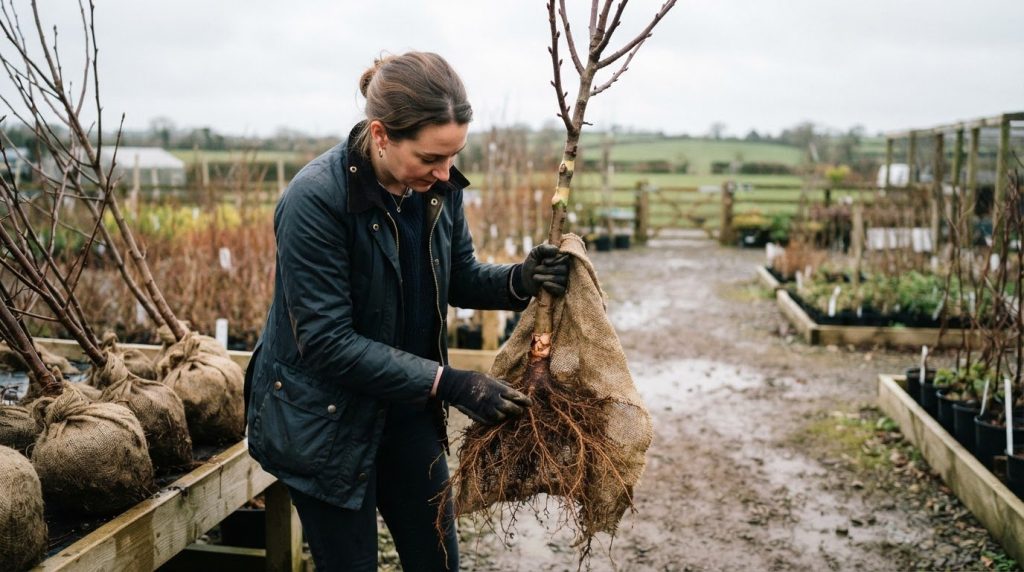
The best time to buy bare root trees in Ireland is generally from mid-December to early spring, during the dormant season. Plant them from November to March, before their buds break. Bare-root plants are grown in open ground, then lifted and supplied without soil around their roots.
Choosing the right time can feel less straightforward when you’re weighing up fruit trees, hedging and shrubs. Their exposed roots need to stay moist, and planting soon after purchase helps avoid leaving them vulnerable to drying out. This guide explains what bare-root means, when to buy and plant, and which fruit trees, hedging plants and shrubs are available bare-root. It also covers what to do if planting has to wait, so you can plan around the dormant season and choose plants suited to the job in your garden.
Key Takeaways
- Learn how to heel in bare-root plants if planting has to wait, and keep their roots from drying out.
- Understand what to weigh up when choosing bare-root fruit trees and how their early growth differs from container-grown trees.
- See how bare-root trees, hedging and shrubs can suit different garden plans, including the spacing to allow for a close-set hedge.
- Get a clear idea of when Irish nurseries typically offer bare-root stock and how to plan your planting around seasonal availability.
1. What Exactly Are Bare-Root Plants?
Bare-root plants are grown in open ground, then lifted during dormancy and supplied without soil around their roots. The best planting season is November to March, while plants remain dormant and before buds break. Plant promptly after purchase, and avoid planting when the ground is frozen. This seasonal window suits trees and hedging, including edible fruit varieties and blackthorn.
To choose healthy bare-root trees, look for roots that are moist and firm, not dried out, broken or badly damaged. Check that the stem is straight and that the plant’s size and variety suit its intended place. Labels such as 60–90cm describe the approximate height above ground; 2YR indicates around two growing seasons before lifting. These details help you compare plants on a like-for-like basis.
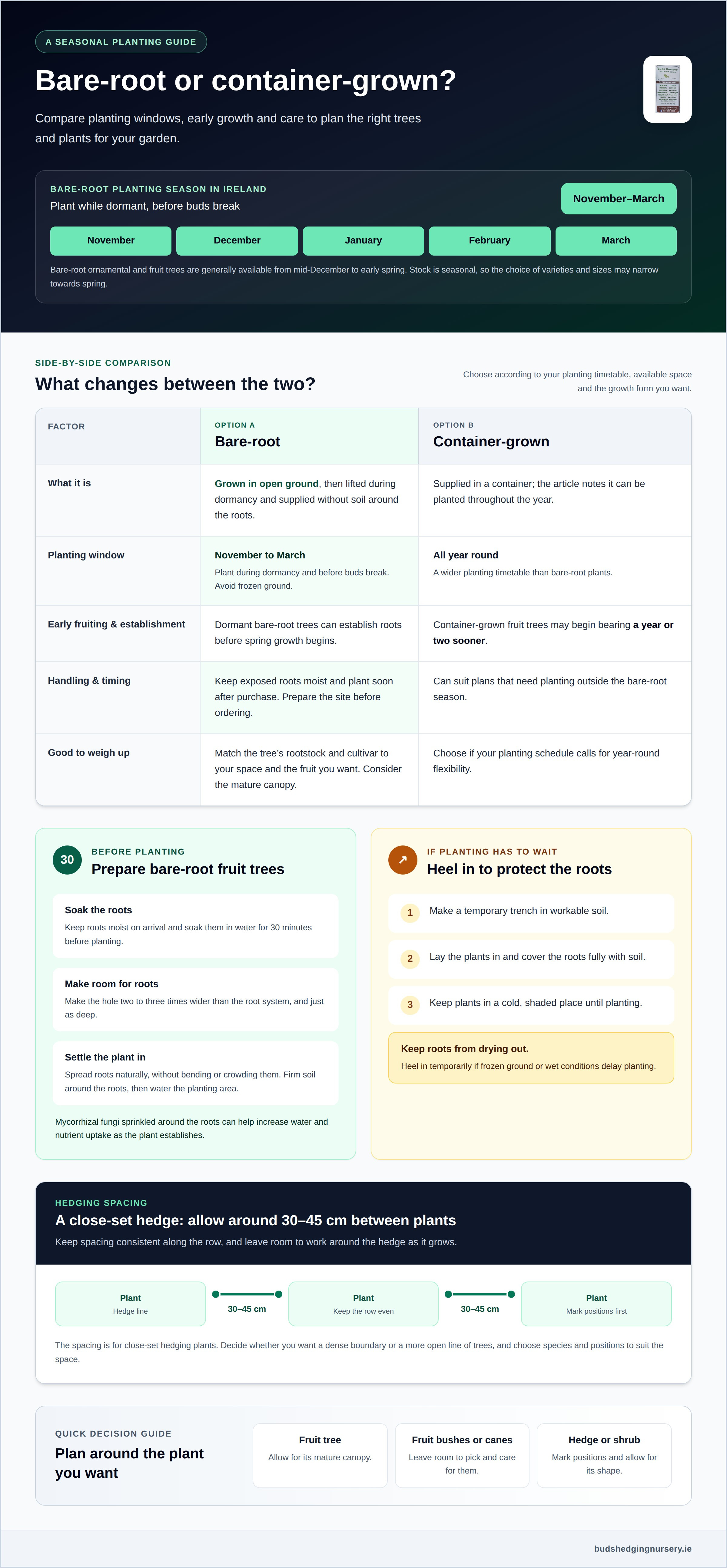
If planting is delayed, heel in the plants so their exposed roots stay covered and moist. Make a temporary trench in workable soil, lay the roots in, then cover them fully with soil. Keep the plants in a cold, shaded place until planting, and don’t let the roots dry out. This is particularly useful when frozen ground prevents immediate planting.
Container plants can be planted all year round, unlike bare-root plants, which are planted from November to March. Bare-root trees are lifted during dormancy, so handle them carefully and plant them as soon as practical. For fruit, container-grown trees may begin bearing a year or two sooner, while dormant bare-root trees can establish roots before spring growth begins.
At planting, sprinkling mycorrhizal fungi around the roots can help increase water and nutrient uptake as the plant establishes. Keep the roots spread naturally in the hole, rather than bent or crowded, and cover them with soil. The right selection depends on the space, purpose and variety: a straight-stemmed fruit tree has a different role from blackthorn grown as hedging.
2. Bare-root fruit trees
Bare-root fruit trees suit planting plans where you can prepare the ground during the dormant season. Many, particularly grafted fruit trees, have been growing for two years before sale. The rootstock and cultivar affect a tree’s mature size and fruit, so match the choice to your available space and what you want to harvest. An apple tree, for example, needs room for its eventual canopy.
Fruit bushes and canes offer another way to grow edible crops where a tree won’t fit. Currants, gooseberries and raspberries are examples to consider, but each has a different growth habit. Mark out the planting area first, allowing enough room to pick and care for the plants. A line of canes can be easier to manage than spreading them through a mixed border.
Bare-root fruit and nut trees can also suit a productive garden. Hazel is a familiar nut-tree example, while apple, pear and plum are familiar fruit-tree choices. Consider the harvest you want, the space available and whether you’ll grow the plant as a tree or train it along a support. These decisions help narrow the selection before planting.
When the plants arrive, keep their roots moist and soak them in water for 30 minutes before planting. Make each planting hole two to three times wider than the root system and just as deep, so the roots can spread without being bent. Firm soil around the roots, then water the planting area to settle the soil.
For a practical starting point, browse fruit tree choices and consider which crop and growth form best suit your garden.
3. Bare root trees, hedging and shrubs
In Ireland, the bare-root planting season runs from November to March, when plants are dormant. This gives gardeners a practical window to establish trees and hedging before spring growth begins. Bare-root stock is lifted from open ground and supplied without soil around its roots. Prepare the planting area in advance so the ground is ready soon after the plants arrive.
Which tree species are suited to bare-root planting in Ireland? Fruit trees and deciduous hedging trees, such as blackthorn, are useful options to consider. Choose according to the purpose: a fruit tree for a crop, or blackthorn for a hedge. Let the available space and the shape you want guide your selection.
For a hedge, decide first whether you want a dense boundary or a more open line of trees. Close-spaced hedging plants may generally be set around 30–45 centimetres apart. Keep spacing consistent along the row, and leave enough room to work around the hedge as it grows. This makes the layout easier to plant and maintain.
Shrubs can also be planted bare-root during dormancy, provided the species is offered in this form. Their mature shape and position matter: a shrub intended as a boundary needs different spacing from one used as an individual feature. Mark the planting positions before digging, then check that each root system can sit naturally in its hole.
Once planting begins, work along the prepared row rather than leaving plants exposed. Keep roots moist, cover them with soil and water the planting area. If frost or wet ground delays the work, heel in the plants temporarily. A clear plan for species, spacing and planting order helps you make good use of the November-to-March window, whether you’re planting fruit trees, blackthorn or shrubs.
4. When are bare root trees available from Irish nurseries?
In Ireland, bare-root ornamental and fruit trees are generally available from mid-December to early spring. This is the period to plan around if you want to plant while trees are dormant. The buying window and planting window overlap, but stock is seasonal, so waiting until spring may narrow the selection of varieties and sizes.
Start by deciding what you want to plant, such as an apple tree, a native tree or a hedge. Then work backwards from planting: prepare the site and soil before ordering, so the ground is ready when the trees arrive. Bare-root plants should be planted soon after purchase, so arrange delivery when you can receive and plant them.
Plan your order early in the season if you want the best selection, particularly when you have a specific species or size in mind. Make a planting list with the trees you need and their intended positions, then use it to organise your order and prepare the ground.
Nurseries dig bare-root trees in late autumn or early spring, and they are often sold by mail order, according to Iowa State University Extension and Outreach. This describes the lifting and selling cycle; in Ireland, ornamental and fruit trees are generally available from mid-December to early spring. Plan delivery for when you have a suitable place ready and can plant promptly.
Before ordering, consider whether weather or ground conditions could delay planting. If the soil is frozen, keep the roots moist and heel the plants into a temporary trench until the ground is workable. This helps you manage an order that arrives during a cold spell without leaving exposed roots to dry out.
For trees intended for winter planting, explore bare-root tree options and plan your order around the planting space you have prepared.
Buds Nursery Cavan: Bare Root Trees
Buds Nursery Cavan offers bare-root trees for gardeners planning winter planting, along with hedging options such as Portuguese Laurel, Cherry Laurel and Golden Privet. These choices can help shape a garden boundary, while bare-root trees suit planting during their dormant season.
Once you’ve decided where to plant and prepared the ground, choose the type that fits the space and purpose. A hedge needs a different planting plan from an individual tree, so have your layout and preferred varieties in mind.
For bare-root trees and hedging plants to suit your garden plans, contact Buds Nursery Cavan.
Put your planting plan into action
Choosing the best time to buy bare root trees is one part of planning a garden that works for you. First, decide the purpose of each planting area: a boundary, a sheltered edge or a place for individual trees. Then consider how the plants will fit together as they grow, so they suit the layout without competing for space.
For a garden boundary, Buds Nursery Cavan offers Portuguese Laurel, Cherry Laurel and Golden Privet. Consider the look and role you want from the hedge, then use that to guide your plant selection. A clear plan makes it easier to turn ideas into a practical planting list.
Take the next step with your plans and contact Buds Nursery Cavan. With your planting area and preferred types in mind, you can make a considered start on your garden.
Frequently Asked Questions
What Exactly Are Bare-Root Plants?
Bare-root plants are lifted from open ground and supplied with exposed roots rather than in a container of compost. The roots are protected for handling, but must stay moist between lifting and planting. Examples include deciduous trees and hedging plants. This method is seasonal because plants are lifted while dormant, unlike container-grown stock, which remains in its growing medium.
What If You Can’t Plant Immediately?
Keep the roots moist and heel the plants into soil if planting must wait. Make a temporary trench in a sheltered part of the garden, lay the roots inside, then cover them completely with soil. If the ground is frozen, keep the plants somewhere cold and shaded until conditions improve. Don’t leave roots exposed to wind or sun, as they can dry out.
When is the best time to buy bare root trees in Ireland?
The best time to buy bare root trees in Ireland is generally from mid-December to early spring, when ornamental and fruit trees are available from nurseries. If you want a particular variety or size, plan your choices early in the season, as seasonal stock can become more limited. Arrange to receive the trees when you can plant them or protect their roots promptly.
What is the best season to plant bare root trees in Ireland?
Plant bare-root trees during dormancy, generally from November to March, before buds break and spring growth starts. Choose a spell when the soil is workable, not frozen or waterlogged. Prepare the planting area ahead of a suitable winter day, then plant promptly. This gives the roots time to settle before new top growth begins.
Can bare root trees be planted in winter, and what weather should be avoided?
Yes, winter is a suitable season for planting bare-root trees while they remain dormant. Avoid planting when the ground is frozen, as you won’t be able to make a workable hole or position the roots properly. In colder conditions, wait until the soil thaws and heel the trees in meanwhile. Don’t leave newly delivered roots exposed to drying wind or direct sun.
How do bare root trees compare with container-grown trees in price and establishment?
Bare-root trees can cost 30–50% less than container-grown trees of the same size. The two forms can establish on different timelines: dormant bare-root trees may grow roots for weeks before spring-planted container trees, while containerised fruit trees may begin bearing a year or two sooner. For a decision, weigh purchase cost against your planting timing and how soon you want fruit.