

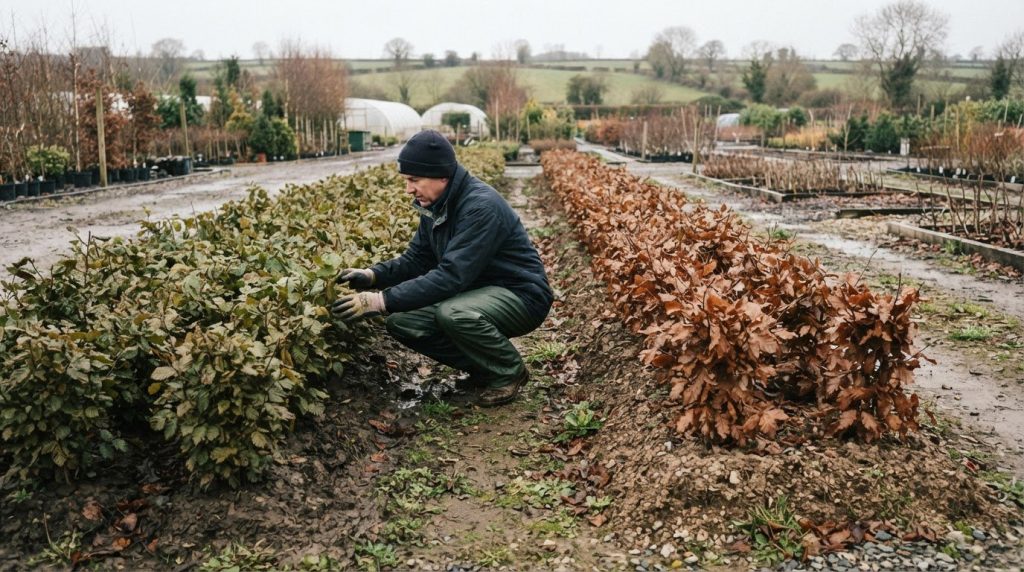
The faster-growing hedge isn’t always the better fit. Hornbeam generally suits heavier, damper ground, while beech does best in well-drained soil and tends to retain more of its dry leaves through winter. For hornbeam vs beech hedging, growth is another difference: hornbeam hedges can grow around 40-60 cm per year, compared with around 20-30 cm for beech.
It’s easy to focus on how quickly a hedge will fill in, but the ground beneath it and the amount of winter screening you need matter just as much. Both species can make an effective boundary when their growing conditions suit the site.
This comparison looks at growth, pruning, winter leaf retention, planting and site preparation to help you weigh the practical differences. It also explains when a single or double row may suit your plan and how to prepare the ground for a healthy start.
Key Takeaways
- Match the hedge to the ground: hornbeam is the stronger option for heavier, damper soil, while beech favours well-drained conditions.
- Factor pruning into your choice, particularly if you want a tightly clipped hedge with crisp lines.
- Consider how much winter screening matters, as the two hedges differ in how reliably they hold their leaves.
- Plan the row layout and prepare the planting site before planting to give the hedge a sound start.
Hornbeam characteristics and growth
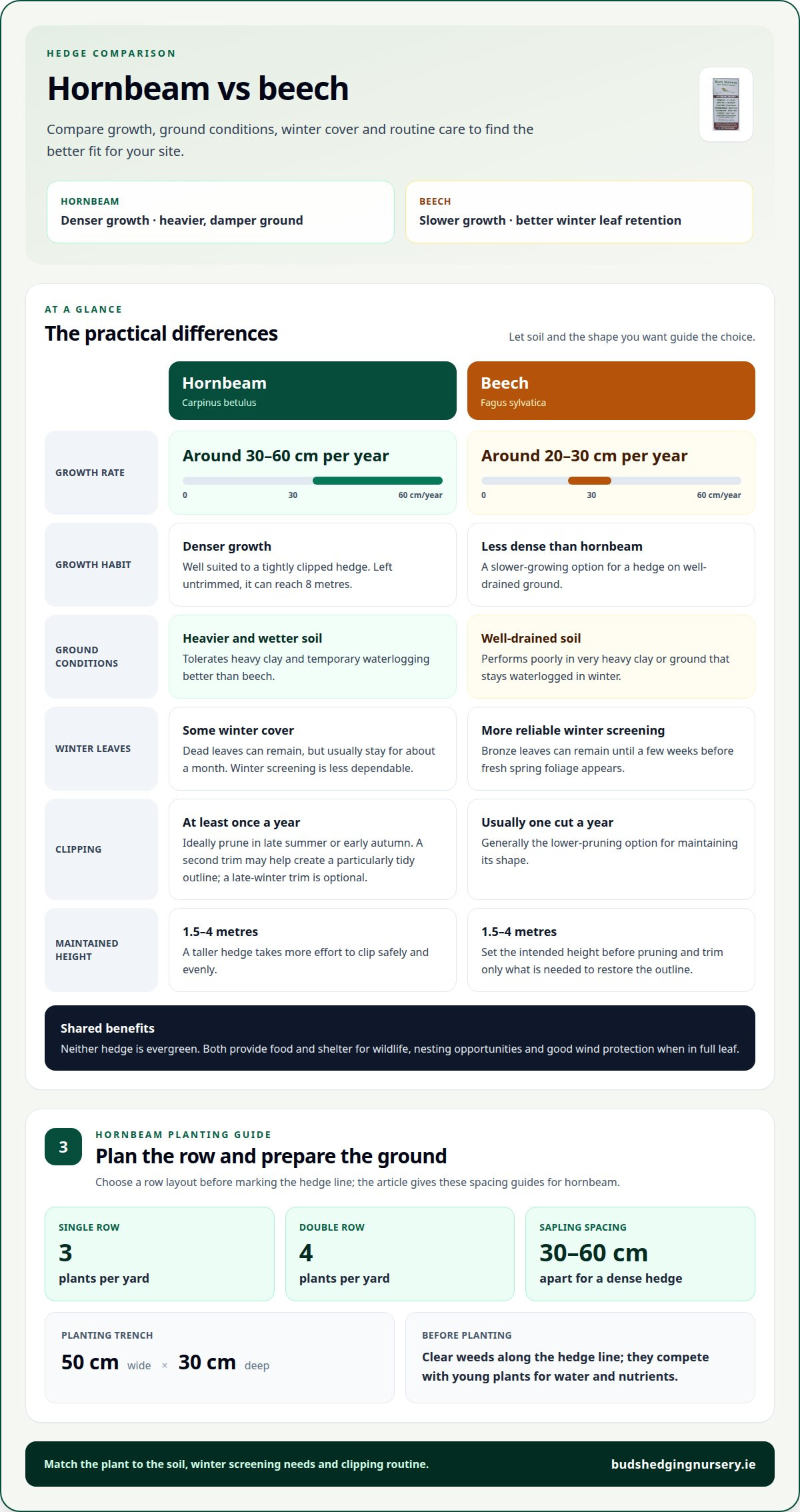
Hornbeam develops a denser growth habit than beech, so it suits a tightly clipped hedge. In suitable conditions, hornbeam grows around 30-60 cm per year. Beech grows around 20-30 cm per year, making hornbeam the faster-growing option in these typical ranges. The main distinction in hornbeam vs beech hedging is how each plant responds to the site and the shape you want.
Left untrimmed, a hornbeam hedge can reach 8 metres. Regular clipping keeps its height and width manageable and encourages a dense outline. Hornbeam is also hardy and tolerates heavier, wetter soil better than beech. Beech prefers well-drained ground and performs poorly in very heavy clay or soil that remains waterlogged.
| Hedge | Growth rate | Growth habit | Ground conditions |
|---|---|---|---|
| Hornbeam | Around 30-60 cm per year | Denser; suitable for tight clipping | Tolerates heavier, wetter soil |
| Beech | Around 20-30 cm per year | Less dense than hornbeam | Prefers well-drained ground |
Choose hornbeam for heavier soil or a denser-growing hedge. Beech suits well-drained ground and a maintenance plan that allows for slower growth. When comparing hornbeam vs beech hedging, let the soil and the shape you want guide your choice.
How much do hornbeam and beech hedge plants cost in Ireland? There is no single price for either plant: the total depends on plant size and the number you need. This comparison focuses on growth and site preferences, not prices.
Are hornbeam or beech hedges susceptible to common pests or diseases in Ireland? Neither is particularly prone to serious pest or disease problems when grown as hedging. According to the Woodland Trust, hornbeam, like beech, can retain leaves throughout the year, providing shelter and nesting opportunities for wildlife.
Pruning and seasonal maintenance
Both hedges need regular clipping to keep their shape and encourage dense growth. European beech usually needs one cut a year. Prune hornbeam at least annually, ideally in late summer or early autumn. Its growth may call for a second cut if you want a particularly tidy outline.
A second hornbeam trim in late winter can neaten the hedge before spring growth begins, but it is optional. Decide based on how crisp you want the finish and how much the hedge has grown. Beech is generally the lower-pruning option, as one annual cut is usually enough to maintain its shape.
Both species can be trimmed once or twice during the growing season. Clip before shoots grow well beyond the intended boundary. Keep the top narrower than the base so lower branches receive light and the hedge holds an even shape. Trim the sides in steady passes, then cut the top to the required line.
Height also affects the work involved. Beech and hornbeam hedges can be maintained between 1.5 and 4 metres, but a taller hedge takes more effort to clip safely and evenly. Set the intended height before pruning, then remove only the growth needed to restore that outline. Clean, sharp cutting tools help leave neat cuts and make repeated seasonal maintenance more manageable.
If you’re still choosing a hedge, explore hedge plant options before deciding how much routine clipping suits your garden. A once-yearly beech cut may fit a lighter maintenance schedule; hornbeam offers the option of a second trim for a tighter finish.
Seasonal appearance and winter leaf retention
Beech and hornbeam both change noticeably between summer and winter. Beech leaves turn bronze in autumn and can remain on the branches until a few weeks before fresh spring foliage appears, helping screen the garden after the growing season. Hornbeam can also retain dead leaves, but they usually stay for about a month, making its winter cover less reliable.
That difference matters beside a road, patio or neighbouring property. Beech generally holds more dry leaves through winter, making it the stronger choice when seasonal privacy matters. Hornbeam can still offer some winter screening, but expect more gaps as its leaves fall. Neither hedge is evergreen.
For wildlife, both hedges provide food and shelter. Their branches offer nesting opportunities, while foliage and structure give birds places to shelter. According to the Woodland Trust, hornbeam, like beech, keeps leaves throughout the year, providing shelter and nesting opportunities for wildlife. In practice, leaf cover varies through the seasons, so the hedge’s branches remain part of its value.
Which hedge is best for privacy, wildlife and screening? Beech is generally the better choice for winter privacy because it retains more dry leaves. Both species support wildlife and provide good wind protection when in full leaf.
Think about when you need the screen most. For a boundary that needs cover through winter, beech’s bronze leaves can help maintain a visual barrier close to spring. For a hedge chosen primarily for its denser growth habit, hornbeam remains a sound option, but its winter leaf retention is less dependable. A useful decision step is to compare the hedge’s summer role with its winter role: screening during full leaf and screening after autumn leaf fall are different requirements.
Planting spacing and site preparation
For hornbeam, allow 3 plants per yard in a single row or 4 plants per yard in a double row. Hornbeam saplings can also be planted approximately 30-60 cm apart for a dense hedge. These are different spacing guides, so plan the row layout around the plants and hedge form before marking the line.
A hornbeam planting trench should be around 50 cm wide and 30 cm deep. Clear weeds along the hedge line before planting, since they compete with young plants for water and nutrients. Keep the trench dimensions consistent, and arrange roots in the trench without forcing them into a narrow space.
Soil is central to the decision. Hornbeam tolerates heavy clay and temporary waterlogging better than beech. Beech performs best in well-drained soil and poorly in very heavy clay or ground that stays waterlogged in winter. For a wet site, hornbeam is generally more suitable; where drainage is good, either may suit.
When is the best time to plant hornbeam or beech hedging in Ireland? Plant hornbeam in autumn or early spring, when the ground isn’t frozen. Planting in these seasons gives roots time to settle before more demanding growing conditions.
After planting, keep weeds under control around the hedge base. Water hornbeam and beech thoroughly during prolonged dry spells while they establish. Organic mulch can help retain moisture around the roots, especially where the soil dries between rainfall. Avoid piling mulch against the stems.
For a dense boundary, choose a single or double row first, then set spacing and prepare the trench to match. If you’re ready to choose plants for your planned hedge, explore hornbeam hedge plants.
Buds Nursery Cavan: Hornbeam
Buds Nursery Cavan offers hornbeam for readers who have chosen this hedge after weighing up soil, growth and winter coverage. Hornbeam is a practical option for a boundary where heavier ground or a dense clipped form makes it a better fit than beech. Your planned row layout and the space available will help determine how many plants the hedge needs.
If beech suits your well-drained site, Buds Nursery stocks Green Beech and Copper Beech. Portuguese Laurel, Cherry Laurel and Golden Privet offer other hedging options when you’re considering a different plant for the boundary.
For a hornbeam hedge, contact Buds Nursery Cavan.
Make a choice that fits your garden
Before choosing hornbeam vs beech hedging, picture the finished boundary in its setting. Consider the view from inside the garden, the space beside paths or driveways, and how the hedge will sit alongside existing plants. It should work as part of the garden, not just mark its edge.
Think beyond planting day, too. Choose a form and position you can maintain as the hedge matures, without blocking access or crowding nearby features. If neither species suits the site, compare other hedging plants that match your priorities. Buds Nursery stocks Portuguese Laurel, Cherry Laurel and Golden Privet among its alternatives.
For help with your next step, contact Buds Nursery Cavan for hedge advice. A clear plan for the boundary makes it easier to choose plants that belong in your garden.
Frequently Asked Questions
Which to Choose: Beech or Hornbeam?
For hornbeam vs beech hedging, choose hornbeam for heavier ground or a close-clipped form. Beech may suit well-drained soil where winter screening is a priority. Assess the whole boundary before deciding: a low point that collects water may affect how well beech grows along that stretch.
Which Hedge is Better for Wildlife?
Both hedges can provide useful cover for wildlife, so site suitability matters more than choosing one solely for this purpose. Branches offer places for birds to shelter and nest, while the hedge creates a continuous habitat along a garden edge. The Woodland Trust notes that hornbeam’s retained leaves provide shelter and nesting opportunities. Avoid cutting during active nesting where birds are present.
Which Hedge is Right for Your Garden?
The right hedge fits your soil, exposure and intended boundary. In a small garden, consider whether its eventual width will crowd a path or planting bed. Beech is unsuitable for sites exposed to salt spray, which can harm it. Where soil varies across the planting line, wetter sections may make hornbeam the more practical choice.
What are the main differences between hornbeam and beech hedging?
The main differences in hornbeam vs beech hedging are growth habit, soil tolerance, pruning needs and winter leaf cover. Hornbeam grows densely and suits heavier, wetter ground; beech generally provides better winter screening. These differences matter beside a patio, driveway or seating area. The best choice depends on which qualities matter most at that particular spot.
Which is better for Irish weather and soil conditions, hornbeam or beech?
Hornbeam is generally the safer choice for heavy clay, damp ground or an exposed site. Beech can suit Irish gardens with sun or partial shade, provided the soil drains well. A boundary that remains waterlogged through winter is a poor match for beech. Check how water moves across the planting line after rain, as conditions can differ within one garden.
How well do hornbeam and beech hedges retain leaves in winter?
Beech usually holds more dry leaves through winter, giving it an advantage where visual screening matters in colder months. Its bronze foliage can remain until shortly before spring leaves emerge. Hornbeam may also retain leaves, but its winter cover is less reliable. Neither is evergreen, so consider how much screening you need after the leaves have fallen.