

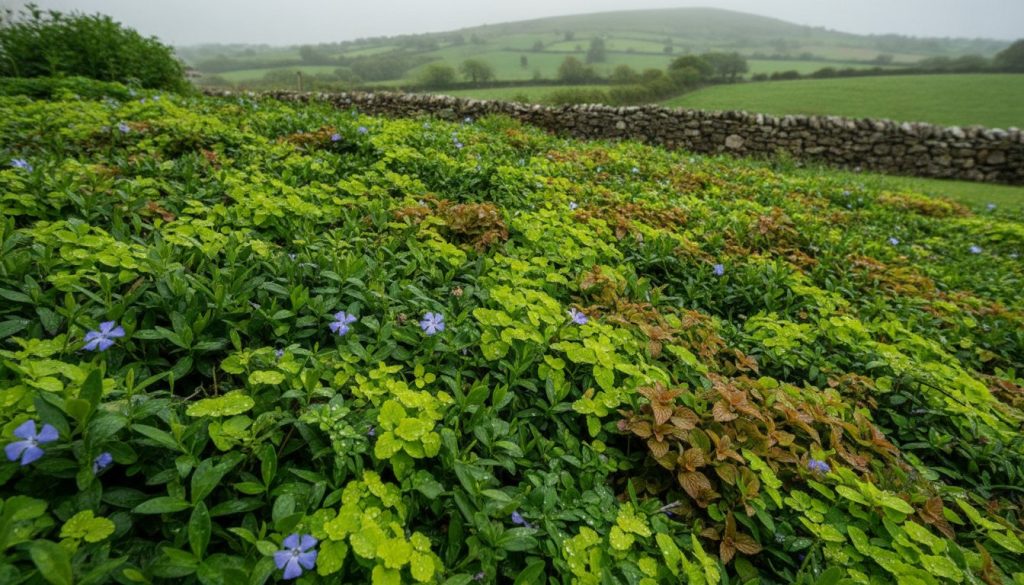
Your garden borders shouldn’t be a constant source of work. Most Irish gardeners spend far too much time pulling weeds from bare soil or trying to fix erosion on steep banks after a typical Atlantic downpour. Choosing the right ground cover plants Ireland provides is the most practical way to turn these problem areas into self-sustaining, green carpets. These plants don’t just fill gaps; they act as a functional living mulch that suppresses weeds and protects your soil structure from heavy rainfall.
We understand the frustration of trying to grow grass in deep shade or watching your topsoil wash away on a slope. It’s a common challenge in our damp climate. This guide will help you select the best varieties for your specific garden conditions, from sun-drenched banks to the darkest corners under trees. You’ll learn how to establish a low-maintenance landscape that requires minimal manual labour whilst supporting local biodiversity and the All-Ireland Pollinator Plan. We’ll cover everything from hardy evergreens to flowering perennials that thrive in Irish gardens.
Key Takeaways
- Learn how to use ground cover as a “living mulch” to naturally suppress weeds and protect your soil from heavy Irish rainfall.
- Discover the best varieties of ground cover plants Ireland offers for specific site conditions, including solutions for heavy clay, deep shade, and coastal gardens.
- Understand why thorough initial weed clearance and precise spacing are the most important factors for achieving quick, dense coverage.
- Find out why sourcing hardy, climate-adapted stock from a specialist nursery ensures better plant survival and long-term garden health.
- Get practical tips on using temporary mulch to support young plants whilst they knit together into a maintenance-free carpet.
What are Ground Cover Plants and Why Use Them in Ireland?
A common question for many gardeners is: What are ground cover plants? In simple terms, these are low-growing species with a spreading habit that form a dense, carpet-like layer over the soil. They are the natural solution for bare patches in your borders. Instead of leaving soil exposed to the elements, these plants create what horticulturists call a “living mulch.” This concept mimics the natural floor of a forest, where plants grow in layers to protect the earth beneath them.
Using ground cover plants Ireland provides a practical way to manage the specific challenges of our climate. We face high humidity and frequent, heavy rainfall. Bare soil in these conditions quickly becomes a breeding ground for weeds or suffers from nutrient leaching. By establishing a thick layer of foliage, you create a protective barrier that regulates moisture and keeps the soil structure intact. Beyond the utility, these plants add significant aesthetic value. They offer a variety of textures, leaf colours, and seasonal flowers that complement taller hedging and shrubs.
The Functional Benefits of Ground Cover
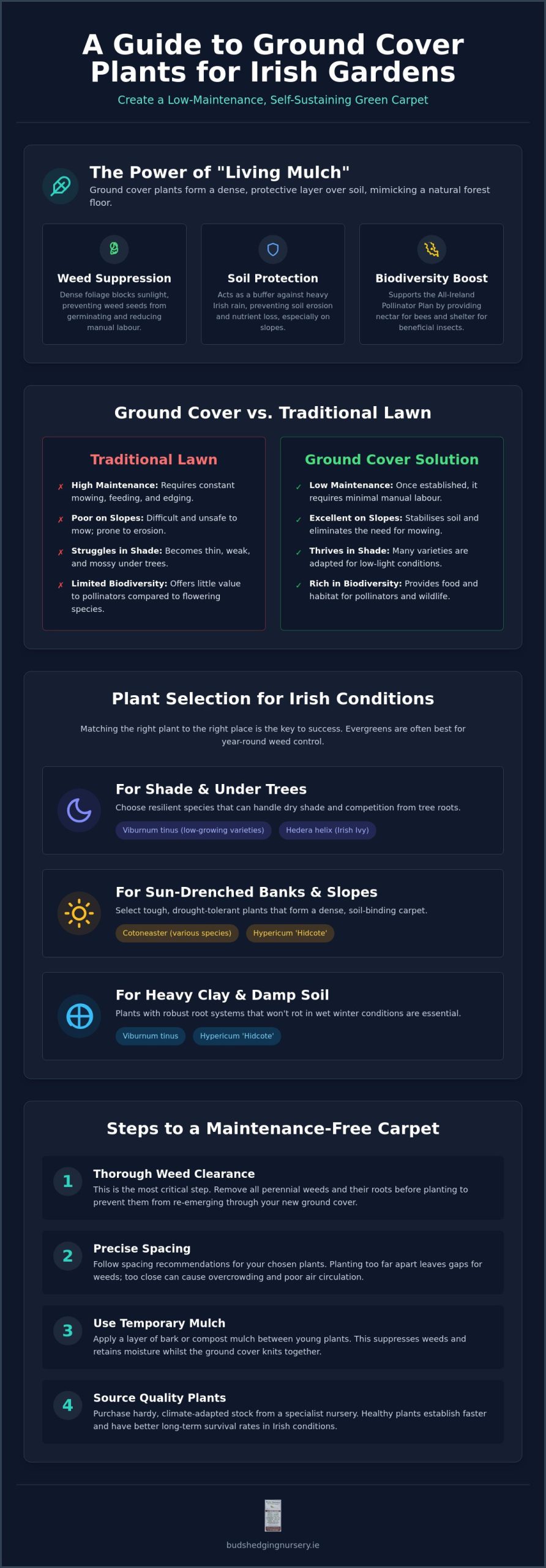
The primary advantage is effective weed suppression. Dense foliage starves weed seeds of the light they need to germinate. This reduces the need for manual weeding or chemical sprays. In our damp climate, soil protection is equally vital. Heavy Irish rain can compact soil and wash away essential nutrients. Ground cover acts as a buffer, breaking the impact of raindrops and preventing erosion on uneven ground.
There is also a significant benefit for local biodiversity. The All-Ireland Pollinator Plan 2026-2030 emphasizes creating “pockets for nature” to support declining populations. Many ground cover species provide essential nectar for bees and shelter for garden-friendly predators like ground beetles. This creates a healthier, more balanced ecosystem in your own backyard.
Replacing Lawns with Ground Cover
Traditional grass isn’t always the best choice for every part of the garden. On steep banks, mowing is difficult and often unsafe. In the deep shade under large trees, grass usually becomes thin and mossy. In these spots, ground cover outperforms turf. Once established, these plants require far less maintenance than a lawn. You won’t need to worry about constant mowing, feeding, or edging.
For those looking for something different, you can create a “tapestry lawn.” This involves mixing several low-growing, walkable species to create a colourful, textured surface. It’s an excellent way to reduce manual labour whilst maintaining a lush, green appearance in difficult garden spots.
Selecting the Best Ground Cover Plants for Irish Conditions
Success with ground cover plants Ireland depends on matching the plant’s vigour to your specific site. Our climate is characterised by high humidity and varying light levels. A plant that thrives in a sunny rockery in Wexford might struggle in a damp, shaded border in Cavan. You must consider soil type first. Heavy clay requires plants with robust root systems that won’t rot in winter. Sandy coastal soils need drought-tolerant varieties that can withstand salt spray. Peaty conditions require acid-loving species that don’t mind damp feet.
For effective weed control, evergreens are usually the better choice. They provide a dense canopy throughout the year, ensuring weed seeds never get the light they need to start growing. Deciduous varieties offer great seasonal colour but leave the soil exposed during the winter months. Reliable performers for the Irish climate include:
- Hypericum Hidcote: A hardy, semi-evergreen shrub with bright yellow flowers that thrives in most soils.
- Cotoneaster: Excellent for banks and slopes; it forms a tough, berry-bearing carpet that stays green year-round.
- Viburnum Tinus: While often a larger shrub, low-growing varieties provide excellent dense cover and winter interest.
Ground Cover for Shade and Under Trees
Dry shade is one of the most difficult garden environments. Mature trees and hedging absorb most of the available moisture and nutrients. To establish ground cover here, you need resilient species. These plants serve as an ideal visual complement to taller structures. For instance, low-growing varieties work well when planted at the base of a Portuguese laurel hedge, filling the gap between the lower branches and the soil.
Sun-Loving and Drought-Tolerant Varieties
South-facing borders and rockeries face different challenges. These areas can dry out quickly during a rare Irish heatwave. You need plants that can handle direct sun whilst performing their functional role of covering the earth. Flowering ground covers add a splash of colour to these bright spots. Aromatic herbs like Lavandula Angustifolia (Lavender) are excellent choices. Whilst often grown for their scent, they also provide a structural, low-growing habit that protects the soil surface. Choosing the right stock from a specialist nursery in Ireland ensures your plants are already hardened to our local weather patterns.
Maintenance and Weed Suppression Strategies
Establishing a successful carpet of ground cover plants Ireland requires a bit of upfront effort. The first three months are the most critical period. You must ensure the area is entirely free of perennial weeds like scutch grass or bindweed before planting. Ground cover plants are excellent at suppressing new weed seeds, but they cannot kill off established weeds already lurking in the soil. If you skip this step, those weeds will simply grow through your new plants, making them almost impossible to remove later.
Whilst your plants are young, they won’t provide total coverage immediately. This is where mulch plays a vital role. Applying a layer of bark mulch or well-rotted compost between the new plants keeps the soil moist and prevents light from reaching the soil surface. It acts as a temporary weed barrier while your plants knit together. As the plants spread and touch, they will take over this role, eventually making the mulch unnecessary.
General maintenance is straightforward. Most spreading varieties benefit from a light trim in early spring to keep them within their designated boundaries. This prevents them from encroaching on paths or smothering smaller ornamental shrubs. During the first growing season, regular watering is essential during dry spells, even in Ireland. Once established, most varieties are remarkably self-sufficient.
Managing Vigorous Spreaders
Distinguishing between a vigorous ground cover and an invasive species is key for long-term garden health. Quality stock from a specialist nursery is chosen for its ability to cover ground without becoming a nuisance. However, some creeping varieties need containment. Use physical edging or simply use a spade to prune the edges of the patch once a year. If a patch becomes too dense or starts to lose vigour in the centre, you can divide the plants in autumn or spring. This thins out the established patch and provides you with new plants to use elsewhere in the garden.
Soil Health and Nutrient Cycling
Ground cover plants do more than just look good; they improve the soil beneath them. As older leaves decompose, they return organic matter directly to the earth. This natural nutrient cycling reduces the need for chemical fertilisers over time. By maintaining a living root system year-round, you also keep the soil biology active and healthy. A dense network of roots and foliage acts as a physical barrier that prevents heavy winter rain from washing essential nutrients out of the topsoil.
If you need advice on which varieties will work best for your specific maintenance levels, contacting an experienced grower at a specialist plant nursery in Ireland is the best way to ensure long-term success.
Planting and Establishment: Bare Root vs Potted
The success of your new ground cover plants Ireland project starts with soil preparation. You must look beyond the surface. In our wet climate, poor drainage is a common reason for plant failure. If you have heavy clay, incorporate grit or organic matter to prevent waterlogging during the winter. Once the ground is clear of perennial weeds, rake the surface to a fine tilth. This makes it easier for young roots to penetrate the soil and begin spreading.
Calculating spacing is the next practical step. To achieve a “quick” coverage that suppresses weeds within two growing seasons, you generally need between five and seven plants per square metre for 9cm potted varieties. For more vigorous spreaders, three to four plants may suffice. If you space them too far apart, you’ll be weeding the gaps for years; too close, and the plants will compete for nutrients and light.
The timing of your project often dictates whether you choose bare root or potted stock. The bare root tree season Ireland typically runs from mid-November to March. This window is also when many deciduous and some evergreen ground covers are available as bare root specimens. This method is highly effective for large-scale landscaping where cost and root health are the primary concerns.
The Advantages of Bare Root Planting
Bare root plants are significantly more cost-effective for covering large areas or long banks. Because they are grown in open fields and lifted whilst dormant, they often have more extensive root systems than their potted counterparts. It’s vital to keep the roots moist and protected from frost before they go into the ground. If you cannot plant them immediately upon delivery, “heel” them into a temporary trench of loose soil to keep the roots active and hydrated.
Potted Plants for Year-Round Flexibility
Potted varieties offer the flexibility to plant almost any time the ground isn’t frozen or waterlogged. They are ideal for filling smaller gaps in established borders during the spring or autumn. When planting, check if the roots have become “pot-bound” or started to circle the base of the container. Gently tease these roots outward with your fingers to encourage them to grow into the surrounding soil. If you plant during the warmer summer months, you must commit to a strict watering schedule until the autumn rains take over.
For high-quality stock grown specifically for our local climate, you can browse our full range of ground cover plants to find the best fit for your garden.
Sourcing Quality Plants from a Specialist Nursery
The success of your garden depends on the quality of the stock you put into the ground. While it is tempting to pick up plants from a general retailer, buying from a specialist plant nursery Ireland ensures you are getting hardy specimens grown for our specific climate. Specialist growers understand the nuances of regional weather patterns and soil types. They provide plants that have been hardened off and are ready to face the wind and rain of an Irish winter. This expert guidance helps you match the right species to your site, preventing costly mistakes and plant failure.
At Buds Nursery Cavan, we manage 60 acres of dedicated production land. This scale allows us to focus on the fundamentals of plant health, ensuring every specimen has a robust root system and clean foliage. We provide national delivery across the country, bringing professional-grade ground cover plants Ireland directly to your gate. Whether you are a hobbyist gardener or a professional landscaper, sourcing directly from the grower guarantees a level of freshness and reliability that mass-market centres cannot match.
The Buds Nursery Difference
Our team carries over 30 years of experience in the Irish horticultural industry. We don’t just sell plants; we understand how they behave in the local landscape. This long-standing experience informs our selection of varieties, focusing on those that offer the best performance for our customers. From bare root trees to ornamental ground cover, our commitment to quality is evident in the resilience of our stock. We grow our plants to be tough, ensuring they transition smoothly from our fields in Cavan to their final position in your garden.
Integrating Ground Cover with Hedging
Ground cover plants are the natural partner to structural hedging. They provide a finished look to the base of a new security hedge, filling the gaps where weeds might otherwise take hold amongst the thorns. This combination creates a multi-layered barrier that is both functional and attractive. You can also pair low-growing species with native trees to create a naturalised, woodland aesthetic that supports local biodiversity.
Consulting with our team allows you to create a comprehensive planting plan. We can advise on how to layer different species to ensure year-round interest and maximum weed suppression. By thinking about your garden as a complete system, from the canopy of the trees to the carpet on the soil, you create a low-maintenance environment that thrives with minimal manual labour.
Transform Your Garden Borders
Establishing a dense, living carpet of ground cover plants Ireland is a practical investment in the health of your soil. By selecting hardy varieties that suit your specific site conditions, you can effectively suppress weeds and protect your garden from the effects of heavy rainfall. Success comes down to proper preparation and choosing the right stock. Once established, these plants reduce manual labour whilst creating a lush, professional finish that complements your existing trees and hedging.
At Buds Nursery Cavan, we bring over 30 years of horticultural expertise to our 60-acre specialist nursery. We grow our plants to be resilient and well-adapted to the Irish climate, ensuring they thrive from the moment they are planted. Whether you need bare root varieties for a large bank or potted plants for a shaded border, our team can provide the guidance you need to get the job done right. We prioritise the health and hardiness of every specimen we produce.
Browse our full range of ground cover and hedging at Buds Nursery Cavan and start planning your low-maintenance garden today.
Frequently Asked Questions
What are the fastest-growing ground cover plants for Ireland?
Hypericum Hidcote and certain Cotoneaster varieties are among the fastest-growing options for Irish gardens. These species establish quickly and can provide significant coverage within two growing seasons. Their vigorous habit makes them ideal for large areas where you want to block out light from the soil surface as soon as possible. Regular pruning in early spring helps manage this growth whilst encouraging a denser, more effective carpet.
Can I plant ground cover over existing weeds?
You shouldn’t plant ground cover directly over existing perennial weeds. Whilst these plants are excellent at preventing new seeds from germinating, they cannot kill off established weeds like scutch grass or bindweed. You must clear the area thoroughly before planting. If you leave weeds in the ground, they will simply grow through your new plants, making maintenance much more difficult in the long run.
How many ground cover plants do I need per square metre?
Most gardeners need between five and seven ground cover plants Ireland provides per square metre to achieve dense coverage. This spacing ensures the plants knit together within eighteen to twenty-four months. For very vigorous spreaders, you might reduce this to three or four plants. Using the correct density prevents large gaps where opportunistic weeds can take hold before the desired plants have fully established.
Is ground cover better than bark mulch for stopping weeds?
Ground cover is a more sustainable long-term solution than bark mulch for weed suppression. Bark mulch is useful during the establishment phase, but it eventually decomposes and requires regular topping up. A living carpet of plants is permanent and improves soil health through natural nutrient cycling. Once the canopy is closed, the plants provide a self-sustaining barrier that requires far less manual labour than maintaining loose mulch.
Are there evergreen ground cover plants that flower in winter?
Viburnum Tinus and certain varieties of winter-flowering Heathers (Erica) provide excellent evergreen cover with winter blossoms. These plants are particularly valuable for adding colour to a dull January landscape. They are hardy enough to withstand typical Irish frosts and damp conditions. Pairing these with other evergreens ensures your garden remains vibrant and weed-resistant even during the dormant months when bare soil is most vulnerable.
Can I walk on ground cover plants?
Most ground cover species aren’t designed for heavy foot traffic, but some “steppable” varieties can handle light, occasional walking. Species like creeping thyme or certain low-growing mosses are often used in “tapestry lawns” or between paving stones. However, for main garden paths or areas where children play, traditional grass or hard landscaping remains a more practical choice. Ground cover is best suited for borders, banks, and under trees.
Which ground cover plants are best for steep, sloping gardens?
Cotoneaster and Hypericum are the most reliable choices for steep, sloping gardens in Ireland. Their robust root systems act as a natural anchor, helping to stabilise the soil and prevent erosion during heavy rain. Because these areas are often difficult to mow or weed safely, a low-maintenance spreading plant is the most logical solution. They provide a green, berry-filled finish that looks far better than bare earth or plastic membranes.
Will ground cover plants damage my house foundations?
Ground cover plants won’t damage your house foundations because they have relatively shallow and non-aggressive root systems. Unlike large trees or certain invasive hedging species, these low-growing plants focus their energy on lateral spread rather than deep, structural roots. They are perfectly safe to plant in borders adjacent to buildings or garden walls. In fact, they help protect the soil near foundations from drying out excessively or eroding.