

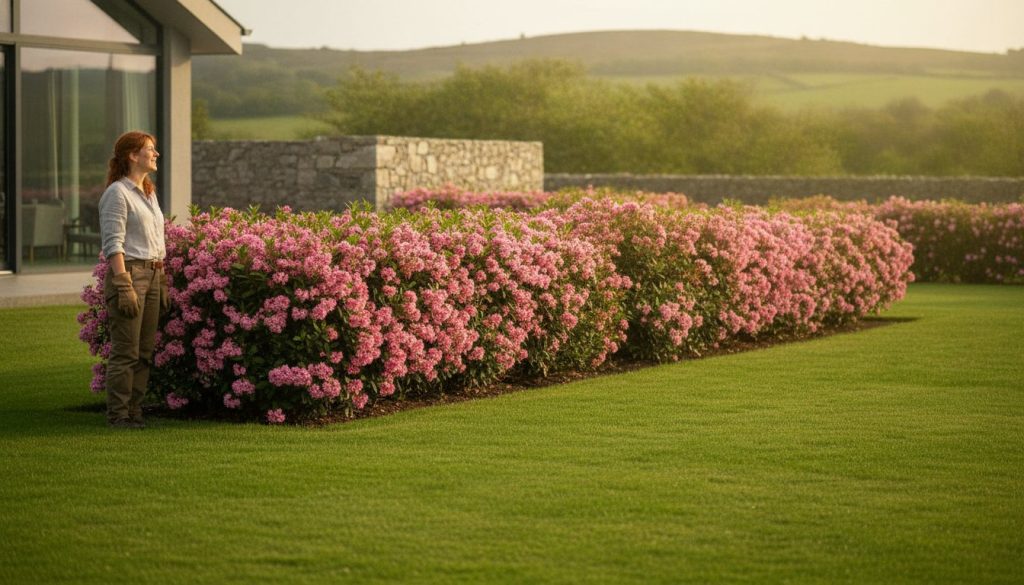
Finding a hedge that stands up to the Atlantic gale whilst looking better than a simple green fence is a challenge most Irish gardeners face. You need a plant that’s as tough as the coastline but still brings life and colour to your property. Choosing escallonia hedging plants offers exactly that balance, providing a dense, evergreen screen that fills with flowers just when the garden needs it most.
It’s understandable to worry about leaf spot or feel confused by the different varieties available at the nursery. You want a thick privacy screen that doesn’t demand all your spare time, and you likely want to see more bees and pollinators visiting your borders. We agree that a garden should be a place of rest, not a source of constant maintenance anxiety.
This guide draws on years of practical experience to help you get the best results from your boundary. We’ll look at the specific varieties that thrive in our climate, the exact spacing you need for a solid screen, and the straightforward maintenance routine required to keep the foliage healthy. From ground preparation to the annual trim, you’ll find the clear advice needed to establish a vibrant, flowering hedge.
Key Takeaways
- Understand how to choose the specific variety that matches your local wind exposure and desired hedge height.
- Learn the correct methods for planting escallonia hedging plants to ensure they establish quickly and develop a strong root system.
- Discover why planting pot-grown specimens during specific seasonal windows is the most reliable way to avoid soil-related failures.
- Find out how to time your pruning to maximise the summer flower display whilst maintaining a thick, evergreen boundary.
- Identify common signs of plant stress early to keep your hedge vibrant and healthy throughout the year.
What are Escallonia Hedging Plants and Why Choose Them?
Escallonia is a versatile group of shrubs that have become a staple in Irish gardens for good reason. These plants are part of the broader Escallonia genus, which contains dozens of species native to the highlands of South America. Despite their southern origins, they’ve adapted perfectly to our temperate, damp conditions. Gardeners often choose escallonia hedging plants when they need a boundary that does more than just mark a line. It provides a dense, year-round privacy screen whilst acting as a significant windbreak against harsh winds.
One of the most valuable traits of this plant is its resilience in coastal areas. It thrives in salt-laden air that would scorch the leaves of many other common hedging varieties. This makes it an essential tool for those living near the sea who still want a lush, green perimeter. It’s a hardworking plant that balances ornamental beauty with pure utility.
The Aesthetic and Practical Benefits
The visual appeal of Escallonia is difficult to match with standard evergreens. The foliage is naturally glossy and deep green, reflecting light and keeping the garden looking bright even on overcast days. Unlike deciduous hedges, these remain fully clothed in leaves throughout the winter. This ensures your garden stays private and sheltered 365 days a year. From June onwards, the hedge transforms as it produces masses of bell-shaped flowers in shades of red, pink, or white.
Growth speed is another practical factor. With a growth rate typically reaching between 20cm and 40cm per year, it’s an ideal choice for new builds where a quick screen is required. It fills out fast. It creates a solid barrier that helps block noise and wind within just a few growing seasons.
Wildlife and Biodiversity Value
Many evergreen hedges act as “green walls” with limited ecological value. Escallonia is different. It serves as a hub for local biodiversity. The summer flowers are a rich source of nectar. You’ll notice a steady stream of honeybees and solitary bees visiting the blooms from early summer right through to the end of the season. It’s a simple way to support pollinators without sacrificing the structure of a formal hedge.
The internal structure of the plant is equally beneficial. Because it grows with a dense, interlacing branch pattern, it provides secure nesting sites for small garden birds. It offers protection from predators and the weather. Choosing escallonia hedging plants allows you to maintain a tidy boundary whilst providing a genuine habitat for garden wildlife.
Selecting the Best Escallonia Varieties for Your Garden
Choosing the right variety of escallonia hedging plants is about more than picking a favourite flower colour. You need to match the cultivar to your garden’s specific microclimate and your own privacy goals. Different cultivars offer varying leaf sizes, growth rates, and ultimate heights. Some varieties grow with a strict, upright habit that makes them easy to keep narrow. Others have a more relaxed, spreading nature that fills a large gap quickly. If your garden is inland and prone to hard winter frosts, verify the hardiness of your selection first. This RHS guide to growing Escallonia provides a reliable baseline for temperature tolerances across the different species.
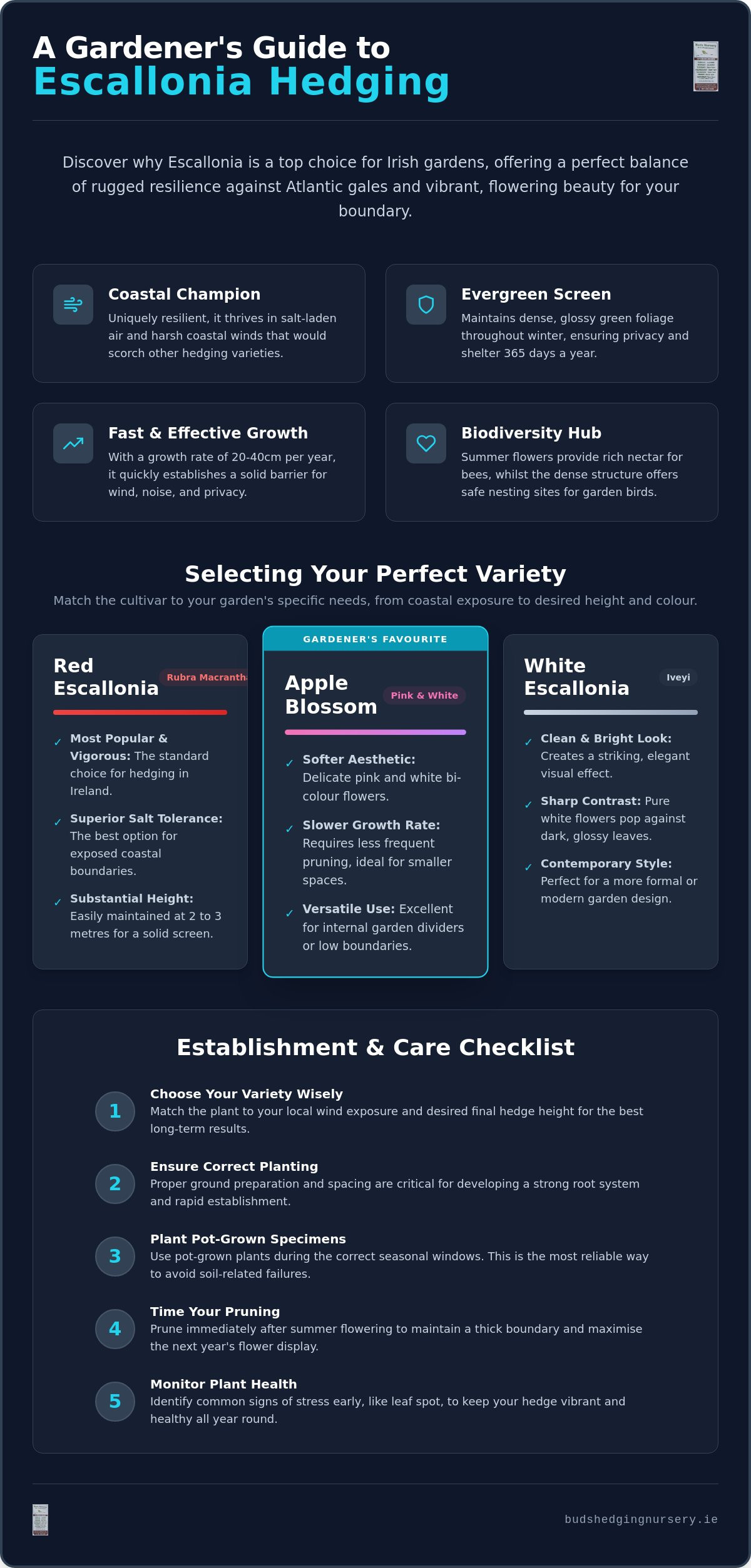
Red Escallonia (Rubra Macrantha)
This is the most popular choice for hedging in Ireland. It’s a vigorous grower that produces deep red, bell-shaped flowers throughout the summer. The foliage is particularly impressive; the leaves are large, leathery, and have a resinous scent when crushed. This physical structure gives it the best salt tolerance amongst all varieties, making it the standard choice for coastal boundaries. You can easily maintain a Rubra Macrantha hedge at a height of 2 to 3 metres, providing a substantial, solid barrier that stands up to heavy winds without thinning out at the base.
Pink and White Varieties
If you prefer a softer aesthetic or have a smaller space to manage, other cultivars might be more appropriate. Escallonia ‘Apple Blossom’ is a well-known favourite. It produces delicate pink and white bi-colour flowers that look exceptional against its mid-green leaves. It has a significantly slower growth rate than the red varieties, which means it requires less frequent pruning. This makes an excellent choice for internal garden dividers or low boundaries where you don’t need a massive screen. Gardeners who want a faster-growing alternative for maximum privacy might also want to explore cherry laurel hedging Cavan specialists recommend as a dense, evergreen option that establishes quickly in Irish conditions.
For a clean, bright look, Escallonia ‘Iveyi’ is the standout white variety. It features dark, glossy leaves that provide a sharp contrast to its large, upright panicles of pure white flowers. It’s a slightly more formal-looking plant that works well in structured garden designs. Whilst it’s still hardy, it appreciates a bit more shelter than the rugged Rubra types. If you’re looking for a specific size or colour for your project, you can view our current stock of Escallonia to see which variety best suits your site conditions.
Before you commit to a specific variety, consider the following factors:
- Exposure: Coastal sites need the leathery-leaved Rubra types.
- Space: Upright varieties like ‘Iveyi’ take up less lateral room.
- Maintenance: Slower growers like ‘Apple Blossom’ need less trimming.
- Height: Ensure the cultivar’s natural vigour matches your target hedge height.
How to Plant Escallonia Hedges for Successful Establishment
Getting the foundation right is the difference between a hedge that struggles and one that thrives. Whilst many hedging varieties are available as bare-root whips, escallonia hedging plants are almost always best planted from pots. This method ensures the root system remains undisturbed and healthy during the move to your garden. Choosing high-quality escallonia hedging plants from a reputable grower ensures you start with strong, resilient specimens that establish quickly. For a successful start, this guide on planting Escallonia hedges provides a solid technical framework for the task ahead.
Timing is just as important as the method. You’ll get the best results by planting in autumn or spring. These windows allow the roots to settle before the extremes of summer heat or winter cold. Never plant into waterlogged or frozen ground; it’s better to keep your pots in a sheltered spot until conditions improve. Spacing is the final critical factor for a thick screen. For standard 1.5-litre or 2-litre pots, space them 50cm apart. If you’re using larger 7.5-litre pots, you should plant 3 specimens per metre to ensure the hedge knits together quickly.
Soil Preparation and Feeding
Escallonia is a hardy plant, but it won’t tolerate “wet feet” over the winter months. Poor drainage is the most common cause of yellowing leaves or root rot. If your soil is heavy clay, spend time improving the structure before you start. Prepare a trench or individual holes at least twice the width of the root ball to allow new roots to spread easily. Incorporate well-rotted organic matter or a general-purpose fertiliser into the backfill to provide a steady nutrient supply. In poor or sandy soils, using mycorrhizal fungi can help the plants establish a more efficient root network much faster.
Post-Planting Care
The first year is the most demanding for a new hedge. Water your plants thoroughly immediately after they go into the ground. Maintain a regular watering schedule throughout the first growing season, especially during dry spells. A layer of bark mulch or compost around the base will help suppress weeds and retain essential moisture. Be careful with the planting depth; the top of the root ball should be exactly level with the soil surface. Planting too deep can suffocate the stem, whilst planting too shallow can cause the roots to dry out. It’s a simple balance that ensures your boundary stays green and vibrant from day one.
Maintenance, Pruning, and Troubleshooting Common Issues
Maintaining escallonia hedging plants is a straightforward task, provided you follow a consistent seasonal routine. Whilst these shrubs are remarkably resilient, they perform best when given a little focused attention each year. A healthy hedge should be dense, dark green, and covered in blooms during the summer months. If you notice sparse growth or pale foliage, it is usually a sign that the plant is lacking nutrients or struggling with local environmental stress. A simple application of a balanced fertiliser every spring will provide the necessary boost to keep the foliage vibrant and the root system strong.
Winter care is another factor to consider. Escallonia is generally robust, but it can suffer in exceptionally cold inland winters where temperatures drop significantly for prolonged periods. If a hard frost scorches the outer leaves, don’t panic. Avoid the temptation to prune immediately; wait until the risk of frost has passed in late spring to see where new growth emerges. Most established hedges will recover quickly once the weather warms up. Gardeners who also grow griselinia hedging plants Ireland-wide will recognise this same caution around frost damage, as both species benefit from the same patient approach to post-winter recovery.
Pruning for Thickness and Flowers
The timing of your pruning dictates how well your hedge will flower the following year. You should prune escallonia hedging plants immediately after they have finished flowering in late summer. This allows the plant to put its energy into new growth that will carry next year’s buds. If you prune too early or too late, you risk cutting off the flowering wood.
For the best results, use sharp shears and follow these practical steps:
- Taper the sides: Always keep the bottom of the hedge slightly wider than the top. This ensures sunlight reaches the lower branches, preventing the base from becoming thin and “leggy.”
- Maintain a neat top: Regular trimming of the leading shoots encourages the plant to fill out laterally, creating a much thicker privacy screen.
- Hard pruning: If an old hedge has become overgrown, you can cut it back hard into the old wood. Whilst it might skip a flowering season, Escallonia responds well to rejuvenation and will usually bounce back with vigour.
Identifying and Treating Escallonia Leaf Spot
The damp Irish climate can sometimes encourage Escallonia leaf spot, a fungal issue caused by Septoria. It is the most common problem gardeners face with this species. You will first notice small purple or black spots appearing on the leaves. Over time, these leaves turn yellow and drop prematurely, leaving the hedge looking thin. This is often a sign of poor air circulation or plant stress.
To manage this, ensure your hedge isn’t overcrowded by other garden plants. Pruning to open up the structure helps air move through the branches, which keeps the foliage dry. Hygiene is also vital; always rake up and dispose of fallen leaves from the base of the hedge to prevent fungal spores from re-infecting the new growth. If your current boundary is struggling beyond repair, it might be time to start fresh with high-quality, disease-resistant stock. You can buy healthy Escallonia hedging directly from our nursery to ensure your new boundary gets the best possible start.
Sourcing Quality Hedging from Buds Nursery Cavan
Sourcing the right stock is the final step in establishing a successful boundary. At Buds Nursery Cavan, we manage 60 acres of land dedicated to producing high-quality hedging and trees. This scale allows us to grow plants with enough space to develop healthy root systems and sturdy top growth. With over 30 years of experience in the Irish horticultural industry, we understand the specific challenges of our local weather. Our escallonia hedging plants are grown and hardened right here in our own soil. This process ensures they are physically prepared to face national climate conditions as soon as they are planted in your garden. We don’t just sell plants; we offer the weight of three decades of practical knowledge to ensure your project succeeds from the first day.
Why Choose Our Specialist Nursery?
We maintain our stock to the highest standards through every stage of the growing cycle. Beyond escallonia hedging plants, we carry a wide range of evergreens to suit different soil types and aesthetic preferences. This includes popular, hardy options like Portuguese Laurel, which provides a different texture for those seeking a classic look. For coastal gardens where salt tolerance is the primary concern, our range also includes griselinia hedging plants Ireland gardeners rely on for that distinctive lime-green foliage and robust wind resistance. If you are unsure which species will perform best on your specific site, our on-site experts are available to provide matter-of-fact guidance. We can also provide advice on combining flowering hedges with selections from our Native Trees Scheme range. This approach helps you build a boundary that is not only functional but also supports local wildlife and biodiversity. Gardeners who prioritise maximum year-round coverage may also wish to consider our cherry laurel hedging Cavan stock, which offers exceptionally fast, dense growth for those who need a solid privacy screen in the shortest possible time.
National Delivery and Collection
Getting your order home shouldn’t be a hurdle for any gardener. We offer convenient delivery options for large hedging orders across the country, ensuring your plants arrive in prime condition. If you prefer to select your plants in person, you can visit our nursery site from Tuesday to Saturday. We are closed on Mondays and Sundays to focus on nursery maintenance and stock management. Seeing the quality of the stock first-hand gives you confidence in the health and vigour of your future hedge. Sourcing from a dedicated grower means you get plants that haven’t spent weeks in transit or sitting on a retail shelf. It is the most reliable way to ensure your new boundary gets the best possible start. Our goal is to provide a straightforward, professional service that respects your time and your garden’s needs.
Establishing Your Flowering Boundary
Choosing escallonia hedging plants offers a practical way to combine year-round privacy with a vibrant summer display. Success comes down to selecting the right variety for your site’s exposure and ensuring the soil is well-prepared before the pots go into the ground. Remember that regular pruning immediately after the flowers fade is the most effective way to maintain a thick, healthy screen that resists common fungal issues.
At Buds Nursery Cavan, we back our stock with over 30 years of horticultural expertise. Our 60 acres of nursery-grown plants are hardened to the Irish climate, ensuring they’re ready for your garden’s specific conditions. We provide national delivery across the country, making it easy to source professional-grade hedging from a dedicated grower who understands the land.
View our range of Escallonia and evergreen hedging plants to find the right fit for your property. With the right start and a consistent care routine, your hedge will provide a dependable, flowering barrier for many seasons to come.
Frequently Asked Questions
How fast do Escallonia hedging plants grow per year?
Escallonia hedging plants typically grow between 20cm and 40cm per year once they’re established in the ground. This relatively fast growth rate makes them a reliable choice for gardeners who need to create a privacy screen within a few seasons. The exact speed depends on soil quality and local shelter, but you can expect a solid boundary within three to four years if the plants are fed and watered correctly.
Is Escallonia completely evergreen in the Irish climate?
Yes, Escallonia remains evergreen throughout the year across most of Ireland. Its glossy, leathery leaves stay on the branches during the winter months, providing a constant visual barrier and windbreak. In very cold inland areas, a particularly harsh frost might cause some minor surface leaf scorch. However, the plant is resilient and usually recovers quickly once the temperatures rise in the spring.
When is the best time of year to prune an Escallonia hedge?
You should prune your Escallonia hedge immediately after it has finished flowering in late summer. This timing ensures that you don’t cut off the developing buds for the following year’s display. For a formal look, a single annual trim is usually sufficient. If your hedge has become overgrown, you can perform a harder prune in the spring, though this will likely reduce the number of flowers you see that summer.
Why are the leaves on my Escallonia hedge turning yellow and falling off?
Yellowing and falling leaves are often caused by Escallonia leaf spot, a fungal condition that thrives in damp, humid conditions. You’ll usually see small purple or black spots on the foliage before the leaves turn yellow and drop. To manage this, improve air circulation by pruning and clear away any fallen leaves from the base of the hedge. Ensuring the plants aren’t stressed by poor drainage or lack of nutrients also helps.
Can I plant Escallonia in a very windy coastal location?
Escallonia is one of the best choices for windy coastal gardens because it’s highly tolerant of salt spray and gale-force winds. The leathery texture of the foliage provides natural protection against the drying effects of sea air. It’s frequently used as a primary windbreak in coastal counties, where it creates a sheltered microclimate that allows more delicate garden plants to thrive in its wake.
How many Escallonia plants do I need per metre of hedging?
We recommend planting three escallonia hedging plants per metre to achieve a thick, dense screen. If you’re using smaller 1.5-litre or 2-litre pots, a spacing of 50cm between each plant is the standard approach. For larger 7.5-litre pots, sticking to three plants per metre ensures the branches knit together quickly. Proper spacing prevents gaps at the base of the hedge as the plants mature.
Is Escallonia safe for pets and livestock?
Escallonia is generally considered non-toxic to dogs, cats, and horses. It isn’t a known hazard in the same way that Yew or certain Laurel varieties can be if ingested. Whilst it isn’t grown as a fodder plant, it’s a safe choice for domestic gardens where pets might come into contact with the foliage. It’s always best to monitor young animals, but the plant carries no significant toxicity warnings for common livestock.
Will Escallonia grow in partial shade or does it need full sun?
Escallonia performs best and produces the most flowers when planted in a position that receives full sun. It’ll grow in partial shade, but you’ll likely notice fewer blooms and a slightly more open, less dense habit. For a thick, flowering boundary, aim for a spot that gets at least six hours of direct light. If your garden is very shaded, you might consider other evergreens that are better suited to low-light conditions.