

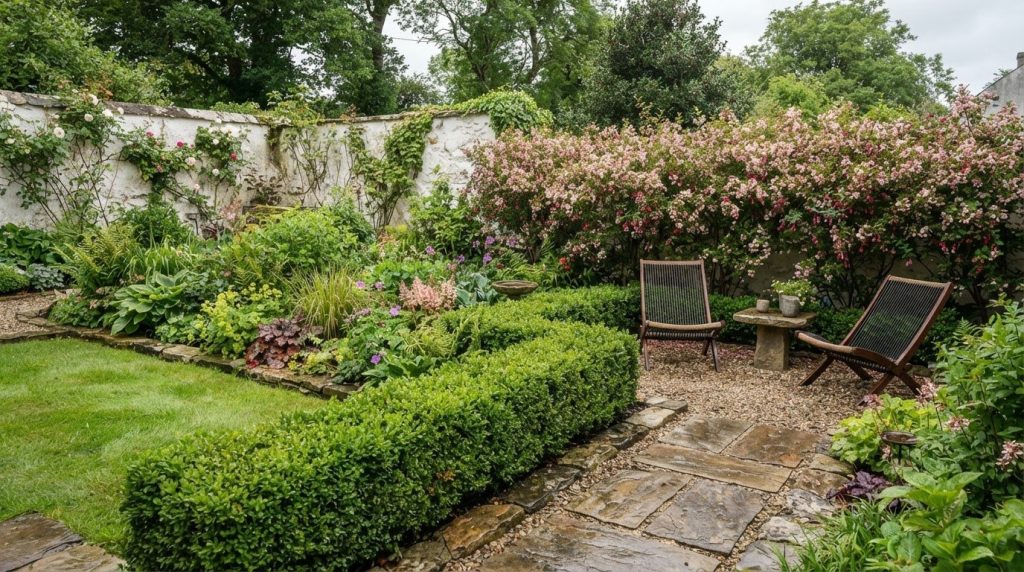
The tallest hedge isn’t always the best choice for privacy in a small garden. Useful small garden hedging ideas start with the space a hedge will occupy as it grows, and how much room you can keep clear around it.
A screen can make a compact garden feel darker or more enclosed if it is too tall or placed in the wrong spot. The right hedge can define a boundary or provide screening without taking over the layout. Start by deciding what you want it to do, then consider the available width, light levels and how much trimming you’re willing to do.
This guide explains how to plan a hedge for a small space, compare planting options and avoid common layout mistakes. You’ll learn what to check before planting and how to make a shortlist that fits your garden. Buds Nursery Cavan offers on-site guidance to help you discuss plant choices, with hedging plants and other nursery stock available to explore.
Key Takeaways
- Use small garden hedging ideas to choose a hedge for a clear purpose, such as defining an edge, screening a boundary or dividing the garden.
- Measure the planting space and decide how high you can maintain the hedge before narrowing down your options.
- Compare planting options by their intended role and upkeep, then check whether each suits your garden’s conditions.
- Plan the hedge’s position before planting so it fits the layout without taking more room than you can spare.
- When sourcing plants, compare the pot sizes, from 2 litre to 45 litre, with your planting plan.
Small garden hedging ideas: what can a compact hedge do?
A small-garden hedge should fit limited space and serve a specific purpose. It might mark a boundary, form a low edge, screen a particular view or divide one part of the garden from another. Defining its job first helps you avoid giving up space or light for a screen you don’t need.
Hedges can serve more than one role, but each has trade-offs. The broad topic is covered in Hedge (Wikipedia). In a compact garden, the practical questions are where the planting will sit and what it needs to do. A taller or denser screen may affect light and sightlines, while a clipped hedge needs room for access and ongoing care.
Which hedge role suits a small garden?
A low edge can define a path or border without creating a full visual barrier. It can also give a seating area a clear outline within a shared garden space. A boundary hedge has a different job: it marks the outer edge and may screen a view, but can take up more space and affect how open the garden feels.
Screening is one option, not the default. If you mainly want to separate a dining spot from a lawn or mark a change between planting areas, a short divider may be enough. Identify the feature you want to define, then decide whether a hedge is the right scale for it.
How can a hedge affect the feel of a compact space?
Position makes a difference. A hedge near a window may change the view from indoors; one beside a narrow path may reduce the room available to move through the garden. A taller screen could also limit light reaching a seating area or nearby planting. The effect depends on the plant, its placement and how it is maintained.
Look at the proposed planting line from indoors as well as outside. Check which views you want to keep, where daylight falls and whether the hedge would narrow a route or take space from a border. A clipped edge in a less prominent spot may define the layout without enclosing the whole garden. A boundary screen may make sense where a view needs softening, as long as its footprint and care suit the space.
For practical small garden hedging ideas, think beyond the plant name. Picture the hedge in place, at a height you can manage and in the part of the garden where it will have the greatest effect. That gives you a useful starting point for comparing options.
How to choose small garden hedging: measure the space and set priorities
Before comparing plants, decide what the hedge needs to do and how much garden you can give it. In a compact plot, the maintained footprint matters as much as the height. A hedge that leaves too little room for a path, seating or other planting may not suit the garden, even if it screens a view.
What should you measure before choosing a hedge?
Measure the planting strip, then note nearby paths, doors, windows, borders and seating. Record both the width available now and the width you’re prepared to allocate as the hedge grows. Write down the height you want to maintain and whether you can reach both sides safely for routine care. These notes make it easier to assess small garden hedging ideas against the real limits of your space.
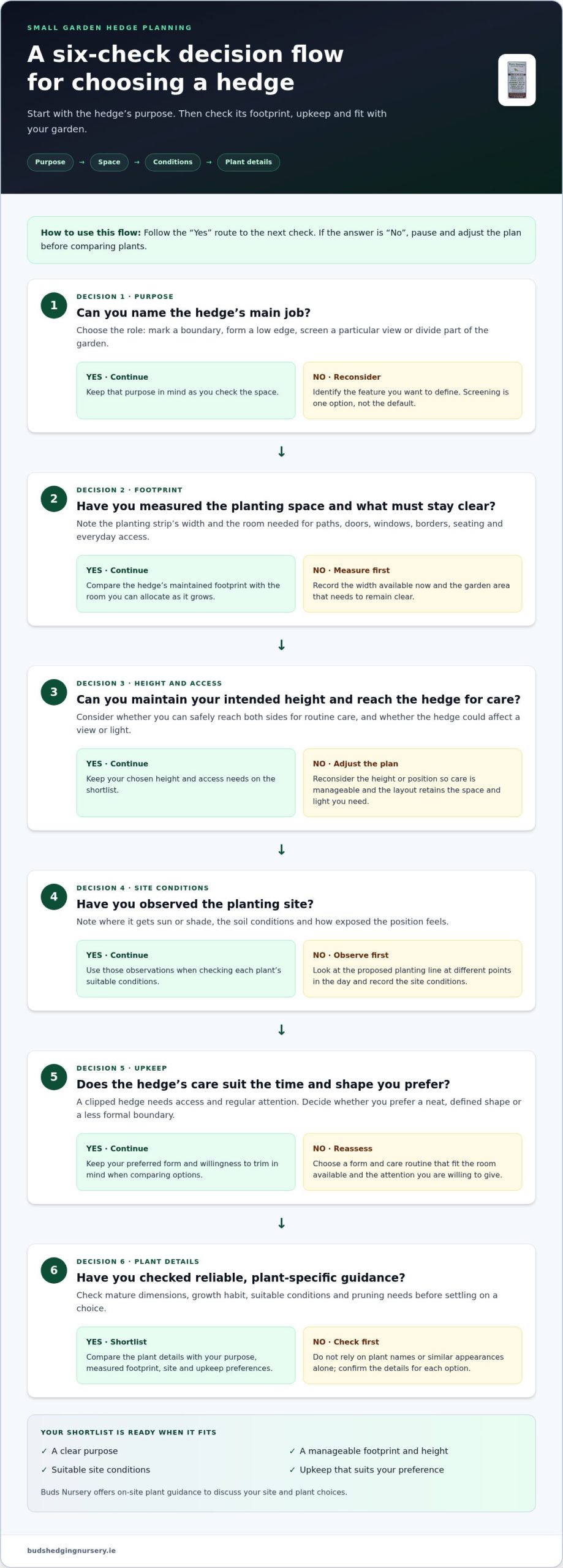
Use this checklist in order, so the plant choice follows the garden’s needs:
- Set the purpose. Decide whether you want a boundary, low edge, visual screen or short divider.
- Measure the footprint. Record the planting strip’s width and the garden area that must stay clear for access or everyday use.
- Choose a manageable height. Note the height you want to maintain and whether you can reach the hedge for routine care.
- Observe the site. Record where the planting area gets sun or shade, and note the soil and how exposed the position is.
- Compare upkeep. Be realistic about how often you’re willing to clip and whether you prefer a neat, defined shape or a less formal boundary.
- Check the plant details. Look up reliable, plant-specific guidance for mature dimensions, growth habit, suitable conditions and pruning needs before settling on a choice.
How do light, soil and maintenance affect the choice?
Observe the proposed planting line at different points in the day. A spot beside a wall or under existing plants may receive different light from an open boundary. Note the soil conditions and how exposed the site feels, then compare these observations with reliable guidance for each plant you’re considering. Don’t assume that options with a similar appearance will suit the same conditions.
Upkeep is part of the space calculation. A clipped hedge needs access and regular attention to stay within its intended outline. If you want a precise, formal edge, factor that work into your choice. If you’d rather have a softer boundary, check that the plant’s growth and pruning requirements suit that preference and the room available.
Which trade-offs matter most in a small garden?
A taller screen may block a view you’d rather keep or affect light near a window, while a low hedge may define an edge without providing the same screening. A formal clipped shape can make boundaries clear, but it calls for ongoing trimming. A looser outline may feel less rigid, though it still needs room to grow. The right choice depends on the garden and the job you want the hedge to do.
Once you’ve made a shortlist, Buds Nursery’s on-site plant guidance can help you discuss your site and plant choices. Explore hedging plants as you refine your shortlist.
Small garden hedge plants compared: low, evergreen and flowering options
Plant names alone won’t tell you whether a hedge will fit. Compare each option by the role it needs to fill, the form you want and the care it may need. The table below is a practical starting point, not a ranking. Check reliable, plant-specific guidance for mature dimensions, leaf habit, clipping and site suitability before choosing. Match these small garden hedging ideas to your measured space rather than treating them as one-size-fits-all advice.
| Plant to investigate | Possible role and form | Practical trade-off to check |
|---|---|---|
| Hedging plants | Consider for a boundary, screen, low edge or divider, depending on the plant and how it is maintained. | Check mature dimensions, growth habit, pruning requirements and suitability for the planting site. |
| Shrubs | Compare as planting for a boundary or visual feature where a hedge is not the only option. | Check the eventual scale and care needs against the available space and the outline you want. |
| Ground cover plants | Consider as planting for a low border or to define an edge without relying on a tall screen. | Check the plant’s spread and site requirements so it does not take over a path or nearby planting. |
| Ornamental trees | Compare where the aim is a focal point or vertical feature rather than a clipped hedge. | Check mature dimensions and position carefully, especially near paths, windows and seating. |
| Fruit trees | Consider if your plan is for a fruit tree rather than a boundary hedge. | Check the space and growing requirements for the chosen tree before adding it to a compact layout. |
Which plants could suit a low, formal edge?
Start by comparing hedging plants with other planting options for a low edge. A clipped hedge can create a defined outline, while ground cover plants may be worth considering if your main goal is to mark a border without creating a screen. These options do not have identical forms or care requirements. Before planting beside a path or border, confirm mature dimensions, suitable growing conditions and pruning needs. A plant that starts small may still need more room or care than the edge allows.
Which plants could suit a clipped or softer boundary?
For a clipped boundary, compare hedging plants by their growth habit and pruning requirements. If you prefer a softer outline, check the natural form and mature spread of the plants you’re considering rather than assuming they will remain compact. In a narrow garden, mature width matters: a plant that grows into a path or seating area can reduce usable space even if its height is manageable.
How should you compare evergreen and seasonal appearance?
Evergreen plants retain foliage through the year; deciduous plants lose their leaves for part of the year. That affects the boundary’s appearance, but doesn’t by itself guarantee a solid screen. Check the leaf habit of each specific plant against reliable guidance, then weigh the look you want through the year against its eventual size and maintenance. A plant’s form and position matter as much as its label.
Small garden hedge design ideas: plan the layout before planting
A quick sketch can show whether a hedge will define the garden or take more space than you intended. Mark the house, paths, doors, windows, seating and existing borders, then draw the proposed planting line. Allow for the plant’s mature dimensions, not just the size of young plants, and leave workable access for care.
Try one of these layout concepts against your own garden measurements:
- Low edge: Run a low hedge beside a path or border to give the garden a clear line without screening the whole view.
- Short divider: Use a hedge to mark the change from a seating area to a lawn or planting space, while leaving sightlines open above or around it.
- Boundary screen: Place screening along the specific boundary or view that needs attention, rather than enclosing every side of the garden.
How can a low hedge define a border or path?
A low line can organise a path or make the edge of a planted border easier to read. On your sketch, show the path width and any access needed to reach nearby features, such as a gate or seating area. Keep space around the planting line for maintenance. Exact spacing and height depend on the plant, so use species-specific guidance rather than a general measurement.
Can a hedge divide a small garden without closing it in?
A short divider can separate two uses without turning the garden into enclosed sections. A clipped line gives a clear boundary; an open layout leaves more of the garden visible from one end to the other. Before deciding, mark the hedge’s eventual width and consider where it may affect light. Keep the divider in proportion to its purpose and the space available.
How can you plan a privacy screen in limited space?
Identify the exact sightline first, such as a view into a seating area, rather than screening the entire garden by default. A taller boundary can take up more room and affect light or open views, so balance the benefit against those costs. The guide Best Hedging for Privacy in Ireland explores privacy-focused choices; use its advice alongside plant-specific details for the option you’re considering.
Before planting, check the proposed line from indoors and outside. Confirm the mature dimensions, spacing and pruning guidance for your chosen plant, then adjust the sketch to preserve paths and usable areas. Keep a copy of the layout to guide planting and future trimming.
Bring your measurements and layout plan to Buds Nursery to discuss suitable hedging plant choices. Explore hedging plants for options to compare with your garden’s space and purpose.
Choosing and sourcing small garden hedging from Buds Nursery
Once you’ve narrowed down the purpose, footprint and plant characteristics you want, turn your shortlist into a practical buying plan. Buds Nursery offers hedging plants, shrubs, ground cover plants and ornamental trees. Compare the options by the role you need them to fill, then check their mature size and care requirements against your plan.
Plant size is another part of the decision. Pot sizes are available from 2 litre to 45 litre. The size you choose affects how the plants fit into your planting and handling plans, but pot size alone does not tell you the plant’s mature width or height. Keep your measurements and species-specific guidance central to the decision.
What can you discuss when choosing hedge plants?
Bring your measurements and a few notes about the garden. Include the available width, the height you intend to maintain, the purpose of the hedge, and the light, soil and exposure in the planting area. A simple sketch showing paths, seating, windows and boundaries can make the conversation more useful.
Buds Nursery offers on-site plant guidance, so you can discuss your shortlist against those site details. Talk through the plant’s expected form, mature dimensions and pruning needs, then compare those details with the room you can allocate. This is useful when options seem similar at first but may differ in growth habit or care requirements.
Buds Nursery has operated for over 30 years and offers hedging plants alongside shrubs, ground cover plants and ornamental trees. Keeping your garden notes to hand helps focus the discussion on the role you need the hedge to fill, rather than choosing on appearance alone. It also gives you a clearer basis for deciding whether a low edge, boundary planting or short divider is a better fit.
What should you know before arranging delivery?
If you’re considering delivery, plan around the quantity of plants and the location of the site. Delivery service is available pending quantity and site location. Include delivery in your practical planning without assuming it will suit every order or location.
Before finalising your shortlist, check the plant-specific details that matter most: mature spread, suitable conditions, leaf habit and maintenance. That comparison can help prevent a hedge from crowding a path or requiring more clipping than you want to manage. For small garden hedging ideas that need to work in a defined space, match the plant and pot size to your plan, not the other way round.
Bring your measurements to Buds Nursery to discuss your options with the team. Discuss hedging plant choices for your garden.
Take your garden plan from sketch to shortlist
Your next step is to turn your measurements into a shortlist you can compare. Note the job the hedge must do, the space it can occupy and the appearance you want through the year. Then weigh each option against your tolerance for clipping and the conditions in the planting spot. This keeps small garden hedging ideas grounded in what your garden can support, rather than a look that may take more room or care than you planned.
Keep the sketch nearby as you explore options. It gives you a practical reference for discussing the hedge’s role and checking plant-specific details before making a choice. You don’t need to settle every detail at once; a clear purpose and realistic footprint are a sound place to start.
Explore hedging plants at Buds Nursery and take the next step towards a hedge that fits your space and plans.
Frequently Asked Questions
What is the best hedge for a small garden?
The right hedge is the one that suits your garden’s purpose, available footprint and growing conditions. A low edge beside a path has different requirements from a boundary screen. Start by deciding what the hedge needs to do, then compare candidate plants’ mature dimensions, leaf habit and care needs. Buds Nursery offers hedging plants; check the specific characteristics of the plants you’re considering before choosing.
Can you have a hedge in a very small garden?
Yes, a very small garden can accommodate a hedge if the planting has a clear job and fits without obstructing essential access. A short run beside a border or around one side of a seating area may be more practical than planting every boundary. Before choosing, map the area that must stay open for bins, gates, furniture or moving through the garden, then assess whether a hedge can fit.
How do I make a small garden hedge look neat?
Keep the planting line consistent and decide on the outline before trimming. A taut guide can help you follow a straight edge, while checking the hedge from several viewpoints can reveal uneven sections. Trim in line with guidance for the particular plant and the shape you want to maintain. Avoid cutting simply to force a plant into a form that doesn’t suit its growth habit.
Are evergreen hedges suitable for small gardens?
They can be, if their eventual size and care requirements suit the site. Evergreen foliage remains through the year, which can provide a consistent boundary appearance, but it may also affect light and views. Check the leaf habit of the exact plant rather than relying on a broad label. Then consider whether its mature spread leaves enough room for paths, seating and other planting.
Is a formal clipped hedge a good choice for a small garden?
A formal clipped hedge can be considered for a defined edge, but whether it’s right depends on the planting conditions, intended shape and maintenance you can manage. Check reliable plant-specific advice for mature dimensions, pruning needs and site suitability before deciding. In a narrow space, make sure the planned line leaves room for access and won’t encroach on a path or border as it grows.
How much space should I leave for a small garden hedge?
There isn’t one spacing figure that suits every hedge. Allow for the chosen plant’s mature width, the planting arrangement recommended for it and room to reach it for maintenance. Include nearby paths, gates and seating in your plan. Check the plant’s specific guidance before setting out the line, and leave enough usable space for the garden to function as well as accommodate the hedge.
Can I use ground cover plants as a low garden edge?
Ground cover plants can be considered for a low garden edge, but check that the site conditions and care requirements suit the plants before choosing them. They won’t necessarily provide the same form or screening as a clipped hedge. Look up plant-specific mature dimensions and guidance, then compare the expected spread with the border or path you want to define.