

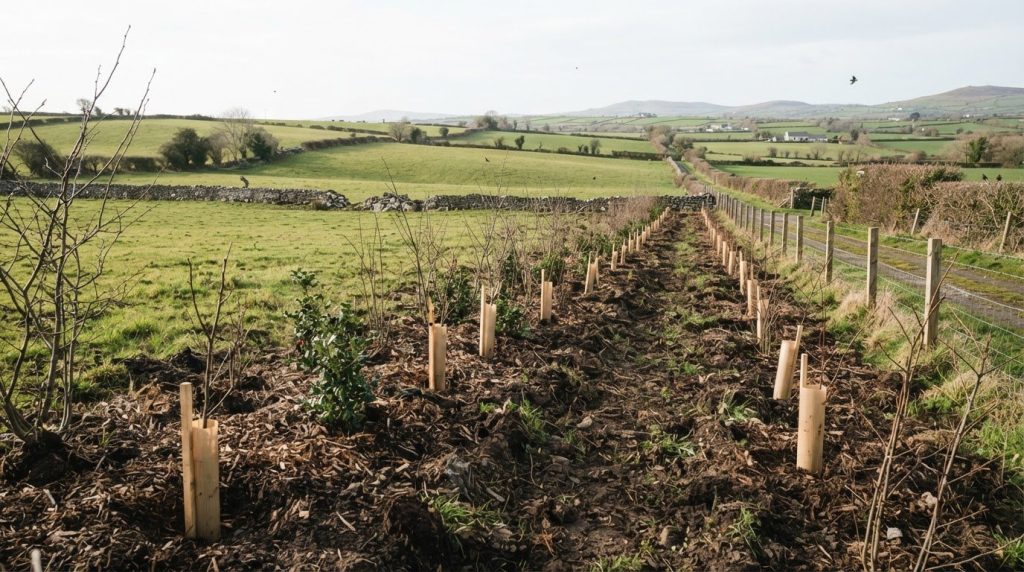
A wildlife-friendly hedge depends less on planting as many species as possible and more on choosing the right mix for your site. If you’re unsure which native plants to combine, how to arrange them or when bare-root plants should go in, a clear plan can help. Planting a mixed native hedgerow for wildlife is a practical project, but the plants need suitable growing conditions and room to establish.
This guide covers the main decisions, from matching species such as Whitethorn and Holly to your soil and available space, to preparing the ground and protecting young plants. It also explains when to plant bare-root hedging in Ireland. The dormant season generally runs from November to March, before spring growth begins.
You’ll also find practical guidance on planting layout, watering and weed control during the hedge’s early seasons. Buds Nursery Cavan sells hedging, trees and shrubs, and offers plant-selection guidance to help you choose options for your site. The aim is to help you plan a suitable mix and give it a strong start.
Key Takeaways
- Plan the hedge line and assess the soil first, so you can address weeds, compaction or waterlogging before planting.
- For planting a mixed native hedgerow for wildlife, consider how different plants can provide flowers, fruit, foliage and shelter across the year.
- Check soil moisture and rainfall when deciding whether new plants need watering, rather than following a fixed schedule.
- Suppress competing weeds and protect young plants from browsing and physical damage while they establish.
- Choose a mix around your site and wildlife aims, using practical plant-selection guidance and suitable hedging and tree options.
Why plant a mixed native hedgerow for wildlife in Ireland?
A mixed native hedgerow is a boundary made from several suitable native woody plants, grown together as a hedge. In a garden, planting a mixed native hedgerow for wildlife means planning for more than a green boundary. Different plants can provide food, cover and nesting structure at different times of year.
Flowers can offer insects a source of food, while later fruit and berries may be eaten by birds and other wildlife. Leaves and branches provide shelter, and dense growth can offer places to rest or nest. The resources available depend on the plants in the mix and how they grow. A newly planted hedge won’t provide the cover of an established one, so its habitat value develops over time.
A wildlife-focused hedge can still work as a garden boundary and provide privacy. A varied planting offers more changes in leaf, flower, fruit and form than a line of one species. A uniform screen may suit you better if an even appearance or consistent screening is the priority. The right choice is the one that meets your needs and grows well in the space available.
The word hedgerow describes a long-established type of planted boundary, but a new garden hedge needs choices suited to its own conditions. Before choosing a mix, consider the soil, light, available width and what you want the hedge to do. A narrow boundary beside a path needs a different plan from a wider hedge intended to provide shelter. These practical limits help keep the planting manageable as well as useful to wildlife.
What wildlife can a native hedgerow support?
Different parts of a hedge can serve different needs. Flowers can attract insects, fruit can provide food, and foliage and woody growth offer shelter and potential nesting places for birds. Small mammals may also use dense cover to move or hide. These are possible benefits, not a promise that particular species will visit. The hedge needs time to grow, fill out and develop useful structure.
Why choose a mixed hedge instead of one species?
A mix can vary the timing of flowering and fruiting, the amount of leaf cover and the shape of the branches. It also gives you options for matching plants to different parts of a boundary. Choose the mix around the site’s conditions and the hedge’s purpose, including how much room it has to grow. More species alone won’t make a better hedge if the plants don’t suit the ground or available space.
Which native plants suit a wildlife hedgerow in Ireland?
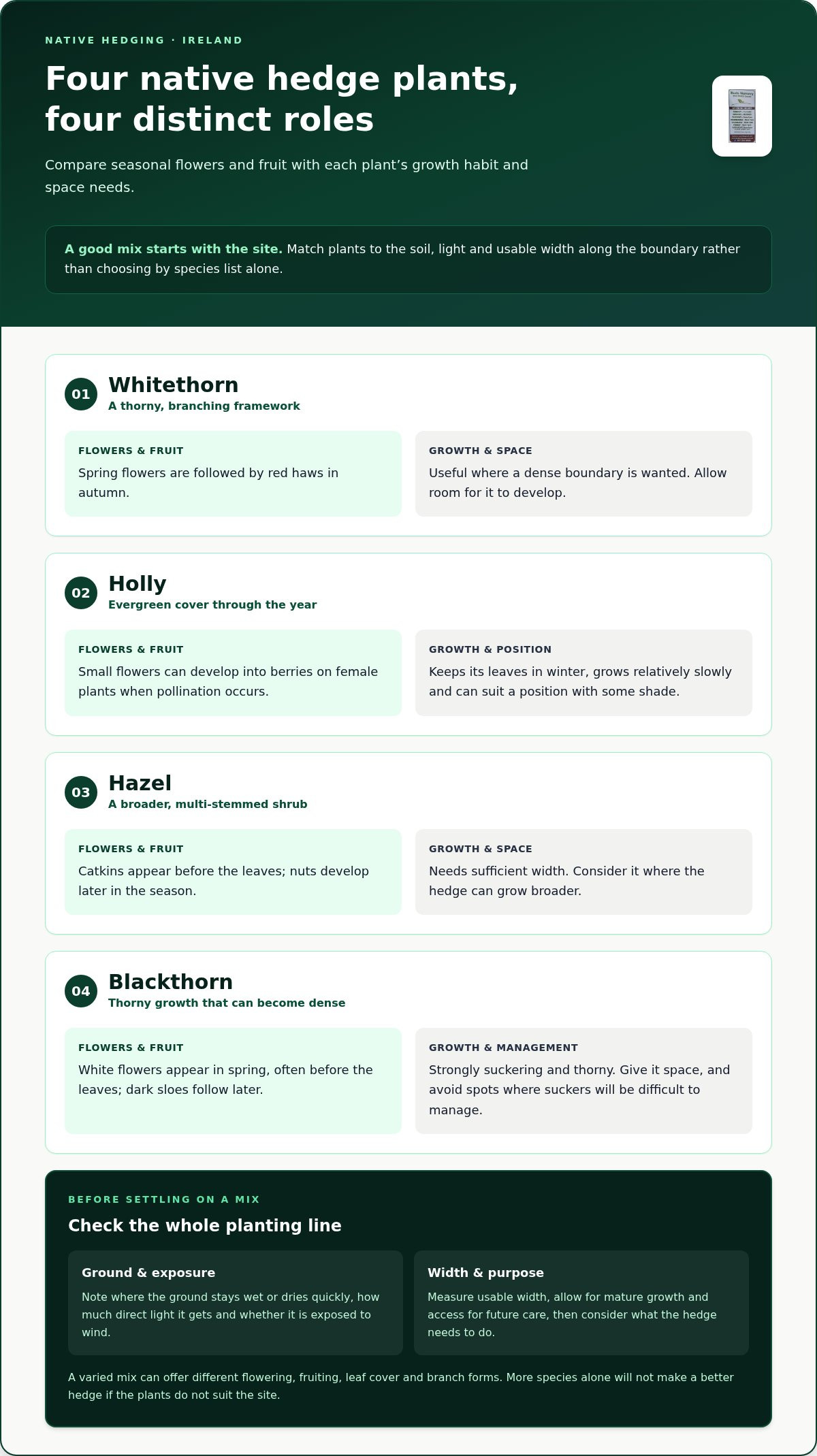
Whitethorn, Holly, Hazel and Blackthorn are familiar Irish native woody plants to consider for a mixed hedge. They differ in leaf cover, flowering, fruiting and mature form, so base your choice on the conditions along the boundary, not just a list of species. Use the table as a starting point, then check each plant’s fit with your soil, light and available space before settling on a mix.
| Plant | Flowers and fruit | Structure and site considerations |
|---|---|---|
| Whitethorn | Spring flowers are followed by red haws in autumn. | A thorny, branching shrub suited to a hedge where a dense boundary is useful. Allow room for it to develop. |
| Holly | Small flowers can develop into berries on female plants when pollination occurs. | Evergreen foliage adds cover through the year. It grows relatively slowly and can suit a position with some shade. |
| Hazel | Catkins appear before the leaves; nuts develop later in the season. | A large, multi-stemmed shrub that needs sufficient width. Consider it where the hedge can be allowed to grow broader. |
| Blackthorn | White flowers appear in spring, often before the leaves; dark sloes follow later. | A strongly suckering, thorny shrub that can form dense growth. Give it space and avoid placing it where suckers will be difficult to manage. |
How do common native hedge plants differ?
Whitethorn offers a deciduous, thorny framework with seasonal flowers and haws. Holly keeps its leaves in winter, adding year-round structure; berry production depends on having female plants and suitable pollination. Hazel and Blackthorn have different growth habits, so they may suit wider or less formal boundaries better than a narrow garden strip. Flowers and fruit can provide seasonal resources, but their presence doesn’t guarantee that particular wildlife will use the hedge.
How should the mix suit the site?
Assess the whole planting line. Note where the ground stays wet, where it dries quickly, how much direct light it gets and whether it is exposed to wind. Measure the usable width, including space for mature growth and access for future care. Then decide the hedge’s main job: a boundary beside a path has different constraints from a wider shelter belt. Choosing plants by name alone can lead to overcrowding or poor growth if their needs don’t match the site.
For planting a mixed native hedgerow for wildlife, choose a balanced selection that fits these conditions rather than trying to include every example. Buds Nursery sells Whitethorn and Holly and offers practical plant-selection guidance to help shape a suitable planting plan. If you’re considering a scheme, the Native Trees Scheme guide explains the programme. Explore hedging and tree plants as you refine your choices.
How to prepare the ground and plant a mixed native hedgerow
Mark the hedge line, clear competing growth, check the soil, arrange the plants, position each root system naturally, firm the soil and water according to ground conditions. This sequence keeps planting orderly and gives bare-root plants a sound start. In Ireland, bare-root hedging is generally planted during dormancy, from November to March. Avoid planting into frozen or waterlogged ground.
What should you do before planting?
Mark a line that works for the boundary and leaves enough room for the hedge to mature. Walk its full length before digging. Look for dense grass, weeds or other growth that will compete with young roots, as well as sections where water collects or the ground feels unusually hard.
- Clear the planting strip. Remove grass and weeds along the line, including persistent roots where practical. A clear strip reduces early competition for moisture and nutrients.
- Check and prepare the soil. Dig or loosen the ground so roots can spread. If it is compacted, break it up rather than planting into a narrow hole in hard ground. If it is waterlogged, wait for better conditions; saturated soil can leave roots short of air.
- Set out the planting plan. Arrange the different species in the intended sequence before opening the plant bundles. This helps you keep the mix consistent and avoids moving plants after their roots are exposed.
Keep bare roots covered while you work. Wind and sun can dry them quickly, even on a cool day. Open only as many plants as you can put in the ground promptly, and keep the rest protected in their packaging or covered with damp material.
How do you plant bare-root hedging correctly?
Work along the prepared line, planting each shrub at a depth similar to the level at which it was previously growing. Spread the roots naturally in the hole or slit. Don’t bend them upwards, bunch them into a tight knot or force them into a space that is too small. Refill with the soil you removed, breaking up large clods as you go.
- Position the plant. Hold it upright and check that the roots sit comfortably below the soil surface.
- Backfill and firm. Draw soil around the roots and press it gently into place to remove large air gaps. Avoid stamping hard or pulling the plant by its stem.
- Water if needed. Water after planting if the soil is dry, so it settles around the roots. If the ground is damp after rainfall, avoid adding water unnecessarily. Assess the soil rather than following a fixed schedule.
For further advice on planting time and keeping exposed roots in good condition, use this bare-root planting guide. Buds Nursery sells hedging and tree plants, including options such as Whitethorn and Holly, and offers practical plant-selection guidance to help you plan your mix.
How to help a new native hedgerow establish and benefit wildlife
After planting a mixed native hedgerow for wildlife, focus on helping each plant establish. Keep competing weeds, dry soil and preventable damage from setting it back. Check the hedge regularly during its first growing seasons. New growth takes time, and habitat opportunities increase as the plants gain height, branch out and form denser cover.
What care does a newly planted hedge need?
Water according to the weather and the soil, not a fixed weekly timetable. After a dry spell, check below the surface near the roots. If the soil is dry, water slowly so moisture reaches the root zone. If it is damp after rain, hold off. Repeated watering in wet ground can leave soil saturated, while a light sprinkle may not reach the roots in dry conditions.
Keep a clear strip around the young plants. Grass and weeds can compete for water and nutrients, especially while the hedge is small. Remove competing growth carefully so you don’t disturb the hedge roots. Suitable mulch can help suppress weeds and conserve moisture, but keep it clear of the stems and check that it hasn’t shifted or exposed the soil.
Look along the line for leaning, broken or missing plants, and check for browsing or damage from garden work, pets or machinery. Protect vulnerable plants with suitable guards or fencing where needed. Replace losses at an appropriate planting time, while bare-root plants are dormant and the ground is workable. Keep replacement plants’ roots protected from drying during handling.
How can hedge management protect wildlife?
Give the hedge time to flower and set fruit where the boundary allows. Avoid cutting it into a tight, uniform shape every year if this removes flowers, berries or developing shelter. A lighter, less frequent trim can allow more growth and varied structure, but the right approach depends on the available space and the hedge’s purpose.
In Ireland, the Wildlife Act 1976 prohibits cutting, grubbing, burning or otherwise destroying vegetation in a hedge or ditch during the bird nesting season, from 1 March to 31 August inclusive. Plan routine trimming outside this period, and avoid disturbing a hedge if you find an active nest at another time. Scheme participants may also have additional management requirements, so follow the rules that apply to their planting.
There’s no instant result. Flowers, fruit and dense branches develop as the hedge grows, creating opportunities for insects, birds and small mammals to feed or find cover. The plants’ condition matters too: steady growth and varied structure are more useful than a hedge kept uniformly clipped.
For advice on choosing plants suited to your hedge and its growing conditions, explore Buds Nursery’s hedging and tree range.
Choosing plants for your wildlife hedgerow with Buds Nursery
Start your plant list with the ground and the hedge’s purpose. Note the soil conditions, light, exposure and available width, then decide whether the boundary needs to provide shelter, mark an edge or screen a view. These details help narrow the choices to plants that can grow comfortably in the space and contribute different forms of seasonal interest.
For planting a mixed native hedgerow for wildlife, don’t treat a species list as a fixed recipe. A broad boundary may accommodate plants with different growth habits, while a narrow garden edge may need a more restrained selection. Plan the mix and planting order before sourcing plants, and consider how you’ll maintain the hedge as it matures.
What can a specialist nursery contribute to plant selection?
Practical plant-selection guidance can help connect your observations with suitable hedging and tree options. Buds Nursery has more than 30 years’ experience and manages 60 acres devoted to hedging, trees and shrubs. Its range includes Whitethorn and Holly, alongside other plants. The nursery also participates in the Native Trees Scheme, which is relevant if you’re considering native tree planting.
This guidance can help turn general aims into a workable list. Bring together the boundary’s purpose, the conditions along its length and the space available for mature growth. A considered selection should suit the site as well as the planting plan. Broader sourcing factors, such as plant type and suitability for a project, are covered in this specialist nursery sourcing guide.
- Site: Record wet or dry patches, light levels and exposed sections.
- Purpose: Decide how much screening, shelter or boundary definition you need.
- Planting plan: Match the species mix to available width and how you intend to manage the hedge.
What should readers do next?
Use your notes to draft a plant list before planting. Check that each choice suits the relevant part of the hedge line, and leave enough room for mature growth. If your plan relates to a scheme, read its current guidance separately and make sure your planting decisions meet its requirements. The Native Trees Scheme guide can help you understand the programme and the plants associated with it.
With your site observations and planting plan in hand, compare suitable options without choosing by name alone. Explore hedging and tree plants as you put together a considered list for your boundary.
Take your hedge plan from paper to planting
A wildlife hedge is a long-term part of the garden, so start with a plan you can maintain as it grows. Mark the boundary, note the conditions along it and decide what you want the hedge to do. These observations give you a practical basis for choosing plants, rather than relying on a mix that looks suitable on paper but may not fit your space.
Planting a mixed native hedgerow for wildlife doesn’t need to happen all at once. A clear plan helps you make considered choices and care for young plants as they establish. Over time, the hedge can develop into a more varied boundary, with seasonal growth and opportunities for wildlife shelter.
Buds Nursery sells hedging and tree plants, including Whitethorn and Holly, and offers practical plant-selection guidance to help you consider suitable options. Use your site notes to shape the next step, then explore hedging and tree plants at Buds Nursery. Start by choosing a mix that suits your site, then give it room and attentive care as it grows.
Frequently Asked Questions
When is the best time to plant a mixed native hedgerow in Ireland?
The best time is usually during the dormant season, from November to March, when bare-root plants can be planted without active top growth. Choose a day when the soil is workable, not frozen or saturated. Let ground conditions guide your timing. If planting is delayed, keep roots protected and avoid leaving them exposed to wind or sun.
Can you plant a mixed native hedgerow in a small garden?
Yes, if you choose plants that fit the available width and can be managed as they grow. A short, narrow boundary may suit a carefully selected mix better than a broad hedge with vigorous, spreading shrubs. Check the mature size of each plant and consider nearby paths, fences and windows. If space is tight, a single row may be more practical than a wider double-row layout.
How long does a new native hedgerow take to establish?
There’s no single timetable: establishment depends on plant size, soil, weather and aftercare. Look for healthy new growth, plants that remain firmly rooted and fewer gaps along the line, rather than expecting a full screen straight away. A hedge may need several growing seasons to gain useful height and density. Keep checking for weeds, dry soil and damage, especially during its early growth.
Do native hedgerows provide food for birds throughout the year?
No single hedge mix provides berries or other food continuously through every month. Flowers, fruits and seeds are seasonal, and availability varies with plant species and conditions. A varied hedge can offer different food sources at different times, while evergreen leaves and dense branches may provide cover when food is scarce. Treat this as an opportunity for wildlife, not a guarantee that birds will feed there year-round.
Can bare-root plants be used for a mixed wildlife hedge?
Yes. Bare-root plants are suitable for a mixed hedge and are generally planted in Ireland during dormancy, from November to March. Keep the roots covered until each plant is ready to go in, and don’t let them dry out while you work. Bare-root stock can be easier to handle along a long planting line, but it still needs suitable soil and prompt planting.
Should a wildlife hedgerow have one row or two?
Either can work. A single row takes up less room and may suit a garden boundary where access or width is limited. A double row can create a broader, denser hedge, but needs more space and a planting plan that keeps both rows clear of competing growth. If planting under ACRES, scheme requirements include a double staggered row, so check the current rules for your application.
Can you add native plants to an existing hedge?
Yes, where gaps or a suitable strip beside the hedge give new plants room to establish. First check whether existing roots, shade or dry soil will make that spot difficult for young plants. Avoid disturbing sound sections of the hedge unnecessarily. Plant additions during a suitable planting period, protect them from browsing and competition, and manage them so they can grow without being smothered by established shrubs.