

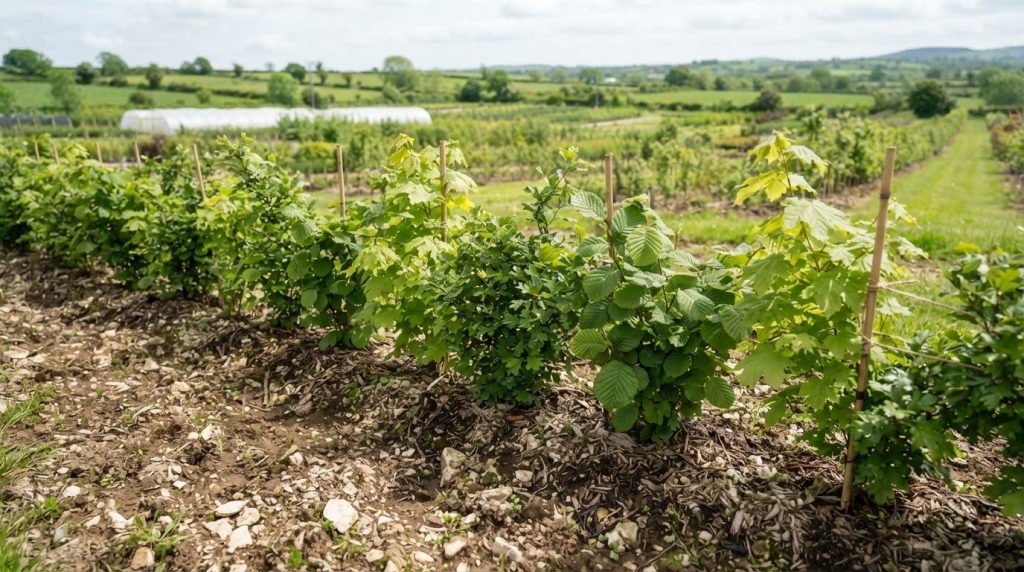
The plant you want may not need a different soil; the hedge may need to suit the ground. For hedging for alkaline soil, first look at plants that cope with chalky conditions: native choices include hawthorn, hazel and field maple, while beech, hornbeam, privet and yew are among the suitable hedging options. Alkaline soil has a pH above 7, and chalky ground can be shallow and quick to dry out.
It’s understandable to consider changing the soil when a favourite plant struggles, but adjusting pH isn’t always the most practical answer. A plant’s tolerance, soil depth and drainage, and summer moisture all affect which hedge is likely to establish well. This guide compares native mixes and shrubs for Irish gardens, considers whether elm is an option, and explains when changing soil pH may help. It also covers straightforward ways to support new hedging, including adding organic matter and using mulch to conserve moisture.
Key Takeaways
- Assess soil depth, drainage and summer drying before choosing a hedge; these conditions affect establishment as much as pH.
- Build a native mix around species suited to chalky ground, and weigh elm against the conditions in your garden.
- Change soil pH only when it helps meet the needs of the plants you want; lime makes soil less acidic, not more acidic.
- Retest after adding an amendment before making further changes, so you can base the next step on the soil’s response.
1. Mixed native hedging for chalk landscapes
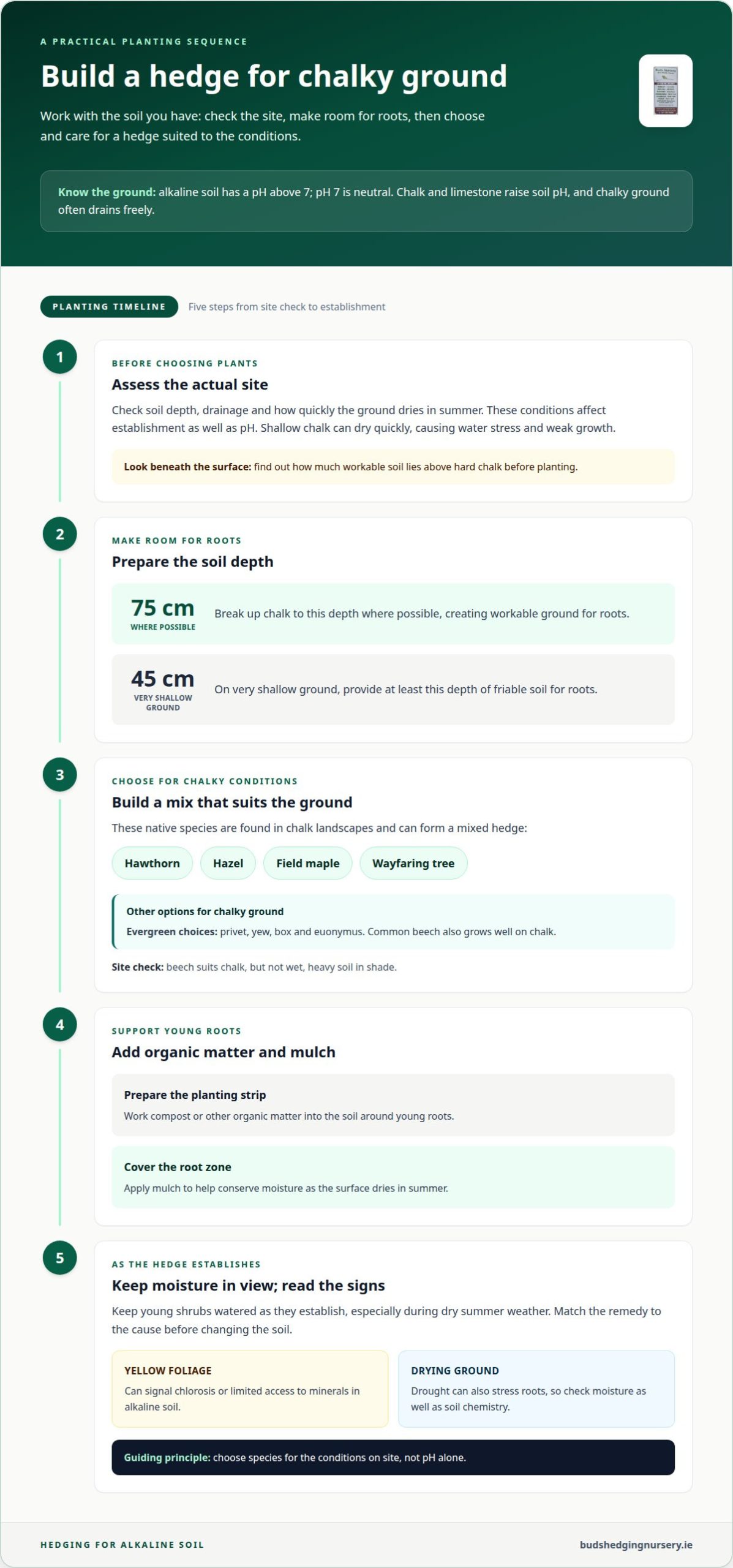
For an Irish garden with chalky, alkaline soil, consider a mixed hedge of hawthorn, hazel, field maple and wayfaring tree. These native species are often found in chalk landscapes. Evergreen choices for chalky ground include privet, yew, box and euonymus; common beech also grows well on chalk.
Alkaline soil has a pH above 7, while pH 7 is neutral. Chalk and limestone raise soil pH, and chalky ground often drains freely. That can leave shallow soil vulnerable to summer drought, with water stress and weak growth. Before planting, assess how much workable soil lies above hard chalk. Break up chalk to 75cm where possible; on very shallow ground, provide at least 45 cm of friable soil for roots.
Prepare the planting strip with compost or other organic matter to improve the soil around young roots. A layer of mulch helps conserve moisture as the surface dries in summer. Choose species for the actual site, not just its pH: beech suits chalk but not wet, heavy soil in shade. A mixed hedge also brings variety in growth habit and seasonal interest.
Yellow foliage can signal chlorosis, and shallow chalk may be deficient in minerals. Add organic matter and mulch to support growth and reduce drying. Club root affects brassicas and is less prevalent in alkaline soil; it is not a typical hedge disease.
For evergreen screening on chalky ground, consider privet, yew, box and euonymus. In Ireland, treat boundary and site considerations separately from soil choice: establish the hedge line and consider nearby access and sightlines before planting or trimming. Circumstances vary, so don’t assume the same arrangements suit every garden.
2. Changing soil pH
Changing pH is useful only when it helps the plants you want to grow. A slightly acidic reading of 6.5 suits a wide range of garden plants, but it isn’t a universal target. Some shrubs tolerate alkaline ground, so altering a chalky border simply to reach 6.5 may add work without improving the hedge. Decide first whether the chosen species struggles because of soil chemistry or another condition, such as poor drainage or summer drought.
Garden lime makes soil less acidic, so it raises pH rather than correcting alkaline soil. Applying lime to already alkaline ground moves the reading in the wrong direction. Lime is relevant when soil needs to become more alkaline; the amount depends on the soil and the intended change. Applied in autumn, the correct amount usually raises pH significantly by spring. Don’t treat the whole garden by assumption: different beds can have different soil conditions.
Changing alkaline soil for a plant that prefers acid conditions can be difficult to sustain, especially where chalk continues to influence the root zone. If you want a dependable hedge without repeatedly amending the soil, choose a shrub suited to the existing conditions. A plant’s leaves may turn yellow when it cannot access nutrients in alkaline soil, but adding an amendment without checking won’t address drought, waterlogging or other causes of stress.
Match the remedy to the plant. If a particular species needs a different pH, assess whether a separate planting area can be managed for it; keep the rest of the hedge suited to the garden’s natural soil. Flowers and foliage can still give a beautiful display without forcing every bed towards one reading. For example, orange berries or flowers are not a reason to change pH if the shrub already suits the site. For suitable hedge choices, browse hedging plants for Irish gardens.
4. Hedging shrubs for alkaline soil
Several shrubs suit alkaline ground, but drainage and exposure still shape the choice. Cotoneaster grows in chalk and limestone, including poor, shallow soil, and tolerates pruning. Its flowers provide nectar for bees, followed by colourful fruits. Euonymus japonicus also suits freely draining chalky soil. For evergreen structure, yew tolerates mildly alkaline soil up to pH 7.5; Portuguese laurel can grow on chalk, though more slowly than cherry laurel.
Other options bring different forms and flowering interest. Berberis and lilac can be options for alkaline soil. Forsythia suits slightly alkaline soil between pH 7.0 and 8.0. Thuja plicata offers an upright, evergreen conifer hedge and grows in sun or shade. Match the shrub to the space, light and soil depth, rather than selecting on pH alone.
Planting and care matter as much as species choice. Work organic matter into the planting mixture, then mulch around the root zone to a depth of around 3 inches. This helps retain moisture in freely draining ground. Keep young shrubs watered as they establish, especially during dry summer weather, and prune cotoneaster when needed to maintain its shape.
Cherry laurel appears on lists of shrubs for alkaline soil, but chalk can make its foliage pale, yellow and chlorotic. It may therefore be a poor choice for some chalky sites, despite suiting other conditions. Check the likely growing conditions before choosing a hedge. Yellow leaves may reflect limited nutrient access in alkaline soil, but drought can also stress roots. Choose a shrub adapted to the site, then maintain moisture and avoid unnecessary soil changes.
4. How often should I retest soil pH after adding amendments?
Retest after an amendment has had time to affect the soil, before deciding whether to apply more. Timing depends on the material and the change you want. For example, garden lime applied in autumn usually raises soil pH significantly by spring, making spring a useful time to assess its effect. Don’t add another dose just because the first treatment hasn’t produced an immediate change.
Use the result to guide the next step. A pH of 7 is neutral; alkaline soil is above 7, while acidic soil is below 7. A reading of 6.5 suits a wide range of garden plants, but it isn’t the right target for every hedge. Cotoneaster, for instance, prefers slightly alkaline soil up to pH 8.0, so lowering its soil towards 6.5 may be unnecessary.
Keep a simple record of the reading, amendment and season. If you treated one bed with lime in autumn, note that alongside its spring result. Compare readings from the same area, rather than relying on a result from another bed with different soil. This helps show whether the amendment moved pH in the intended direction.
Retesting is especially useful before making another adjustment or changing your planting plan. A persistently high reading may favour shrubs suited to alkaline conditions over repeated attempts to alter chalky ground. If a plant has yellow leaves, pH is only one possible factor; dryness and the soil’s ability to supply nutrients can also affect growth.
Use the next reading to choose a measured response: continue with plants that suit the soil, or make a further amendment only if the target plant needs it. Avoid applying lime to reduce alkalinity, because lime raises pH. For a hedge that matches your garden’s soil, explore plants for your garden.
Buds Nursery Cavan
Buds Nursery Cavan sells hedging plants and trees for gardeners choosing what to grow in Irish soil. If alkaline or chalky ground is shaping your decision, consider Portuguese Laurel and privet alongside the conditions at your planting site. Portuguese laurel can suit chalky soil; cherry laurel may develop yellow, chlorotic foliage on chalk, so take particular care when considering it for that setting.
The range also includes Green Privet, Golden Privet and fruit trees. For a project centred on native planting, Buds Nursery Cavan participates in the Native Trees Scheme. These options offer a starting point for matching plants to your garden, rather than changing soil pH without a clear reason.
Contact Buds Nursery Cavan to discuss your planting plans and the types of hedging or trees you’re considering.
Plan your next planting step
Before choosing plants, decide what you need the hedge to do. Privacy, shelter, a clear boundary and wildlife value can each point towards a different mix. Note the available space, light levels and exposure in the planting area. These practical details help narrow the choices for hedging for alkaline soil without making pH the only consideration.
Then set out a simple planting plan: mark the hedge line, consider how it fits around paths and entrances, and choose a mix that suits the garden’s character. A varied hedge can bring different textures and seasonal interest, while a single species creates a more uniform look. Match the planting to the place where it will grow.
If you’d like help considering suitable plants for your garden, contact Buds Nursery Cavan for advice. A clear plan makes it easier to choose a hedge that fits your space and your priorities. Start with the ground you have, and build from there.
Frequently Asked Questions
The plant I love doesn’t like my soil pH. What can I do?
Grow an acid-loving plant in a separate, managed bed, or choose a species suited to your garden’s soil. For example, keep acid-loving heather apart from a hedge rooted in chalky ground rather than treating the whole planting area. If you want to adjust the soil, first consider the plant’s preferred conditions and the existing pH. This helps avoid amendments that work against your planting plan.
What plants and trees grow well in alkaline soil in Ireland?
Options include cotoneaster, euonymus, yew, beech, hornbeam and privet, as well as native hawthorn, hazel, field maple and wayfaring tree. For hedging for alkaline soil, match each species to drainage, soil depth and light as well as pH. A plant that tolerates chalk may still struggle in wet, heavy ground or shade, so assess the planting site before choosing.
Which soil amendments work best for alkaline soil, and how much should I use?
Compost and mulch help conserve moisture in free-draining chalk, but they aren’t reliable ways to lower soil pH. Garden lime raises pH, so it’s unsuitable if the aim is to make alkaline soil less alkaline. There isn’t one suitable dose for every plot: the amount depends on the soil’s starting condition and the pH you’re aiming for. Avoid applying amendments without a clear purpose.
How can I choose hedging plants that tolerate alkaline or chalky soil?
Start with the hedge’s purpose, then compare suitable species with the site’s soil depth, drainage and light. Cotoneaster suits a prunable hedge with flowers and fruit; yew provides evergreen structure on mildly alkaline ground. For hedging for alkaline soil, consider how the plants will fit the boundary and growing conditions. Cherry laurel can develop pale, yellow foliage on chalk, so weigh that risk before planting.
Which native Irish hedge species tolerate alkaline soil and local weather?
Hawthorn, hazel, field maple and wayfaring tree are native examples associated with chalk-based landscapes. In an Irish garden, consider exposure and whether the ground stays wet or dries quickly, as these conditions affect establishment. A varied mix can provide different forms and seasonal interest. Choose species suited to the actual boundary and site, rather than relying on soil pH alone.
What nutrient deficiencies and plant diseases are common in alkaline soil, and how can I prevent them?
Chalky alkaline soil can be shallow and mineral-deficient, limiting nutrient access and causing yellow foliage (chlorosis) and weak growth; summer drought can also stress plants. Add organic matter and mulch to conserve moisture, check for nutrient deficiencies, and apply a general-purpose fertiliser in spring if needed. Club root affects brassicas but is less prevalent in alkaline soil and is not a typical hedge disease.