

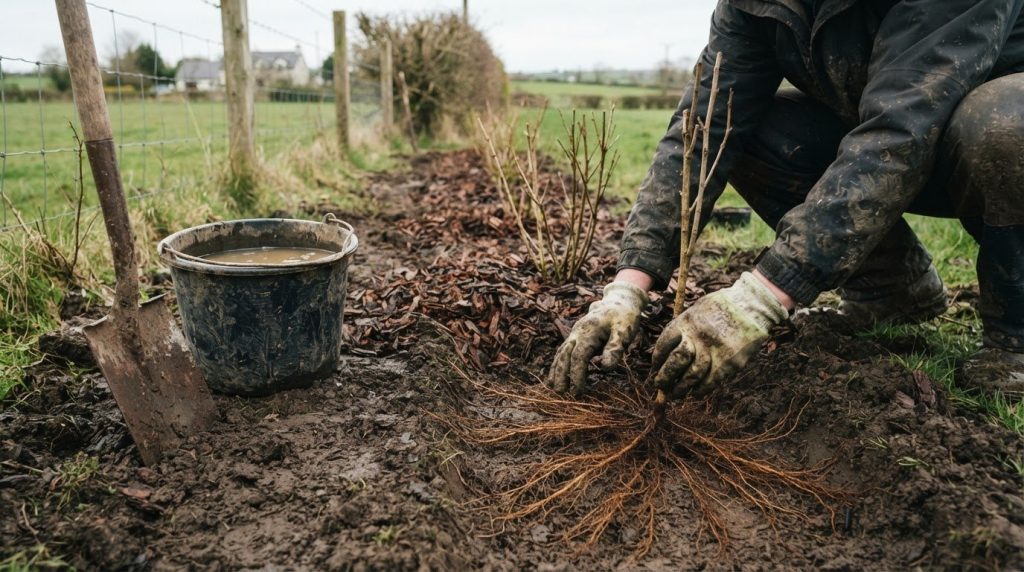
What if the ground is frozen when your bare-root trees arrive? Bare-root plants are generally planted during dormancy, from November to March, but you can heel them in if planting has to wait. If you’re wondering how long bare-root plants take to establish, bare-root perennials often need a year to establish before making a strong impression.
Plant trees as soon as possible after delivery. The Department of Agriculture, Food and the Marine advises prompt planting, and roots must not be allowed to dry out. If the soil is frozen or the planting spot is not ready, heeling in protects the roots until you can plant.
This guide covers when to plant, how to protect bare-root plants if you can’t plant straight away, and how to care for trees and perennials as they establish. It also explains how planting conditions affect progress, so you can plan practical next steps.
Key Takeaways
- Plan bare-root planting for the dormant season, and learn what to do if the ground or your schedule delays planting.
- Understand the difference between a plant beginning to emerge and becoming established in its new position.
- Use watering, mulch and weed control to support roots as they settle in.
- See what to consider when planting bare-root trees, from protecting roots before planting to choosing the right planting time.
How long bare-root perennials take to establish
Bare-root perennials often need a year to establish before making a strong impression. Shrubs and hedging plants establish as their roots grow into the surrounding soil. The pace depends on planting conditions, moisture and how well the roots are protected.
- Allow time for shoots to appear. Iowa State University Extension and Outreach says a bare-root perennial takes 2 to 4 weeks to emerge, depending on weather and soil conditions. Emergence is an early sign of growth, not proof that the plant is fully established. Allow the root system time to settle before expecting strong height or abundant colour.
- Look for steady growth and secure roots. New leaves and stems show that a perennial is growing, while resistance to a gentle tug suggests its roots are anchoring in the soil. For potted perennials, roots emerging from the drainage hole and compost holding together when lifted indicate readiness to move. These signs matter more than height alone.
- Keep roots moist, not waterlogged. Water whenever the soil feels dry while potted perennials grow on. Bare-root plants can struggle if their roots dry out, planting is delayed without protection, or the soil stays too wet. Weather, soil condition and root care all affect establishment, so give the root system consistent moisture without leaving it in saturated ground.
- Plant at the right time for the plant. Bare-root perennials can be planted on arrival in spring or autumn. If starting one in a pot, most can grow on for 2 to 5 months before moving to a border, depending on plant type, planting time and pot size. Plant out in late spring or early summer once it is in full growth.
- Divide established clumps at the right point. Divide perennials in late autumn, or in early spring if autumn has passed. After the first year, established plants can return with around twice the impact. Give divided sections room to develop, then water them as they settle into their new position.
Watering and mulching after planting
After planting, water enough to settle the soil around the roots. Then keep moisture consistent, manage weeds and follow the fertiliser instructions as the plants move from dormancy into active growth.
-
Water plants after planting
Water each plant thoroughly after planting so moisture reaches the root system, not just the soil surface. In dry conditions, water well every 2-3 days rather than giving a light splash daily. During dry summer weather, a guide is 30-50 litres per square metre per week. In hot summers or dry, windy spring weather, water thoroughly if rain has not fallen for more than a couple of days.
For a large shrub or tree, shape a low ridge of soil around the planting area to direct water towards the roots. Check that water soaks into the ground. If it runs away, reshape the basin so moisture reaches the root zone.
-
Control weeds and apply mulch
Keep the planting area clear of weeds, particularly during the first 2-3 years of establishment. Weeds compete with a young plant for water and nutrients, so remove them before they spread across the soil around a new tree or shrub. Take care not to disturb the plant’s roots while clearing the ground.
Apply a 2-inch (5 cm) layer of mulch around the plant, leaving a clear gap around the stems. This helps cover bare soil and retain moisture, but mulch piled against the stem can trap dampness there. Recheck the layer as it settles, and keep the stem gap open.
-
Feed and maintain the planting area
Apply blood, fish and bone fertiliser around the planting hole to support root growth, following the product directions. Keep it away from stems. Leave mulch in place as the plant grows, topping it up if bare ground reappears and maintaining a clear space around each stem.
Where a planting plan includes ground cover plants, allow for their spread and keep the immediate root area clear while a newly planted tree establishes.
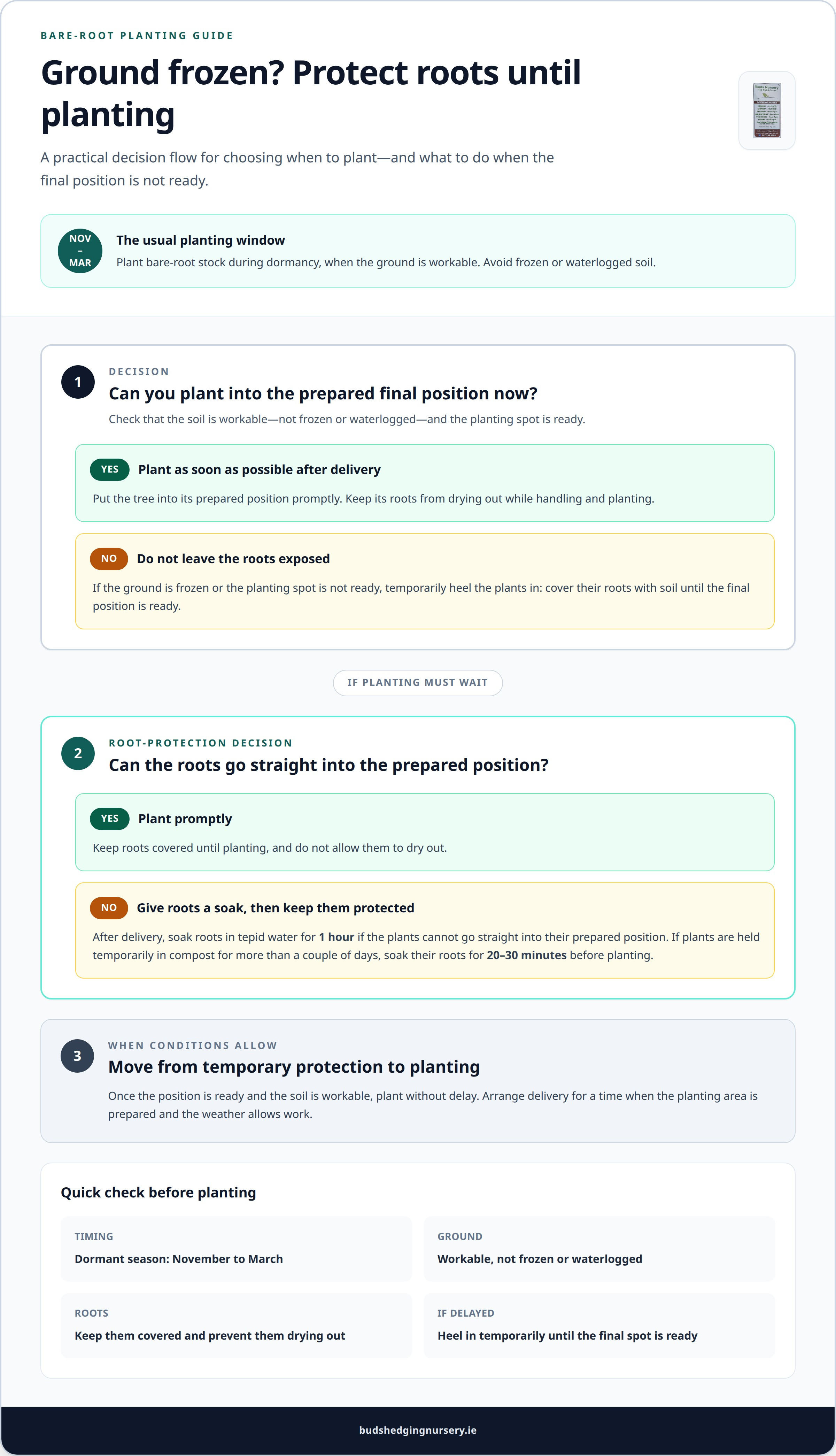
Bare-root planting season
In Ireland, plant bare-root stock during dormancy when the ground is workable. A suitable position and planting conditions give roots time to settle before active growth begins.
- Choose the dormant season. November to March is the ideal time to plant bare-root plants. They are grown in open ground, then lifted for despatch and planting during dormancy. With growth paused, plants can be moved before spring growth starts. Use this season to plan the position and prepare the ground for each variety.
- Prepare the position before plants arrive. Clear weeds and make sure the soil is workable, not frozen or waterlogged. Prepare planting holes ahead of delivery so roots can go into the ground straight away. A bare-root tree should be planted as soon as possible after delivery, according to the Department of Agriculture, Food and the Marine.
- Match planting to the weather. A mild, calm spell makes handling and planting easier than frozen ground or drying wind. Avoid leaving roots exposed while waiting for conditions to improve. If the soil is frozen and planting must wait, heel the plants in temporarily, covering their roots with soil until the final position is ready.
- Protect roots during any delay. Keep roots from drying out between delivery and planting. If bare-root plants cannot go straight into their prepared position, soak their roots in tepid water for an hour after delivery. Plants held temporarily in compost for more than a couple of days need their roots soaked for 20-30 minutes before planting.
- Use seasonal timing to organise the job. Arrange delivery for a point when the planting area is ready and weather allows work. Check that each plant’s roots are covered promptly, then plant without leaving them exposed. If several varieties are involved, group them by their final position before starting, so each can be planted and watered in sequence.
Planting bare-root trees
Bare-root trees establish as their roots grow into the surrounding soil. Smaller transplants generally settle faster than larger ones, but progress also depends on the tree’s size, planting position and aftercare. New foliage alone is not a reliable sign that the roots have fully established.
- Prepare a suitable planting hole. Make it no deeper than the roots and ideally 2-3 times the root system’s diameter. Spread the roots naturally, without bending them upwards, then backfill and firm the soil around them. For sticky clay that lies wet, the backfill can include about 25% by volume of compost and sharp sand or lime-free coarse grit.
- Plant promptly and protect the roots. Bare-root trees should be planted as soon as possible after delivery, according to the Department of Agriculture, Food and the Marine. Keep roots from drying out while preparing the position. If planting must wait because the ground is frozen, heel the tree in temporarily rather than leaving its roots exposed.
- Choose tree size with establishment in mind. Smaller transplants have a more balanced root-to-stem ratio and establish quicker than larger ones. Replanting larger trees results in the loss of over 50% of their original root mass, so choose the final border or hedging position carefully. Avoid moving the tree again once planted.
- Stake only where needed. Trees below 120 cm do not need staking when planted. For a taller tree, use a stake that allows some trunk movement, because movement stimulates root growth. Check ties in May and September, loosening them if they begin to constrict the stem. Stakes can be removed after 2 growing seasons.
- Judge progress by growth, not flowers alone. New foliage in spring shows the tree is growing, but root establishment takes longer than the first flush of leaves or flowers. Keep the planting area weed-free and water through dry spells, especially while the root system is spreading. For a suitable planting choice, browse bare-root trees before deciding on position and size.
Buds Nursery Cavan: Bare Root Trees
Buds Nursery Cavan offers bare-root trees for gardeners planning a planting project. They’re a practical option when you can prepare the planting position and protect the roots until they go into the ground.
For a hedge, Portuguese Laurel, Cherry Laurel and Golden Privet are among the plant options available. Consider the space, purpose and final position before choosing, then plan planting for the bare-root season. Prompt planting and steady aftercare help give roots the conditions they need to establish.
If you’re deciding which bare-root trees or hedge plants suit your garden, contact Buds Nursery Cavan to discuss your planting plans.
Plan your next planting with confidence
Knowing how long bare-root plants take to establish helps set realistic expectations. Next, choose plants suited to the space and purpose: a hedge, a sheltered boundary and a mixed garden border each need a different planting plan. Consider the position, soil and appearance you want as the plants mature.
For a hedge, consider Portuguese Laurel, Cherry Laurel and Golden Privet. Check how each option fits your intended layout before choosing. A clear plan makes it easier to prepare the ground and care for young plants after planting.
Contact Buds Nursery Cavan to discuss your bare-root planting plans. A practical choice now can give your garden a sound start for the seasons ahead.
Frequently Asked Questions
What if you can’t plant immediately?
Heel the plants into soil if frozen ground or a delay prevents planting. Cover the roots completely and keep them from drying out while they wait. If you temporarily hold them in compost for more than a couple of days, soak the roots for 20-30 minutes before planting. For a short delay after delivery, roots can be soaked in tepid water for an hour.
How long do bare-root plants take to establish after planting?
Establishment time depends on the plant, its roots and growing conditions. A bare-root perennial may take a year to establish fully, while a tree’s progress depends on its size, soil and aftercare. Look for steady growth and signs that the plant is anchoring, rather than judging success by the first leaves alone. Keeping roots from drying out gives plants a better start.
How long do bare-root roses and perennials take to establish?
Bare-root roses should establish in time to flower the following summer. Bare-root perennials often take a year to establish before making a strong impression. Their first shoots may appear much sooner: Iowa State University Extension and Outreach says emergence takes 2 to 4 weeks, depending on weather and soil conditions. Treat emergence as an early growth sign, not full establishment.
How often should you water bare-root plants during establishment?
In dry conditions, water thoroughly every 2-3 days rather than giving a light splash each day. During dry summer weather, a guide is 30-50 litres per square metre per week. Adjust to rainfall and the soil: the aim is to reach the root zone without leaving it waterlogged. Pay particular attention during hot weather or dry, windy spring conditions.
When is the best time to plant bare-root plants in Ireland?
In Ireland, November to March is the usual planting period for bare-root plants. They are lifted and planted during dormancy, before active growth resumes. Choose a spell when the ground is workable and prepare each planting position in advance. If frost prevents planting, protect the roots temporarily rather than leaving them exposed to drying weather.