

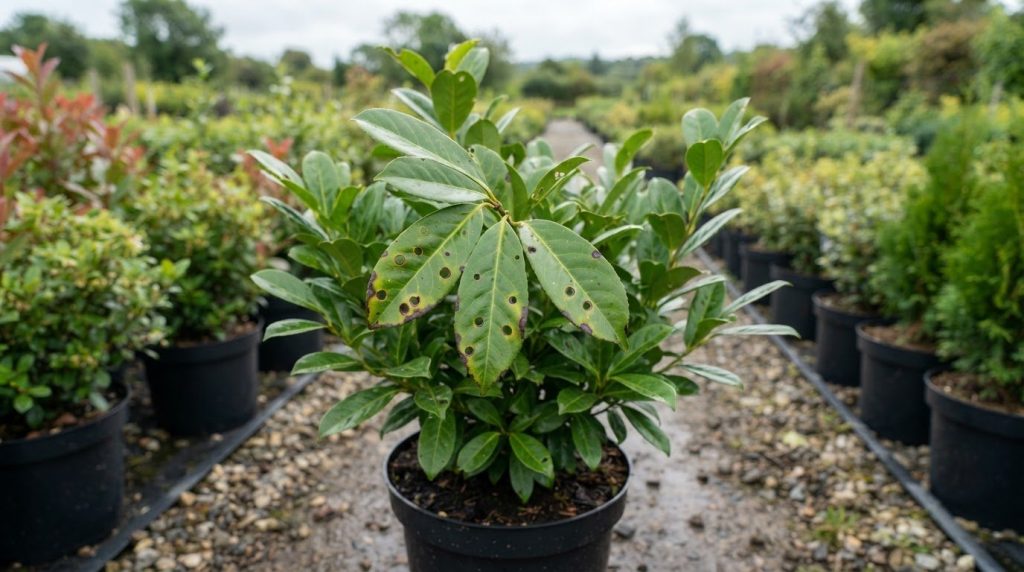
A hedge with damaged leaves is not necessarily beyond saving. Common problems with cherry laurel, including holes, brown edges and leaf drop, can have different causes. A hedge may recover if its roots and stems remain healthy. Newly planted laurels can produce fresh leaves in late spring or early summer once their roots are established, provided they receive enough water and grow in suitably prepared soil.
It’s understandable to worry when a dense hedge starts looking thin or scorched. The pattern of damage matters: holes may indicate leaf spot, ragged edges can follow pruning or pest activity, and brown margins may reflect dry soil, frost or wind. Treating every mark in the same way can miss the underlying cause.
This guide explains how to identify common signs, what may cause them and what recovery can look like. It also covers the growing conditions that support healthy growth and how the pattern of damage can help you decide whether the hedge needs time or a change in care.
Key Takeaways
- Look at the shape of leaf damage: clean holes, ragged edges and U-shaped notches can point to different causes.
- Spotting that develops into holes may be shot hole disease, which is more common in damp conditions and dense foliage.
- Frost-damaged leaves often fall as new growth appears in late spring; soft shoots blackened by spring frost can produce another flush.
- Water at the base and allow air to circulate through the hedge to help reduce leaf wetness and disease risk.
Torn or brown leaf edges after pruning
Torn, brown margins often follow trimming with hedge trimmers, which can slice cherry laurel leaves rather than cut cleanly through stems. The damaged edges then dry and turn brown. This is pruning damage, not necessarily disease. For a cleaner finish, use sharp secateurs to cut individual stems, particularly when a formal hedge is not essential. Check the plants through the season and note whether damage is limited to recently trimmed growth or continues elsewhere.
Adult vine weevils leave distinctive U-shaped notches along leaf edges, while their larvae feed on roots. Root damage can cause plants to wilt or struggle to establish. Scale insects are another possible pest: look for small, fixed, scale-like bumps on stems or leaves. If you see notches, assess the plant as a whole, since root feeding can cause symptoms beyond the visible leaf damage.
Yellowing and leaf drop can have several causes. Dry soil, dull or drooping leaves, brown tips and wilting new shoots suggest insufficient water. Yellow leaves, wilting despite damp soil or progressive shoot dieback may instead indicate poor drainage or waterlogging. Check soil moisture and drainage before changing your care routine. Leaf spot fungi and powdery mildew can also affect cherry laurel from spring to autumn. Powdery mildew may leave a white coating, while leaf spot can develop into shot hole damage.
In Ireland, prune cherry laurel in late spring or early summer, after flowering. Use sharp secateurs to cut stems rather than hedge trimmers that tear leaves, and wear gloves and protective clothing because the leaves and branches contain compounds that can irritate skin. If leaf disease is present, avoid pruning when foliage is wet. Good air circulation and watering at the base help limit leaf wetness. These checks can help distinguish rough pruning from pests, disease and growing-condition stress.
Laurel shot hole
Shot hole describes a leaf symptom, not a single cause. On cherry laurel, leaf spot fungi such as Stigmina carpophila and Eupropolella britannica can create brown spots whose centres fall out, leaving holes. Damp conditions and dense foliage can help disease spread, so mature, crowded growth may show more damage.
Cherry shot hole can also be mistaken for insect chewing. Look closely: fungal leaf spots usually begin as distinct brown patches before their centres fall out. Powdery mildew looks different, often starting with a white coating; affected tissue may later turn brown and fall away. Bacterial shothole can produce water-soaked lesions that enlarge, turn tan and develop yellow halos. These signs help distinguish disease from feeding damage.
Reduce prolonged leaf wetness by watering at the base rather than over the foliage. Allow air to move through the hedge and avoid heavy pruning, which can stress plants. If affected leaves make the hedge unsightly, remove the worst growth during dry weather. Clean tools regularly and do not compost infected cuttings. New growth may emerge without symptoms when conditions become less favourable to disease.
For an evergreen privacy hedge in Ireland, Portuguese laurel is an alternative to cherry laurel. Both provide screening, but your choice should also suit the site’s soil and growing conditions.
Cherry laurel leaves and branches contain toxic compounds and can irritate skin. Keep prunings away from people, dogs, cats and livestock, and wear gloves when handling cuttings.
Can a damaged Laurel hedge recover?
Cherry laurel growth depends on variety and conditions; ‘Rotundifolia’ can grow up to 60cm per year. In Ireland, planting and maintenance costs depend on plant size, hedge length, ground preparation and ongoing pruning.
Recovery depends on whether damage is limited to leaves or has affected shoots and roots. Seasonal growth can replace damaged foliage if the root system remains healthy.
Frost and winter damage
Frost can brown established laurel leaves in autumn or winter, especially after very cold winds without protective snow cover. These leaves usually fall as new growth appears in late spring, so avoid cutting back healthy stems too soon.
Spring frost can blacken and wither soft new shoots, but plants should produce another flush fairly quickly. Once frost-damaged shoots are clearly dead, prune them back to healthy wood. Removing damaged material helps prevent fungal diseases from taking hold. New plants may also lose some or all of their leaves after harsh winter weather or a rapid spring warm-up.
Vine weevil damage and control
Adult vine weevils make U-shaped notches along leaf edges, while their larvae feed on roots. Root feeding can leave plants wilting or struggling to establish, even when leaf damage looks limited.
Watch for continuing decline and inspect the roots if a plant fails to establish. Biological controls, such as nematodes, can be used against vine weevils; follow the product directions. Don’t assume leaf notches alone prove root damage: adult feeding marks appear on leaves, while larvae affect the roots.
Rabbit and slug damage
Rabbits can browse young Laurel shoots before a hedge becomes established. Chicken-wire fencing can protect young plants until they have grown beyond easy reach; a mature Common Laurel hedge is less accessible to rabbits once it reaches 3-4 ft.
Slugs can also damage young plants by feeding on tender leaves and shoots, leaving irregular holes or ragged edges. Check new growth and nearby sheltered, damp spots for signs of feeding, then compare the damage with symptoms of leaf disease. Protecting vulnerable young growth gives plants more opportunity to establish and replace damaged foliage during the growing season.

What causes holes in Laurel leaves?
Brown or scorched leaves can follow drought, frost, wind scorch or salt exposure. In an Irish garden, dry soil may cause brown tips and margins, while exposed hedges can suffer wind damage. Check whether symptoms affect the windward side, follow a dry spell or appear across the whole plant. That pattern helps separate weather stress from leaf disease.
Yellow leaves can point to soil or nutrient problems. Waterlogged or poorly drained ground can make cherry laurel leaves yellow and fall; compacted soil can also restrict root growth. A lack of nutrients, especially nitrogen, may cause yellowing, while iron deficiency is more commonly linked with chalky soil. Check soil moisture and drainage before adding fertiliser, as extra feeding won’t correct waterlogged roots.
For watering, use the soil and rainfall as a guide rather than following a fixed calendar. Water at the base when the soil feels dry; keep soil evenly moist during the first two years of establishment. Water thoroughly when rainfall is less than 1 inch per week. For feeding, slow-release fertiliser containing bone meal is recommended; apply it according to its label.
Yellowing and leaf drop can follow prolonged wet soil, especially in a low or poorly drained part of a hedge. If the ground stays saturated, address drainage rather than increasing watering. Dull, drooping leaves and dry, crumbly soil around the original root ball point instead to drought stress. These signs help you judge whether the ground needs better drainage or deeper watering.
If powdery mildew leaves a white coating or leaf spots become unsightly, remove affected leaves or growth during dry weather. Avoid heavy pruning, which can stress evergreen plants. Clear cuttings away from the hedge and clean tools before using them on healthy plants. A measured response preserves healthy foliage while addressing visible damage.
Buds Nursery Cavan: Cherry Laurel
Buds Nursery Cavan sells Cherry Laurel for gardeners planning a new hedge or replacing plants that have declined. Choosing suitable plants is a practical next step when damage is widespread or the existing hedge no longer provides the screening you need.
For an alternative evergreen hedge, Portuguese Laurel and Golden Privet are also available. Fruit trees offer a different planting option when screening is not the main requirement. Consider the site’s soil, drainage and available space when deciding what to plant, as these conditions affect establishment and future growth.
If you’re planning a replacement, contact Buds Nursery Cavan to discuss the planting options.
Plan the next step for your hedge
Use the condition of the whole hedge, not one marked leaf, to guide your decision. A few damaged leaves may call for a change in care, while widespread decline or bare sections may mean it is time to consider replacement planting. Note where symptoms appear and how they change through the season to make a more informed choice.
Common problems with cherry laurel can have different causes, so matching your response to the damage is more useful than treating every symptom alike. If you’re planning a new hedge, Buds Nursery Cavan sells Cherry Laurel, Portuguese Laurel and Golden Privet as planting options.
Contact Buds Nursery Cavan for advice about your hedge and the planting options that may suit your garden. A considered next step can help you move towards a healthier, more suitable hedge.
Frequently Asked Questions
What are laurel leaf diseases?
Laurel leaf diseases are infections that affect foliage, causing spots, coatings or holes. Common problems with cherry laurel include leaf spot, powdery mildew and shot hole symptoms. Their appearance can help distinguish them: powdery mildew leaves a pale coating, while fungal spots may leave holes as their centres fall out. Check the pattern across the hedge, since insect feeding can look similar.
Why are Laurel leaves turning yellow?
Yellow leaves can result from roots being too wet or dry, compacted soil or a nutrient shortage. Compare affected plants with nearby healthy ones: yellowing concentrated in a low section may point to drainage, while dry, curled foliage across an exposed area suggests moisture stress. A lack of nitrogen can also cause yellowing, so consider soil conditions before adding fertiliser.
Why are my Laurel leaves brown after winter?
Brown leaves after winter often reflect frost or cold wind damage, particularly on exposed sides. Check whether stems beneath them remain firm and green before assuming the plant has died. Damaged leaves can fall as growth resumes. If shoots are dead, prune them back to healthy wood once the extent of frost injury is clear, rather than cutting back healthy growth unnecessarily.
What are the most common diseases affecting cherry laurel in Ireland?
Leaf spot, powdery mildew and shot hole are common diseases affecting cherry laurel. Leaf spot fungi, including Stigmina carpophila and Eupropolella britannica, can leave brown marks that develop into holes. Powdery mildew produces a white coating, while bacterial shothole can cause water-soaked lesions with yellow halos. Damp, crowded foliage favours leaf disease.
Why are cherry laurel leaves turning yellow, brown, or black?
The colour and location of the damage offer useful clues. Yellowing can relate to wet soil, restricted roots or nutrient shortage; brown margins may follow drought, wind, frost or salt exposure. Blackened young shoots can result from spring frost. If damage is limited to the roadside edge, exposure may be more likely than a root problem affecting the whole plant.
What causes holes in cherry laurel leaves and how can shot-hole disease be treated?
Holes can form when leaf spot lesions dry and their centres fall out; insect feeding can look similar. Among the common problems with cherry laurel, shot hole is managed by reducing leaf wetness and removing affected growth in dry weather. Water at soil level, improve airflow through dense growth, clean pruning tools, and keep infected cuttings out of compost. Avoid heavy pruning, which can stress the plant.