

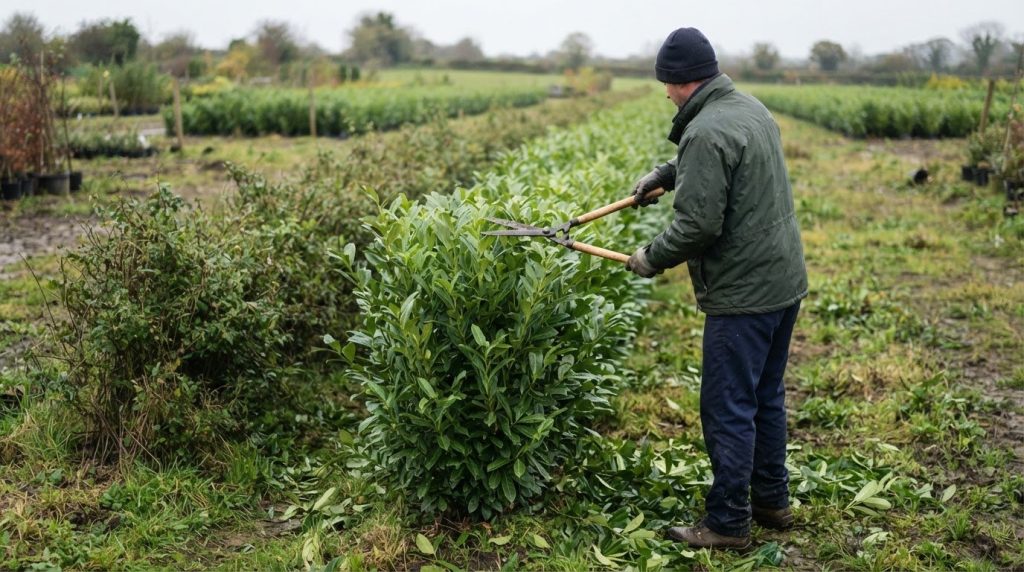
A hedge can be level at the top yet still thin out below. When shaping a formal hedge, angle the sides slightly inwards so light reaches the lower leaves, helping the hedge keep a full outline from top to bottom.
Regular trimming keeps a formal hedge neat, but the right method depends on the plant and the growth you’re cutting. Hand shears suit smaller hedges and soft growth; powered trimmers are easier to use on longer hedges, while thicker stems need secateurs or loppers.
This guide explains how to choose and use trimming tools, time cuts for popular hedging plants in Ireland, and restore a hedge that has outgrown its intended size. You’ll also learn how to set a straight top, taper the sides and avoid cutting into growth that may not regrow. The aim is a clean, manageable shape that suits the plant and lets light reach the whole hedge.
Key Takeaways
- Match your tool to the hedge: use shears for soft growth and secateurs or loppers for thicker stems.
- Choose pruning times around the plant’s growth and flowering pattern, and keep Ireland’s hedge-cutting restrictions in mind.
- Restore an overgrown hedge gradually, taking care not to cut into bare wood that may not regrow.
- Slope the sides slightly inwards towards the top so light reaches the lower leaves and helps keep the hedge dense.
Choosing hedge-trimming tools
For hedges beside roads or property boundaries, the Irish rule set out here concerns cutting vegetation on uncultivated land. Under section 40, cutting vegetation on uncultivated land from 15 April to 31 August is an offence, except for destruction in the ordinary course of agriculture or forestry on or in a hedge or ditch, according to the Office of the Attorney General.
- Match the tool to the growth. Use hand shears for a small garden hedge or soft new growth. Powered hedge trimmers are easier to use across a larger, straight run. Choose by hedge size and species, not simply by preference.
- Switch tools for thicker stems. Cut stems thicker than a few millimetres with secateurs or loppers, rather than forcing them through shears. This gives better control over individual cuts and avoids tearing woody growth.
- Prepare protective equipment. Wear eye protection, gloves and sturdy footwear to guard against clippings and sharp branches. If using a powered trimmer, follow its instructions and use hearing protection where the equipment requires it.
- Keep powered trimming within reach. Don’t use a power tool above shoulder height. Work from stable ground, keep both hands on the trimmer as designed, and avoid leaning or stretching to reach the top. A ladder can make balance and tool control harder; don’t operate a powered trimmer from one.
- Clear as you go. Move loose clippings away from the cutting line and collect them after trimming. Clearing the hedge top helps prevent debris from covering the new outline, while a tidy base makes it easier to spot missed growth.
- Care for the hedge after cutting. Water during drought conditions, particularly where the soil around the roots has dried. Mulch the base with organic matter in late winter or early spring. Don’t apply feed automatically; consider the species and growing conditions before adding it.
Pruning times for popular hedging plants
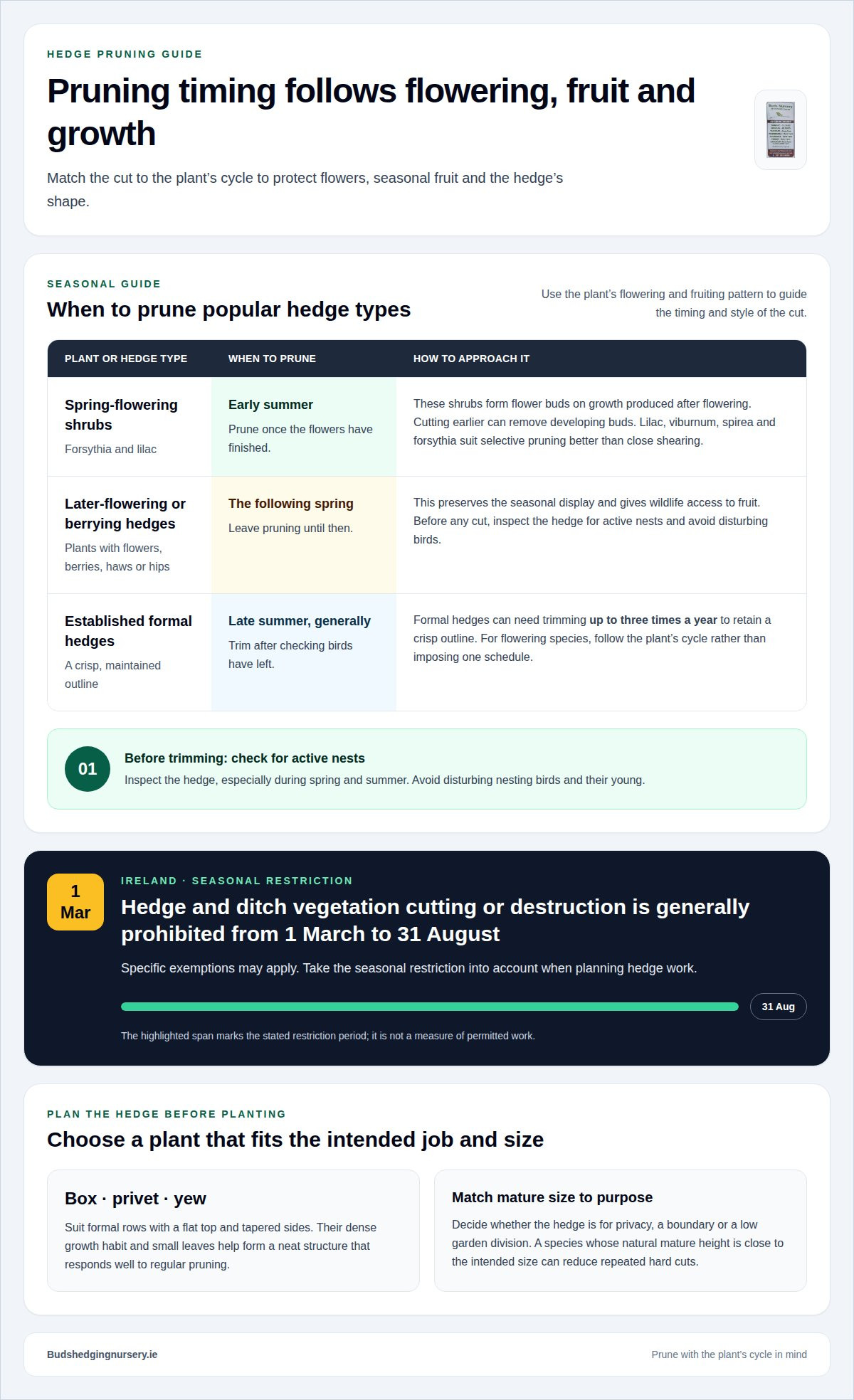
Plan hedge trimming around the plant’s flowering, growth habit and purpose. In Ireland, hedge and ditch vegetation cutting or destruction is generally prohibited from 1 March to 31 August, subject to specific exemptions.
- Choose the shape and species before planting. Box, privet and yew suit formal rows with a flat top and tapered sides. Check each plant’s mature size against your intended hedge height. A dense growth habit and small leaves help form a neat structure that responds well to regular pruning.
- Match the plant to the hedge’s purpose. Decide whether you need privacy, a boundary or a low garden division before selecting plants. Choose a species whose natural mature height is close to the intended size. This reduces repeated hard cuts and helps avoid forcing a vigorous plant into a small space.
- Time spring-flowering shrubs after bloom. Forsythia and lilac form their flower buds on growth produced after flowering. Prune them in early summer once the display has finished, rather than cutting off developing buds beforehand. Lilac, viburnum, spirea and forsythia suit selective pruning better than close shearing.
- Leave later-flowering and berrying plants until spring. Hedges with later flowers, berries, haws or hips are best pruned the following spring. This timing preserves their seasonal display and gives wildlife access to fruit. Before any cut, inspect the hedge for active nests and avoid disturbing birds.
- Set a routine for established formal hedges. Formal hedges can need trimming up to three times a year to retain a crisp outline, but Ireland’s seasonal restrictions govern when work may happen. Established hedges are generally trimmed in late summer after checking birds have left. For flowering species, follow the plant’s cycle rather than imposing one schedule.
Restorative pruning for overgrown formal hedges
Cutting during Ireland’s bird-nesting period risks disturbing active nests and harming nesting birds. Hedge and ditch vegetation cutting or destruction is generally prohibited from 1 March to 31 August, subject to specific exemptions.
-
Assess the overgrown hedge
Before removing growth, check the hedge’s species, density and intended height. For rejuvenation, this approach is suitable for a hedge with at least one multi-stem every half metre. Avoid cutting everything back at once: remove no more than one-third of a shrub’s total volume in a single year. If the hedge is sparse or bare inside, first assess where living growth remains.
-
Plan pruning around growth habits and seasons
Set trimming frequency according to growth rather than following one schedule for every boundary. Most deciduous and evergreen hedges need pruning two to four times during the growing season to maintain their shape; faster-growing shrubs may need more frequent attention. Fertile soil, moisture and warm weather can increase growth. Avoid pruning in hot, dry weather, and finish well before the first frost date.
-
Prune large-leaved evergreen hedges
Use secateurs or loppers on large-leaved evergreen shrubs, rather than hedge shears. A trimmer can leave cut leaf surfaces that look untidy, particularly across a formal hedge. Make selective cuts through individual stems to preserve the foliage’s appearance. For example, if reducing a hedge from 6 feet to 4 feet, plan the change over at least two years, aiming for about 4.5 to 5 feet in the first year.
-
Consider nesting-season cutting risks
Inspect the hedge carefully for nests before any trimming, especially during spring and summer. Disturbing active nests can harm birds and their young; in Ireland, vegetation cutting or destruction in hedges is generally restricted from 1 March to 31 August, subject to exemptions. Where restoration can wait, schedule substantial cutting outside this period. This also gives you time to plan the work around the shrub’s regrowth.
Tapering formal hedges to let light reach lower leaves
When shaping a formal hedge, decide on its height and outline before you start trimming. Keep the top level and the base slightly wider, allowing light to reach the lower leaves and encouraging dense growth from the ground up.
-
Set the formal hedge shape
Choose a straight top or a softer, rounded outline before cutting. For a level finish, use a guide line as a visual reference along the hedge. A low hedge under about 1 m high can have vertical sides, but taller growth needs a more deliberate outline. Avoid making a mature hedge rectangular: upper branches can shade lower leaves, leaving the bottom sparse as the hedge grows.
-
Taper the sides to let light reach lower leaves
Trim each side so it slopes gently inwards towards the top. This leaves the hedge wider at ground level, allowing sunlight to reach lower leaves rather than being blocked by upper growth. Keep the overall width to no more than 60 cm, with the bottom slightly wider than the top. Work upwards from the base and check the line as you go. A narrower top can also hold less snow, reducing pressure on branches.
-
Shape the top and sides
Start with the sides, then level the top against your guide line. Keep the blades parallel to each side’s slope, and step back regularly to spot uneven sections. On taller hedges, form a chamfer where the angled sides meet the flat top; a 45° slope gives a clear transition. This method of shaping a formal hedge keeps the outline practical as well as neat. Remove clippings from the top so light reaches cut stems.
Planning a border beneath the hedge? Browse ground cover plants for planting around its base.
Buds Nursery Cavan
Buds Nursery Cavan can help when you’re planning a new hedge or replacing plants that no longer suit its intended shape. Choosing a species with a mature size and growth habit suited to your garden can reduce the need for repeated hard pruning and make a formal outline easier to maintain.
Buds Nursery Cavan sells hedging plants including Portuguese Laurel, Cherry Laurel and Golden Privet. Compare each plant’s growth habit with the height and density you want, then plan the planting around the hedge’s purpose and available space. These choices matter before the first trim: regular cutting can maintain a shape, but not make every species suitable for every hedge.
For help choosing plants for your hedge, contact Buds Nursery Cavan.
Plan the next stage of your hedge
A formal hedge is easier to manage when its mature size, position and intended outline work together. Before planting or replacing a section, consider how much space the hedge has to grow and how often you can maintain its shape. Portuguese Laurel, Cherry Laurel and Golden Privet are among the options to consider; the right choice depends on the garden and the role the hedge needs to serve.
For an existing hedge, take a measured approach. Set a clear outline, preserve healthy growth and allow time for gradual recovery if substantial reshaping is needed. For a new boundary, choosing a suitable plant from the outset gives you a sound starting point for future trimming.
Contact Buds Nursery Cavan for hedge advice if you’re deciding which plants may suit your garden. A considered choice now can make the hedge simpler to shape and maintain as it grows.
Frequently Asked Questions
When is the best time to trim formal hedges in Ireland?
For routine hedge maintenance in Ireland, plan trimming from 1 September to 28 February. Cutting vegetation on uncultivated land is generally prohibited from 1 March to 31 August, subject to specific exemptions. The plant’s flowering cycle also matters: spring-flowering shrubs are usually pruned after flowering, while berrying plants are best left until the following spring.
How often should a formal hedge be trimmed?
A formal hedge may need trimming up to three times a year to keep its outline neat. The actual frequency depends on the species, growing conditions and how crisp a finish you want. Privet grows quickly, while slower-growing plants may need fewer cuts. Keep regular trims light rather than waiting until the hedge has grown well beyond its intended shape.
What tools are best for shaping a formal hedge?
Choose tools to suit the hedge’s size and leaf type. Hand shears work well for small areas and soft growth; a powered trimmer can cover long runs more easily. Use secateurs or loppers for thicker stems and large-leaved evergreens, where selective cuts give a tidier finish. Keep blades sharp and clear away debris so you can see the outline.
How do you make a formal hedge straight, level and even?
Use a taut string line to mark the top, then trim in short passes while checking the line from different angles. Tie the line about 1 cm below the desired height, allowing for the cut. Work along the sides in steady sections and step back to spot dips or bulges. Keep the base slightly wider than the top so lower growth receives light.
How much should you cut back an overgrown formal hedge?
Reduce an overgrown hedge gradually, removing no more than one-third of a shrub’s total volume in a single year. For example, reducing a hedge from 6 feet to 4 feet takes at least two years; set the first-year target at about 4.5 to 5 feet. Avoid cutting conifers such as arborvitae into bare central wood, where regrowth may not occur.
Which hedge plants are suitable for formal hedging in Ireland?
Box, privet and yew suit formal rows, while beech and hornbeam can also be shaped into structured hedges. Choose a species whose mature height and growth habit suit the space, so it won’t need constant correction. Buds Nursery Cavan sells Box, Green Privet, Green Beech, Hornbeam and Taxus baccata for gardeners considering a formal hedge.