

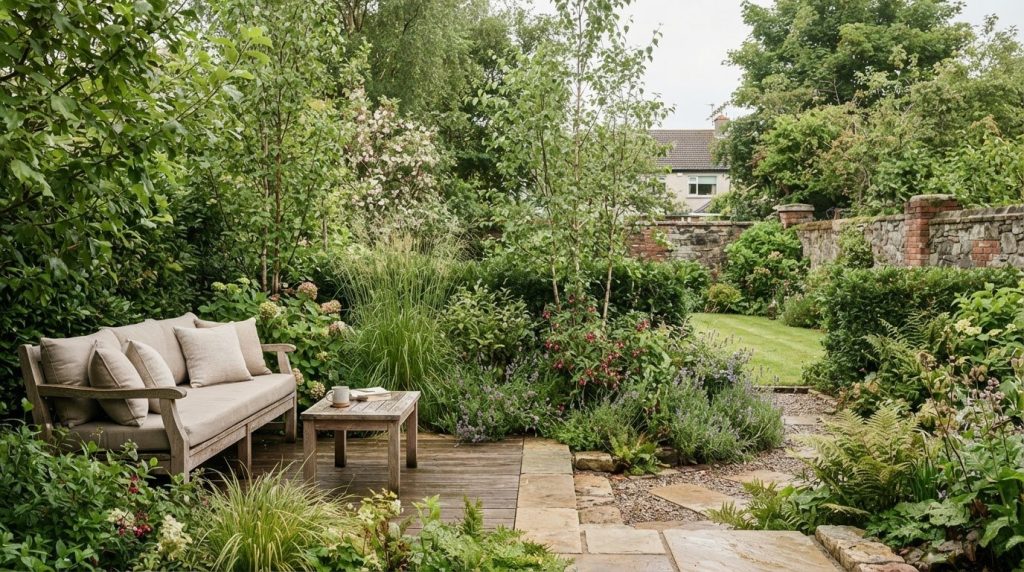
What if the most neighbour-friendly garden screen isn’t the tallest or densest one? If you feel overlooked beside the house or in your seating area, it’s natural to want more privacy. But a solid wall of greenery along the whole boundary may also affect light, views and the feel of the space next door. Good neighbour friendly garden screening starts with identifying where privacy is needed, then choosing a screen to suit.
A living screen doesn’t have to close off the garden. Carefully placed hedging or layered planting can soften a particular sightline while leaving other parts of the boundary more open. The right choice depends on your garden’s layout, the height and position of nearby windows, the space available for planting and how much ongoing care you can manage.
This guide compares hedging, mixed planting and planting alongside an existing structure. It also explains how to plan around light, views, access and maintenance as plants grow. The aim is a practical screen that gives you more privacy without unnecessarily closing off the garden next door.
Key Takeaways
- Identify the specific window, seating area or sightline you want to screen before covering a whole boundary.
- Plan neighbour friendly garden screening around planting depth, garden access and the coverage you actually need.
- Compare a single hedge, mixed shrubs and planting alongside an existing structure to find an approach that suits your space and upkeep preferences.
- Think about boundary conversations, pruning access and aftercare before planting, so the screen remains manageable as it grows.
- Use your coverage goal and maintenance capacity to narrow down the type of hedging and planting that suits your garden.
Neighbour-friendly garden screening: privacy without shutting out the next garden
Wanting privacy doesn’t mean you want to shut out the garden next door. An unbroken screen along a boundary can make a garden feel enclosed, even if the issue is just one overlooked chair or window. Start by identifying the view you want to soften, then place screening where it can address that view without unnecessarily closing off shared outlooks or reducing light.
Considerate garden screening provides privacy at the sightline that needs it, while taking account of light, views and shared boundary space. That is the practical principle behind neighbour friendly garden screening: solve the specific problem, rather than defaulting to the tallest or densest option.
Which parts of the garden need screening?
Map the areas you use and the views into them before choosing a screen. Include seating, a patio, bedroom windows and any part of the garden where you spend time. For instance, if you have wide garden-facing openings or bi-fold doors crafted by specialists like Ravenswood Joinery, you may want focused screening that preserves interior daylight while shielding the view inside. On a simple sketch, mark where you feel overlooked and trace the line of sight to its source. This helps you judge whether you need a screen along a boundary or just in one focused section.
Check the view from both seated and standing positions, and at different times of day. A sightline may be more noticeable at certain times because of changing light or how the garden is being used. Screening a view towards a patio might leave the rest of the boundary open, preserving light and a sense of space elsewhere. The wider principles of garden design also treat boundaries, planting and sunlight as connected elements, rather than separate decisions.
What makes a screen feel considerate?
Scale, density and placement all affect how a screen feels from both sides. A short, carefully positioned section may be enough to shelter a seating area. A more open arrangement can mark a boundary without creating a solid visual barrier. Decide how much of the view needs to be obscured, and whether setting the screen back within your garden would leave enough room for access and maintenance.
Before work near a shared boundary, have a calm conversation with your neighbour. Explain which view you’re trying to screen and where you’re considering planting. They may point out a window, path or valued outlook you hadn’t considered. Discussing the position and future pruning access can help prevent avoidable friction later.
Keep design decisions distinct from legal assumptions. Planting advice can help you plan a screen, but it doesn’t establish what boundary rights or planning requirements apply. Don’t rely on a presumed universal height limit. If a legal or planning question affects your plans in Ireland, consult current, relevant guidance before proceeding. For the planting itself, begin with the specific sightline and available space, then consider how the screen will look and be maintained as it grows.
How to plan a living garden screen around light, sightlines and space
A useful planting plan starts with the space you have, not a plant name. Work through the view, site conditions and coverage you want. This helps keep the screen proportionate, leaves room for access and gives you a clear basis for comparing options.
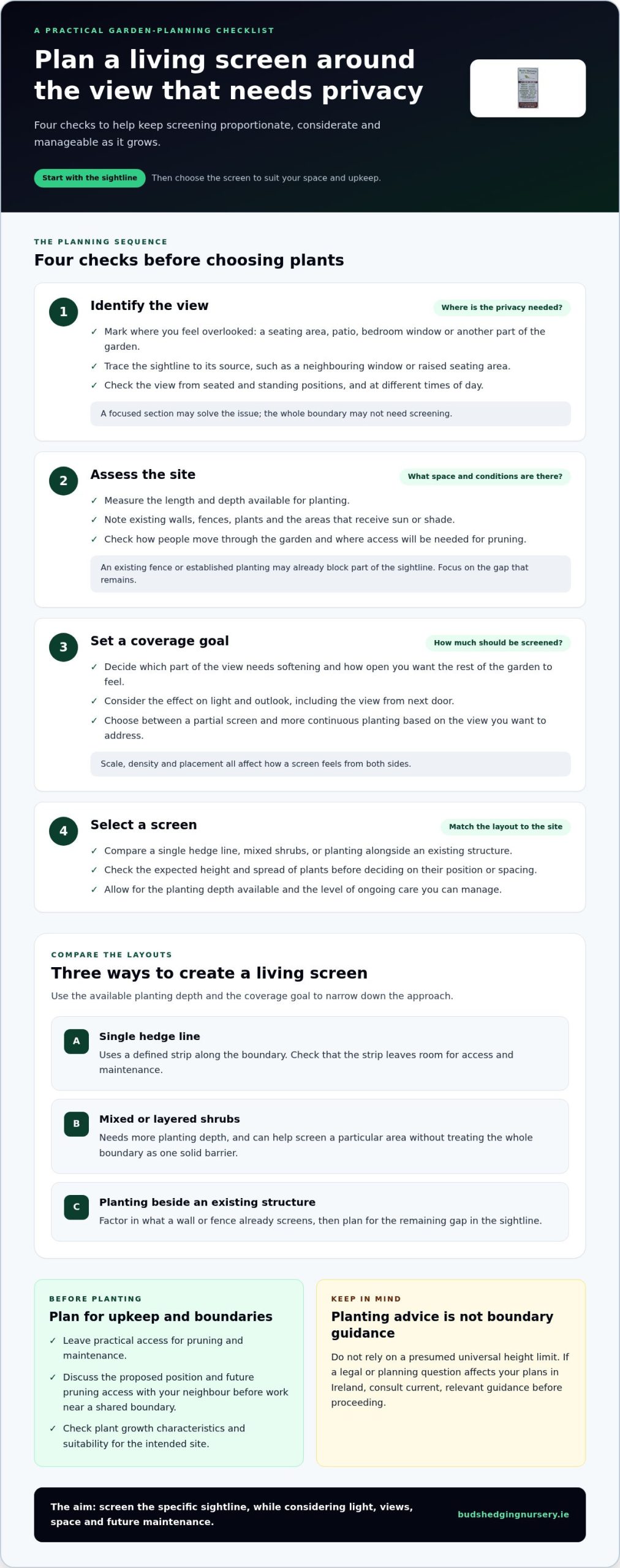
- Identify the view. Mark where you’re being overlooked and where the sightline starts, such as a neighbouring window or raised seating area. Note its height and direction rather than assuming the whole boundary needs covering.
- Assess the site. Measure the length and depth available for planting. Note existing walls, fences and plants, along with areas that receive sun or shade at different times. Check how people move through the garden and where you’ll need access for pruning.
- Set a coverage goal. Decide which part of the view needs softening and how open you want the rest of the garden to feel. A partial screen may be enough; a wider area might call for more continuous planting.
- Select a screen. Compare a single hedge line with mixed shrubs or a combination of planting and an existing structure. Consider how each approach fits the available depth and the level of upkeep you can manage.
Assess the view before choosing plants
Draw a simple plan showing the seating area, windows, boundary and existing features. A fence or established planting may already block part of the sightline, so focus on the gap that remains. Check the view from the places you use and at different times of day. This can help you avoid planting more than the problem requires.
Sunlight matters too. A new screen can change the light reaching nearby areas, depending on its position, form and growth. Consider the outlook from next door as well as your own. Before choosing plants, check their growth characteristics and how they may suit the intended site. Avoid assuming a particular plant will provide a set level of cover or have a predictable effect on light.
Match the screen to available space
A single hedge line uses a defined strip along the boundary. Layered shrubs need more planting depth, but can help screen a particular area without treating the whole edge as one solid barrier. Both layouts need room for maintenance. Check the expected spread and height of the plants you’re considering before deciding on their position or spacing.
For broader plant-selection considerations, see this privacy hedging buying guide. Once you’ve established your coverage goal and available space, explore hedging plants at Buds Nursery Cavan to compare living-screen options.
Living hedge or mixed planting: compare screening options before deciding
A living screen can take several forms. A single hedge creates a continuous planting line; mixed shrubs allow a more varied layout; and planting beside an existing structure can combine greenery with a defined barrier. The right fit depends on the space available, the view you need to screen and how enclosed you want the garden to feel. Use the comparison as a starting point for neighbour friendly garden screening, not as a guarantee of how a particular planting will perform.
| Approach | Coverage and space | Upkeep and garden feel |
|---|---|---|
| Single hedge | Can form a continuous screen where there’s a suitable strip of planting space. | Needs access for ongoing care. A continuous line may feel more enclosing than a broken or partial screen. |
| Mixed shrubs | Different positions can address selected sightlines, but the layout may need more planting depth. | Care varies with the plants chosen. A varied outline can feel less uniform, though it still needs room to grow and be maintained. |
| Planting with a structure | An existing fence or wall can provide a backdrop or part of the screen, reducing the need to cover every section with planting. | Consider how the combined screen affects light and outlook. Planting still needs access and care. |
These are layout differences, not fixed results. Coverage, spread and maintenance depend on the plant, its condition, position and care. Check reliable horticultural information for expected dimensions, growth habits and site suitability before choosing plants. Make sure the plan also leaves practical access along the boundary.
When might a hedge suit the screening goal?
A hedge may suit a boundary where there’s enough planting space for a continuous line and you’re prepared to maintain it. Compare the expected growth and dimensions of the hedging you’re considering with your garden conditions and coverage goal. A hedge is not an automatic fit for every garden, so factor in how much of the neighbouring outlook it may cover and the access needed for care.
When could layered planting help keep a garden open?
Varying the position of shrubs can break up a long, uniform screen and focus cover on a particular area. Check each plant’s growth, dimensions and screening characteristics, then consider how its placement affects the neighbour’s outlook. A mixed layout can still become dense, so allow for the space and maintenance it will need.
Before settling on either approach, compare the expected coverage with the amount of boundary you actually need to screen. That keeps the decision focused on your garden’s layout, rather than on a plant name alone.
Plant and maintain a garden screen with neighbours in mind
A considerate screen takes planning beyond choosing plants. Its position, future spread and maintenance all affect how it works for you and the person next door. Decide on the layout before planting, and make sure you can reach the screen for routine care without relying on access across a shared boundary.
Agree the approach and prepare the planting area
Before work near a shared boundary, explain what you plan to plant, where it will go and how you expect to manage it. A brief conversation can bring practical concerns to light, such as pruning access or the effect a screen may have on an established view. Agreeing on the intended position in advance can help avoid misunderstandings once planting begins.
Measure the planting area and mark its edges. Include the space needed to reach and care for plants as they grow, rather than planning only for planting day. Prepare the ground to suit the chosen plants and site, taking account of existing surfaces and planting. If your plans raise a legal or planning question, consult current official Irish guidance rather than relying on a general rule or advice intended for another jurisdiction.
Plan for ongoing care and plant sourcing
Pruning is part of keeping a living screen within its intended space. Check the recommended care and pruning timing for each chosen plant, and monitor its growth so you can address unwanted spread before it becomes difficult to manage. Don’t assume that one pruning schedule suits every plant. If the screen is close to a boundary, plan how you’ll reach both sides that need attention without stepping onto your neighbour’s property.
Planting is only the start. Follow plant-specific guidance for planting and establishment, and keep an eye on the plants as they settle in. Buds Nursery offers pot sizes from 2 litre to 45 litre. Delivery service is available pending quantity and site location.
Use this checklist before you begin:
- Position: Have you marked the planting area and considered its relationship to the boundary?
- Access: Can you reach the screen for routine care as it grows?
- Care: Have you checked pruning timing and ongoing needs for the plants selected?
- Preparation: Is the ground ready for the chosen plants and the conditions on site?
- Neighbour discussion: Have you shared the intended layout and maintenance approach?
- Rules: Have you checked current official guidance if legal or planning questions apply?
Working through these points helps turn neighbour friendly garden screening into a manageable planting plan, not just a boundary decision. Explore hedging plants at Buds Nursery as you compare options for your garden.
Choose screening plants with Buds Nursery and take the next step
You’ve done the useful groundwork: identified the view to screen, measured the planting area and considered how much coverage and ongoing care you want. Now compare plants against those details, rather than choosing by name alone. Neighbour friendly garden screening depends on the fit between the plant, your site and the way you use the garden.
Buds Nursery has been established for over 30 years and offers hedging, ground cover plants, shrubs and ornamental trees. Use your measurements, coverage goal and maintenance preferences to compare options for your garden. The right selection depends on your site conditions and the space available.
What to have ready when selecting hedging
A few practical details will help you make a more informed comparison. Note where the intended screen will sit in relation to the boundary, and estimate the planting area. Include the space available for access and future care, not just the line where plants will go.
- Location: Describe where the planting will sit in relation to the boundary, windows, patio or seating area.
- Space: Estimate the length and depth available, and note any paths, structures or existing plants that affect the layout.
- Conditions: Describe the light and other site conditions you’ve observed, and mention any limits on access or maintenance.
- Privacy goal: Explain whether you need to soften one particular sightline or provide broader coverage.
- Care: Be realistic about the pruning and monitoring you can manage as the screen grows.
These details keep plant comparisons grounded in the actual site. Check reliable, plant-specific information for expected growth, mature dimensions and care needs before settling on a choice. A plant that suits one boundary may not suit another with different space, light or maintenance requirements.
Explore hedging and nursery options
Compare the hedging options at Buds Nursery against your available space and coverage goal. Don’t assume different plants provide the same coverage or grow in the same way. Use reliable information about each plant’s characteristics alongside your measurements to narrow the options.
The aim isn’t to screen every view. It’s to choose a living screen that addresses the part of the garden you want to protect whilst respecting the space and outlook around it. For a practical next step, explore hedging and nursery options at Buds Nursery.
Take the next step towards a considered garden screen
Turn your screening idea into a simple planting brief. Mark the view you want to soften, the space available and how much ongoing care you can manage. This gives you a clear basis for comparing options, without committing to a screen that covers more than you need.
Thoughtful neighbour friendly garden screening is about balancing privacy and openness. Compare plants with the light, space and layout of your garden in mind, and plan for access and maintenance as the screen grows.
Buds Nursery grows hedging and nursery stock across 60 acres, including six acres of containerised production. Explore the nursery’s hedging options and take the next step at your own pace.
Explore hedging plants at Buds Nursery and start planning a screen that works for your garden and its surroundings.
Frequently Asked Questions
How can I screen my garden from neighbours without blocking all the light?
Screen only the part of the view that affects your privacy, rather than planting a continuous barrier by default. For example, if overlooking is mainly an issue beside a dining area, focus the screen there and leave other boundary sections open. Consider how planting might affect light at different times of day, and check the selected plants’ mature size and growth habit before deciding where they’ll go.
Is a hedge a neighbour-friendly way to create garden privacy?
Yes, a hedge can be neighbour-friendly if its position, scale and ongoing care suit the boundary. Consider how much of the neighbouring outlook it will cover and whether you can maintain it without relying on access next door. A hedge that grows beyond its intended space can cause friction, so choose with its eventual dimensions in mind and discuss the plan before planting close to a shared boundary.
Can I screen a garden without planting a full hedge?
Yes. You could use a small group of shrubs to interrupt one sightline, or combine planting with an existing fence or wall. For instance, screening beside a patio may not require covering the whole garden edge. Decide which view matters most, then choose a layout that leaves other areas open. Check the growth characteristics of any plants you select so the arrangement remains suited to the space.
How do I choose screening plants for a small garden?
Start by measuring the available planting area and checking the expected spread and height of each plant, rather than choosing by its size at purchase. In a narrow garden, also consider whether you can reach the plants for pruning without obstructing a path or seating area. Compare varieties using reliable, plant-specific guidance, including their light requirements and care needs, before deciding which could suit your conditions.
Do I need permission to plant screening along a boundary in Ireland?
There isn’t a statutory maximum height for residential garden hedges in the Republic of Ireland, but that doesn’t settle every boundary or planning question. A hedge planted directly on a boundary may raise shared-property issues, so discuss the position with your neighbour before work begins. If the planting or structure could involve planning requirements, check current guidance from your local authority rather than assuming a general rule applies.
How much maintenance does a living garden screen need?
Maintenance depends on the plants, their site and the coverage you want to retain. Plan to monitor growth and carry out pruning as needed, using reliable guidance for each chosen variety rather than applying one schedule to all. In Ireland, the Wildlife Act restricts cutting, burning or destroying vegetation in a hedge or ditch from 1 March to 31 August. Check current official guidance before arranging hedge work.
Can Buds Nursery deliver hedging plants?
Yes. Delivery service is available pending quantity and site location. When comparing hedging for a particular boundary, have the approximate planting area and your coverage goal in mind. Buds Nursery offers hedging plants alongside shrubs, ground cover plants and ornamental trees. Compare plant growth and care information with your site conditions before choosing.