

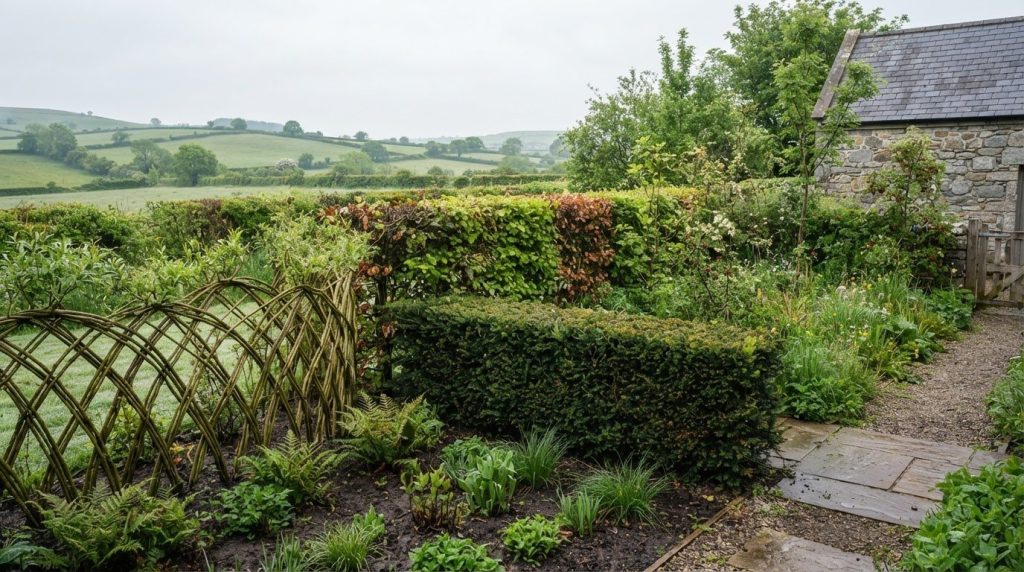
The neatest-looking boundary isn’t always the right one for your garden. The best living fence ideas Ireland gardeners consider depend on what the boundary needs to do, how much room is available and how much upkeep suits your routine.
If you’re weighing woven willow against a planted hedge, start by separating the two jobs a boundary might do: mark an edge or provide screening. You may also want structure or a softer garden border. Each design takes a different amount of space and care, and plants need time to establish. Appearance matters, but it’s only part of the decision.
This guide compares living willow, traditional hedging and mixed planting, with practical points to help you choose for your garden and its purpose. You’ll find what to plan before planting, including available space, site conditions and ongoing maintenance. Buds Nursery Cavan grows and sells hedging plants, native trees and shrubs, and offers guidance on selecting plants for a living boundary.
Key Takeaways
- Living fence ideas Ireland gardeners can consider include woven willow, evergreen screening, deciduous hedging and mixed native planting. Each suits different boundary needs.
- Compare the space, shape and routine care each design calls for before deciding which fits your garden.
- Note the boundary’s purpose, light, exposure, soil and available width to narrow down suitable options.
- Match plant choices to the effect you want, with beech, privet, Griselinia, whitethorn and mixed hedging among the possibilities.
- Plant-selection guidance can help you weigh up hedging and native planting options for your site.
Living fence ideas in Ireland: what counts as a living boundary?
A living boundary is a line of plants, or a structure made from living plant stems, used to mark or screen the edge of a garden. Unlike a conventional built fence, it grows and changes over time. The phrase living fence ideas Ireland can describe several approaches: a woven willow feature and a hedge of shrubs or trees are both living boundaries, but they look and behave differently.
That distinction matters when you’re planning. A boundary might provide a clear edge, contribute to screening or form part of the garden’s overall planting. Its eventual appearance, space requirements and care needs depend on the design and plants. A useful general reference is Hedge, which explains how hedges are formed and notes “live fence” as an alternative term.
Living willow fences and the term fedge
A fedge is a living willow fence made from willow stems planted in the ground and woven together. The crossed stems create a visible lattice, giving it a more patterned, crafted look than a row of shrubs. The design can follow a boundary, with its form determined by how the stems are arranged.
Willow construction and care differ from ordinary hedge planting. The stems need to be positioned and woven as part of the structure, rather than simply planted in a line to grow into a hedge. A fedge is a distinct design choice, not just another name for a planted screen. Its development depends on the planting and site, so don’t assume it will establish to a particular timetable.
Planted hedges as living boundaries
A planted hedge is a boundary formed from shrubs or trees set out in a line. It may be kept to a defined shape or allowed a looser outline, depending on the plants and how they’re managed. Beech, privet and whitethorn are examples of hedging plants. Unlike willow stems, they aren’t woven into a framework.
Hedges can have a formal or natural appearance, and their screening, width and upkeep vary with the selected plants and how they’re maintained. A single row of one type creates a different effect from a varied planting. Before choosing plants, decide whether you want a uniform outline or a more varied look, and how much width you can give the hedge as it grows.
In practice, the choice isn’t simply between a fence that grows and one that doesn’t. A woven willow structure has a deliberately arranged pattern; a hedge develops as its plants grow and are managed. Both need suitable space and care, but the work involved differs. As you compare living fence ideas, consider the boundary’s purpose, the appearance you want and the time you can give it. The following designs explore those options, then look at how to match a choice to your garden conditions.
Four living fence ideas for Irish gardens
The right design depends on the boundary’s job and the look you want. These four living fence ideas Ireland gardeners can consider range from a woven feature to a planted line of one species or a varied mix. Use the comparison as a starting point, then compare each option with your site and intended upkeep.
| Design | Typical character | Useful starting point |
|---|---|---|
| Woven willow | A patterned, structured screen | Consider the desired shape and willow construction needs |
| Evergreen planting | A consistent green presence | Look at options such as Griselinia, subject to site suitability |
| Deciduous hedge | A planted boundary with seasonal change | Consider beech or privet and the form you intend to maintain |
| Mixed native planting | A varied line of foliage and growth forms | Explore native options such as whitethorn |
Woven willow and structured living screens
Woven willow creates a defined, architectural boundary, with stems arranged in a visible pattern rather than left to form a conventional hedge. It can suit a garden where the structure itself is part of the design. The willow varieties, construction method and ongoing care need to suit the particular site. This is a different approach from planting ordinary hedge shrubs.
Evergreen screening
An evergreen planting scheme is worth considering if you want the boundary to retain foliage through the year. Griselinia is one option to explore, but suitability depends on the garden’s conditions and the intended shape. Allow for the plant’s eventual width as well as its height. A screen that looks narrow when planted may need more room as it develops. Compare the plant’s requirements with the conditions along the boundary before settling on it.
Deciduous hedging
A single-species hedge gives the boundary a more uniform character. Beech or privet can be considered for this type of design, with the final appearance shaped by planting and maintenance. Deciduous plants bring seasonal change, so the boundary may look different across the year. Decide whether you prefer a closely managed outline or a looser hedge, then consider which plant suits the site and available space.
Mixed native planting
A mixed native boundary combines different plants rather than repeating one species along the full line. Whitethorn is one option to consider, alongside other suitable native plants chosen for the site. The result can have more variation in leaf shape and growth habit than a single-species hedge. The FAO guide Living Fences: Protection with Production describes wider uses of living fences, but its plant examples aren’t a ready-made Irish planting list. Readers exploring native choices can also consider plants in the Native Trees Scheme.
For a planted boundary, Buds Nursery’s hedging plants include options such as beech, privet, Griselinia and whitethorn. The nursery offers plant-selection guidance to help you compare these categories with your garden’s purpose and conditions.
Living fence or traditional hedge: compare the practical trade-offs
A woven willow structure and a planted hedge can both define a garden boundary, but they call for different decisions. Willow is shaped into a framework as it is planted; a hedge is a line of shrubs or trees whose form develops through growth and ongoing management. Compare the intended use, available space and care you can maintain before choosing between them.
| Consideration | Woven willow | Planted hedge |
|---|---|---|
| Form | A visible woven pattern with a planned structure | A planted line that can be kept formal or allowed a looser outline |
| Design flexibility | Shape comes from the arrangement of stems | Appearance depends on plant choice and how it is managed |
| Space | Needs room for the structure and its growth | Needs room for plants to develop to the intended form |
| Routine care | Care relates to both the willow and the woven design | Pruning and other care vary with the hedge species |
How purpose and available space affect the choice
Start by naming the boundary’s main job. Is it for visual screening, a clear marker between areas, a strong design feature or seasonal character? Then assess the space on both sides of the planting line. In a narrow garden, the eventual width may matter as much as the outline. A larger space can allow for broader or more varied planting, provided the plants suit the setting.
Also distinguish visual screening from animal containment. A boundary that looks enclosed may not be designed or maintained to contain animals. Don’t assume a woven willow feature or ornamental hedge will serve that purpose without suitable design advice. Let the intended function guide the choice from the start.
What to expect from establishment and maintenance
There’s no single timetable or care routine for every living boundary. Establishment depends on the plant material, site conditions and design. Willow needs attention to its woven structure as well as plant growth; hedge care varies with species and the form you want to maintain. Consider who will carry out routine pruning and whether the boundary will remain manageable as it grows.
For species-specific detail, consult dedicated guidance on beech hedging and privacy planting. These topics can help narrow the choices, but conditions in your garden still matter. A plant that suits one boundary may not suit another with different light, soil or space.
The right living boundary suits its purpose, fits the space and has a care routine you can keep up with. That’s a more reliable basis for comparing living fence ideas Ireland gardeners may be considering than choosing by appearance alone.
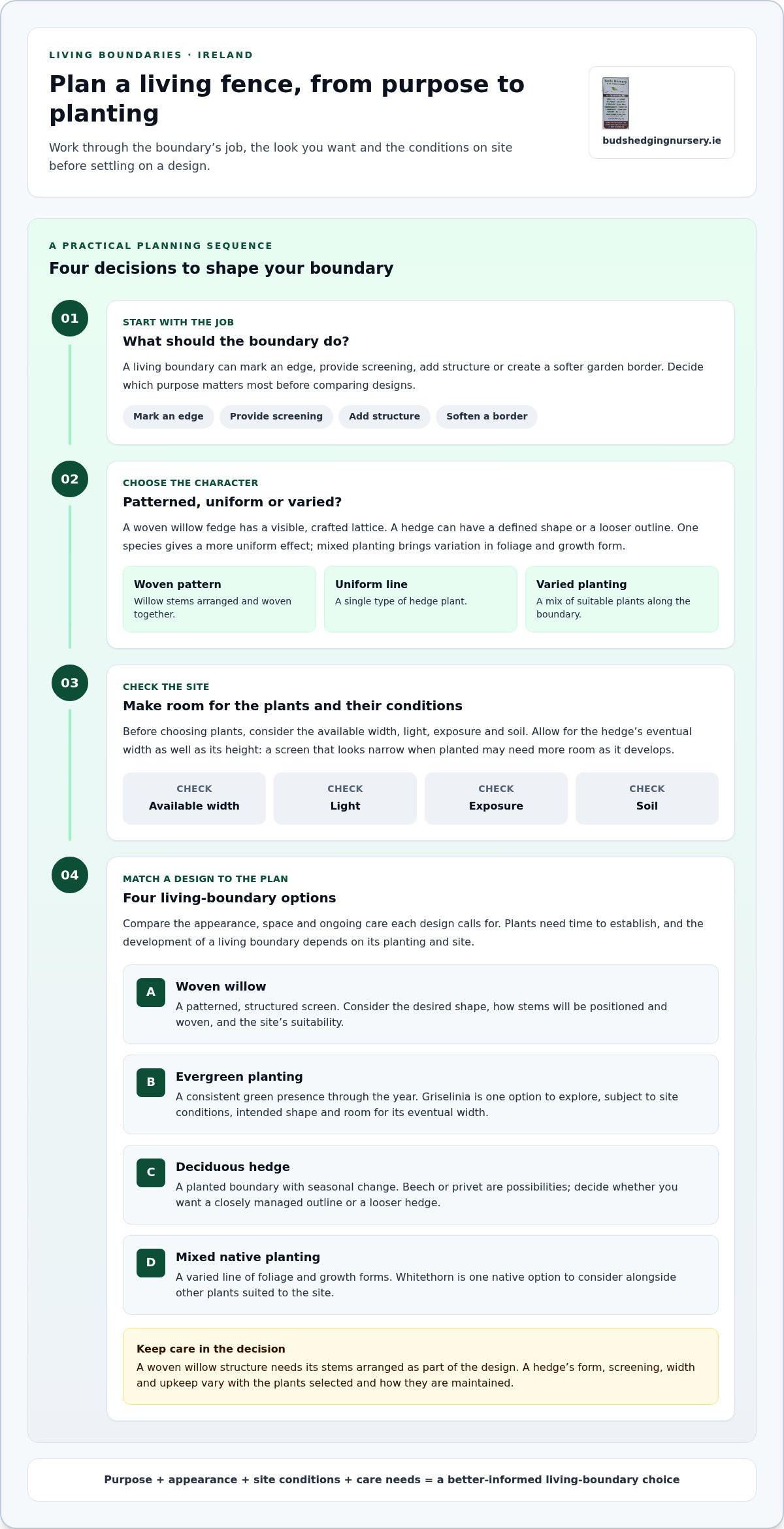
Plan a living fence: site, design and planting checklist
Site planning can prevent a poor match between the boundary you want and the plants you choose. Before ordering, work through the steps below and compare plant requirements with the conditions along the proposed line. With living fence ideas Ireland gardeners can adapt to different settings, the site matters as much as the design.
Assess the boundary before choosing plants
Walk the full boundary and note where the ground changes, where access is restricted and what may affect growth. A wall, building, path or existing planting can alter light and available room. Consider access for planting now and for future pruning. Measurements help you describe the space, but one width or spacing won’t suit every plant or design.
- Define the purpose. Decide whether the boundary is mainly for screening, marking an edge, adding structure or creating a varied planting feature. If it needs to contain animals, treat that as a separate requirement. A visual screen isn’t automatically designed for containment.
- Map the line. Record its length, available width, changes in direction and any gaps or obstacles. Note nearby structures and how people will reach the planting for care.
- Assess the conditions. Check how much light the line receives, how exposed it is and what the soil is like. Observe the site rather than assuming conditions are uniform from one end to the other.
- Choose a suitable form. Decide whether a woven structure, one type of hedge plant or a mixed planting best fits the purpose and space. Compare the mature form and care needs of the plants you’re considering.
- Plan planting and aftercare. Match the planting approach and timing to the selected plants and season. Make a practical plan for watering and ongoing care, and check technical details such as spacing and planting depth against reliable, species-specific horticultural guidance.
Set a realistic establishment and care plan
Establishment rates vary with species and growing conditions, so don’t plan on instant coverage. Consider whether you can provide appropriate watering and aftercare, particularly after planting. The care routine should also suit the boundary’s intended shape: woven willow and a trimmed hedge have different maintenance requirements.
If you’re considering bare-root trees as part of a boundary, use planting guidance specific to that form and follow advice suited to the chosen plants and season. Don’t apply instructions for bare-root stock to other plant forms without checking that they’re appropriate.
Quick checklist:
- Purpose and intended appearance
- Boundary length, width, shape and access
- Light, exposure and soil conditions
- Plant form suited to the site
- Planting, watering and future care plan
For help matching hedging plants to your site notes, get plant-selection guidance from Buds Nursery.
Choose plants for your living fence with Buds Nursery
Once you’ve settled on the boundary’s purpose and assessed the site, compare plant categories that suit the conditions. Buds Nursery grows and sells hedging plants, trees and shrubs, and offers plant-selection guidance to help you weigh up options for your garden. The nursery manages 60 acres of growing land.
Match the design to suitable plant categories
For a deciduous hedge, beech is one option to consider. Privet and Griselinia are other hedging choices, while whitethorn can form part of a native planting plan. Each has its own growth habit and requirements, so use your notes on light, soil, exposure and available space to guide the selection rather than choosing on appearance alone.
A single type of plant gives a different look from a mixed hedge. For a varied boundary, compare which plants suit the same site and can work together in the design. Native options may also suit a planting scheme built around native trees and shrubs. For a closer look at screening choices, use the Irish privacy hedging guide alongside your site plan.
Take the next step with Buds Nursery
Plant-selection guidance can help turn a general idea into a practical shortlist. Bring together the boundary’s purpose, dimensions and site conditions you’ve recorded. These details provide a useful basis for comparing beech, privet, Griselinia, whitethorn and mixed hedging plants. Buds Nursery also offers delivery options for larger orders.
Choosing plants is only one part of planning. You’ll still need to prepare the site and carry out planting and aftercare suited to the plants selected. Keep the expected form and ongoing care in mind, particularly if the boundary runs beside a path or another space that needs regular access.
With living fence ideas Ireland gardeners can adapt to different gardens, consider how each option will fit the site before settling on a plant. A clear purpose and a few practical details make it easier to compare designs and narrow the choice.
Explore hedging plants and trees at Buds Nursery to see options for your living boundary.
Take your living boundary plan one step further
Before choosing plants, turn your preferred design into a practical shortlist. Note what the boundary needs to do, how much room you can give it and what level of ongoing care fits your routine. These details will help you compare living fence ideas Ireland gardeners can adapt to different sites and avoid a style that proves difficult to maintain.
Use your shortlist to compare plant options with the conditions you’ve observed. Buds Nursery’s plant-selection guidance can help you think through the choices for your garden. Delivery options are available for larger orders, which can help when your boundary involves a substantial number of plants.
Explore the range of hedging and trees, then take the next step at a pace that suits your planting plan. Explore hedging plants and trees at Buds Nursery and move towards a living boundary that feels right for your garden.
Frequently Asked Questions
Can a living fence be planted in front of an existing fence?
Yes, if there’s enough room for planting, future growth and maintenance access. Check the space between the two boundaries, including room for roots below ground and the canopy above it. A plant that fits as a young specimen may spread into a path or become awkward to prune later. Choose a form suited to the available space, and keep access for ongoing care in your plan.
How can I protect a newly planted living fence from animals?
Young plants may need temporary protection while they establish, but the right approach depends on the animals and the site. A guard or barrier should be secure enough for its intended use without pressing against or restricting the plant. Inspect it as the plants grow, and adjust or remove it if it interferes with development or access. No single protective method can be relied on to prevent all damage in every garden.
Can a living fence follow a curved boundary?
Yes, a planted hedge can often follow a curve, provided the layout suits the chosen plants and the site. Mark the intended line with a garden hose or string before planting, then view it from different parts of the garden. This helps reveal tight bends or awkward transitions. Set spacing according to the selected species and its planting guidance, rather than applying one figure to every hedge.
Can I combine a living fence with a conventional fence?
Yes, plants can be grown alongside an existing fence if there’s enough room and the growing conditions are suitable. A hedge may soften the appearance of a built boundary, but allow space to reach both the plants and the fence for maintenance. Plan for the mature spread and check that the planting won’t obstruct gates or paths. Keep the existing fence in place for any function it needs to provide.
Will a living fence grow on a sloping site?
Often, a slope doesn’t rule out planting, but conditions can change along its length. Check for areas where water gathers or runs off, loose soil, exposure and difficult access. These factors can affect establishment and the care plants receive. Assess the ground at several points, not just at the top or bottom, then choose plants suited to those conditions. Advice on planting a particular slope should be based on horticultural assessment.
When should I replace a section of an established living fence?
Before replacing plants, consider why they were lost and how much of the boundary is affected. One dead plant beside healthy growth is different from several declining plants along the same stretch. Look for a recurring cause, such as unsuitable site conditions or a care problem, before replanting. Otherwise, a replacement may face the same issue. Match any new plant to the existing hedge’s species and intended form where practical.