

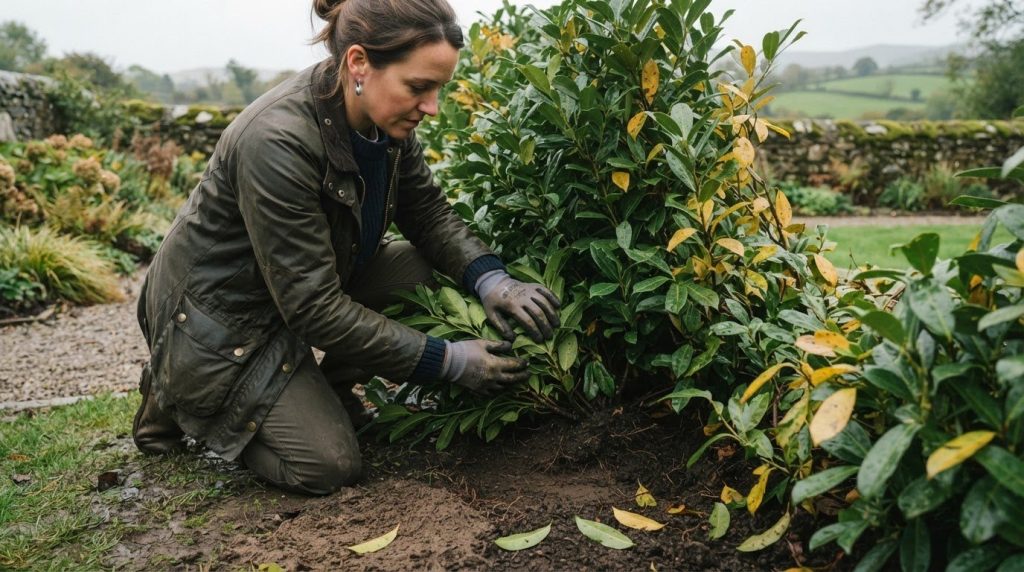
What if a yellow leaf is not the problem, but a sign that the roots are under stress? Yellow leaves on a laurel hedge can point to waterlogged soil, drought or a nutrient issue. Treating the wrong cause may add stress rather than help. A few yellowing leaves do not always mean the hedge is in serious trouble, but a careful yellow leaves on laurel hedge treatment starts with finding out what has changed.
First, look at the pattern and check the soil rather than reaching straight for feed or spray. This guide explains how to compare visible symptoms with site conditions, choose a measured response and avoid unnecessary treatments. You’ll also learn what signs suggest the hedge is recovering, and when persistent or spreading damage needs closer attention.
From wet or compacted ground to dry spells, leaf spots and possible nutrient shortages, we’ll work through likely causes and practical care steps for Irish gardens. The aim is simple: address the cause in the root zone, then give the hedge time to show how it responds.
Key Takeaways
- A few older yellow leaves may be part of normal growth, but widespread or increasing yellowing needs closer attention.
- Check soil conditions and recent weather for signs of waterlogging or prolonged dryness before changing your watering routine.
- Compare where yellowing appears and whether leaves have spots or other damage to narrow down the likely cause.
- Use a measured treatment plan: inspect first, address the likely cause, then monitor for changes.
- Judge recovery by new growth and whether symptoms are spreading. Damaged leaves may not regain their colour.
Yellow leaves on a laurel hedge: when is it a problem?
Inspect the whole hedge and its growing conditions. Yellowing is a symptom, not a diagnosis, so there is no single treatment that suits every laurel. A small number of older leaves changing colour and dropping gradually may be part of normal growth. It is more concerning when yellowing is widespread, keeps appearing or worsens quickly, particularly if new growth or stems are affected too.
Look at the pattern before deciding whether action is needed. A few leaves inside an otherwise healthy hedge are different from yellowing across several plants or along a whole stretch. Note whether affected leaves are mainly older or newer, and whether they also have spots, holes, browning or distortion. The Prunus laurocerasus (Cherry Laurel) overview provides botanical context for this commonly grown laurel, but visible symptoms still need to be considered alongside conditions in your garden.
How to tell normal leaf turnover from persistent yellowing
Check whether the change is limited to scattered older leaves or is appearing across the outer growth and several plants. Gradual loss of a few older leaves, with healthy-looking new growth and firm stems, is less concerning than a sudden change across the hedge. If leaves on new shoots are yellowing, stems look weak or bare areas are spreading, keep a closer record and investigate the growing conditions.
Consider the scale as well as the speed. One affected plant may point to a local issue, while several plants changing colour at the same time can point to a shared factor, such as conditions along the hedge bed. Neither pattern identifies the cause on its own, but it helps you decide what to inspect next rather than treating every yellow leaf as evidence of disease.
What to record before treating a laurel hedge
A short record makes it easier to judge whether symptoms are stable or progressing. Before treating the hedge, note when you first saw the change and how quickly it has spread. Include recent weather and any changes to the hedge’s setting or care. This can help you connect symptoms with a period of dry weather, heavy rain or recent planting.
- Mark which plants and parts of the hedge are affected, including whether new growth is involved.
- Note recent dry spells, heavy rain, watering changes, planting or disturbance near the hedge.
- Take clear photographs from the same viewpoints so you can compare affected areas later.
Use your record to look for a trend, not to diagnose the problem from one observation. If the colour change remains limited and new growth looks sound, keep monitoring. If it continues to spread or other parts of the plant show damage, check the soil, watering and leaf symptoms more closely before choosing a response.
Why do laurel hedge leaves turn yellow? Check the growing conditions
When yellowing looks persistent or widespread, start with the root zone. Waterlogged soil and poor drainage can leave roots short of air, while prolonged dry conditions can also stress a hedge, particularly after planting as roots establish. The same colour change can have different causes, so check the soil and site before choosing a treatment.
How soil moisture and drainage can affect laurel leaves
Check below the surface near the hedge rather than judging moisture from the top layer alone. Gently part the soil or use a small trowel near the root zone, taking care not to damage roots. Soil that remains wet after rain may point to poor drainage or compacted ground. By contrast, dry soil around a recently planted hedge after a rain-free spell may mean the root ball is drying out.
These conditions need different responses. Adding water to already wet ground can worsen the problem, while withholding water from dry roots can increase stress. Consider the site as well as the weather: low spots, compacted soil and areas where water collects can stay wet, while exposed ground may dry more quickly. Check moisture around the roots and recent rainfall before watering.
When nutrition, pests or disease may be involved
Leaf colour alone cannot confirm a nutrient deficiency. A nutrient imbalance is one possibility, but yellowing can also follow water stress or other growing conditions. Before feeding, check whether the colour is uniform or appears between green veins, and look for other changes that could help distinguish the cause. A closer inspection is more useful than applying several treatments in succession.
Look over both sides of the leaves, their edges and nearby stems. White, dusty growth, distinct spots or holes, distortion, visible insects or sticky residue are additional clues to record. These signs do not prove a particular pest or disease, but they make a problem beyond general root stress more plausible. Clemson Cooperative Extension’s Laurel Pests and Disorders describes pests and disorders affecting laurel, including leaf damage and root problems.
- Wet soil that stays saturated means you should check drainage before watering again.
- Dry soil around the root zone calls for a different response from persistently wet ground.
- Distinctive leaf marks or visible pests need closer identification before treatment.
Avoid applying fertiliser, insecticide or fungicide based only on yellow leaves. First compare the soil condition and any additional symptoms with a likely cause. If a plant protection product seems necessary, follow its label and check that it is suitable for the problem and use in Ireland. Correcting the growing conditions may be the more relevant first step.
If the hedge is severely damaged and replacement is a consideration, Buds Nursery Cavan sells Portuguese Laurel and Cherry Laurel as hedging plants. Before deciding, compare the visible pattern with the soil and site conditions.
Yellow laurel leaves: compare the symptoms before choosing treatment
Use the pattern of yellowing to decide what to inspect next, not to diagnose the problem from colour alone. Look at which leaves are affected, where the change is happening and how quickly it is spreading. A few older leaves on one plant call for a different check from a sudden change across several plants. Symptoms can overlap, so treat the comparisons below as clues, not proof of a particular cause.
| Visible pattern | Possible cause | Next observation |
|---|---|---|
| Scattered yellow leaves, mostly older or inside the hedge | Normal leaf turnover or mild environmental stress | Check whether new growth and stems look healthy, and whether the change is gradual. |
| Widespread, even yellowing across one plant or a section | Water stress, poor drainage or a nutrient issue | Check soil moisture around the roots and compare the affected area with the rest of the hedge. |
| Yellowing between green veins, especially on newer leaves | A possible nutrient imbalance or other root-zone issue | Note which leaves show the pattern and consider soil conditions before feeding. |
| Yellow leaves with dry, brown edges | Possible prolonged dryness or other stress | Check whether the root zone is dry and whether nearby plants show the same symptoms. |
| Yellowing with spots, holes, distortion or visible insects | A possible pest or disease issue, or more than one stress factor | Inspect both leaf surfaces and nearby stems for distinctive signs, and check whether damage is spreading. |
What the location and spread of yellow leaves can suggest
Compare affected plants with unaffected ones. If just one plant is changing, inspect its immediate soil and surroundings. If several plants in the same stretch are affected, look for a shared condition along that section, such as soil that holds water or dries out quickly. Note whether the change has appeared slowly or spread across the hedge in a short period. Check stems too: healthy-looking foliage on sound stems is different from yellow leaves alongside weak or declining growth.
Yellow leaves with spots, holes or brown edges
Yellowing without marks calls for different checks from yellowing accompanied by visible damage. Spots, holes or browned edges deserve closer inspection, but none identifies a pest or disease on its own. Look for repeated patterns of marks, signs on both sides of leaves or insects nearby. Michigan State University Extension’s guide to identifying plant nutrient deficiencies explains why the age and position of affected leaves can help with assessment.
Use these clues to narrow your inspection before choosing a treatment. Do not respond to every pattern with fertiliser or a spray. Check the soil, recent weather and spread of symptoms first. If leaf damage persists or is difficult to identify, seek a reliable diagnosis before applying a product. Similar-looking symptoms can have different causes, and the wrong treatment may not address the underlying problem.
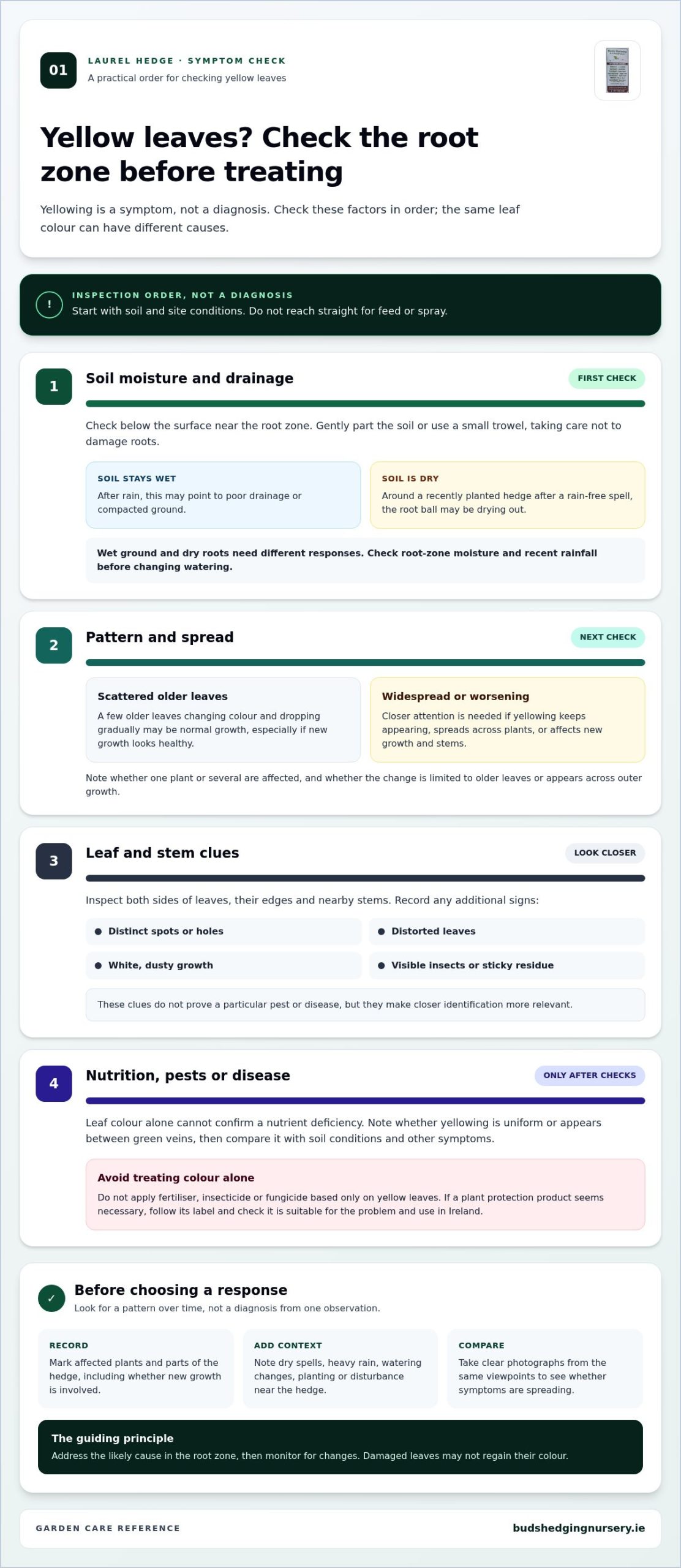
How to treat yellow leaves on a laurel hedge: a measured action plan
A useful treatment plan follows three steps: inspect, address the most likely cause, then monitor. Start with the soil around affected plants and check the leaves and stems for other signs of stress. Consider recent weather and any changes in watering or the hedge bed. This helps you avoid treating every yellowing hedge as though it has the same problem.
- Inspect. Check moisture around the root zone, not just at the soil surface. Note whether the ground feels dry, damp or persistently wet, and whether symptoms affect one plant or a longer stretch.
- Address the likely cause. Change watering or improve the growing conditions only when your observations support that response. Avoid applying several remedies at once, as it becomes harder to tell what is helping.
- Monitor. Keep a brief record or take photographs from the same viewpoint. Look for changes in new growth and whether yellowing continues to spread.
First steps for watering and drainage problems
If the soil is dry around the roots, water thoroughly so moisture reaches below the surface rather than giving the hedge a light sprinkle. There is no single watering schedule that suits every site. Check the soil and recent weather before watering again, particularly after rain or during a dry spell. Newly planted hedges need attention as they establish, but let the soil guide when to water.
If the ground stays wet, do not add more water. Look for compacted soil or places where water collects, and consider whether the hedge bed drains freely. Where the soil needs improvement, organic matter can help support its structure, but work carefully around established roots. A layer of mulch can help reduce moisture loss and protect the soil surface. Keep it clear of the stems, and check the soil beneath it before watering.
When to hold back on fertiliser or plant treatments
Yellow leaves alone do not confirm a nutrient deficiency. Feeding without a clear reason may fail to address the cause, especially if roots are struggling in wet or dry soil. Check the symptom pattern and soil conditions first. If a deficiency remains a possibility, use evidence such as a suitable soil assessment to help decide whether feeding is appropriate, rather than applying fertiliser by guesswork.
Take the same care with other plant treatments. Spots, holes or visible pests may need closer identification, but do not choose a product based only on yellow colour. Follow the product label and make sure any treatment is suitable for the problem and intended use. Avoid routine spraying when there is no clear diagnosis.
Remove leaves or branches that are clearly dead, using clean tools and taking care not to cut into healthy growth. Heavy pruning is not a default response to yellowing and may add stress if the underlying cause remains. After making a targeted change, give the hedge time and watch for further spread or healthier new growth. If you are planning a hedge, explore laurel hedge plants to consider the plants available from Buds Nursery.
Will a yellow laurel hedge recover, and when should you consider replacement?
A laurel hedge may produce healthy new growth after its growing conditions improve, but recovery depends on what caused the yellowing, how much of the plant is affected and the condition of its stems and roots. Do not judge progress by whether damaged leaves turn green again. Instead, look for symptoms stabilising and fresh growth appearing without further decline.
Before deciding to replace plants, compare the affected section with the rest of the hedge. One plant that remains bare or has dead stems may have a different problem from yellowing that continues along the whole row. If decline is widespread, review the shared conditions along the hedge before replacing individual plants. Otherwise, a replacement could face the same underlying issue.
How to monitor a hedge after treatment
Keep a simple dated record after making a change. Note what you adjusted, such as watering, and record relevant weather and visible symptoms. Take photographs from the same viewpoints so you can compare the extent of yellowing over time. This gives you a clearer picture than relying on memory, particularly if the change is gradual.
- Check whether yellowing is stable, receding or appearing on more leaves.
- Look for healthy new growth and note whether stems remain firm and sound.
- Record any fresh spots, holes, browning or other damage.
Healthy new growth and no further spread are useful signs to watch, but they cannot guarantee recovery. If yellowing continues or spreads after you have addressed a likely cause, reassess the soil, drainage and other symptoms. Avoid adding more treatments without a reason, as repeated changes make it harder to judge what is happening.
Choosing laurel plants if replacement is needed
If only one plant is dead or severely declining, consider whether its immediate soil or growing conditions differ from those around it. If the whole hedge is struggling, review the site and planting conditions before choosing replacements. The right laurel depends on the garden, the ground and the hedge’s purpose, so species choice is only part of the decision.
For species-specific context, the Portuguese Laurel guide covers considerations for Irish gardens. Buds Nursery sells Portuguese Laurel and Cherry Laurel as hedging plants. Choosing a replacement is also a chance to reassess the site, rather than putting another plant into the same conditions that may have contributed to the decline.
Compare the hedge’s purpose, the soil and the space available before settling on a replacement. Buds Nursery offers on-site plant guidance and has Portuguese Laurel and Cherry Laurel for sale. Explore the nursery to plan your next step.
Make your next hedge check count
Use your observations to guide the next step rather than trying several remedies at once. A short note after each check can help you see whether the hedge is stable, improving or still declining. That makes your treatment more deliberate and helps you decide whether to keep monitoring, investigate further or plan for replacement.
If replacement is on your mind, consider what the hedge needs to do and the conditions it will grow in. Choosing plants with the site in mind gives you a more useful starting point for long-term care. Buds Nursery sells Portuguese Laurel and Cherry Laurel, with delivery available for larger orders.
Explore laurel hedging and practical nursery guidance as you plan your next step. For plant selection and guidance, get in touch with Buds Nursery.
Frequently Asked Questions
Is yellowing after a late frost a sign that my laurel hedge is dying?
No. Frost can damage laurel foliage, leaving leaves yellow or brown, but that alone does not show whether the plant is dying. Check how much of the hedge is affected and inspect stems for firm tissue and living buds. Mark the damaged area and watch for fresh shoots as growth resumes. If stems are dry and brittle across a large section, reassess the plant’s condition before deciding whether replacement is needed.
Can lawn weedkiller make laurel hedge leaves turn yellow?
Yes, herbicide drift or accidental contact can injure nearby plants, although yellowing has several possible causes. Consider whether lawn treatment took place before symptoms appeared, and note if damage is worst on the side facing the treated area. Check the product label for precautions and follow its instructions. If exposure seems likely but the damage pattern is unclear, seek reliable plant identification advice rather than applying another product.
What happens if yellow laurel leaves are left on the ground?
Ordinary fallen leaves can often be left to break down or cleared if you prefer a tidier hedge base. If leaves have suspicious spots or other signs of possible disease, handle them separately and follow local green-waste guidance. Do not assume that all affected leaves are suitable for composting. Clearing foliage may improve garden hygiene, but it will not correct the soil, watering or other condition that caused the hedge to yellow.
Can I compost yellow leaves from my laurel hedge?
Yellow colour alone does not show whether a leaf is diseased, so sort fallen foliage by its condition. Leaves without unusual marks are different from those with spreading spots, holes or other damage. Follow local composting guidance. If disease is suspected, do not add the affected material to a home compost heap unless reliable local advice says it is suitable. Keep a note of where damaged leaves came from so you can check that part of the hedge.
Why are only a few laurel leaves yellow whilst the rest of the hedge looks healthy?
A few older leaves may yellow as part of normal turnover, but a localised issue affecting one plant or section is also possible. Do not diagnose the hedge from one leaf. Look for similar leaves nearby, check the soil beside the affected plant and note any new marks or changes. A dated photograph can show whether the yellowing stays limited or begins to spread, helping you decide whether further checks are needed.
Should I cut off every yellow leaf on my laurel hedge?
No. Removing every discoloured leaf will not resolve a problem in the roots or growing conditions, and stripping foliage can add unnecessary stress. You can carefully remove material that is clearly dead or badly damaged, but avoid extensive cutting as an automatic response. First consider what may be causing the yellowing, then watch for fresh discolouration. Continued changes can help you decide whether your treatment needs reassessment.