

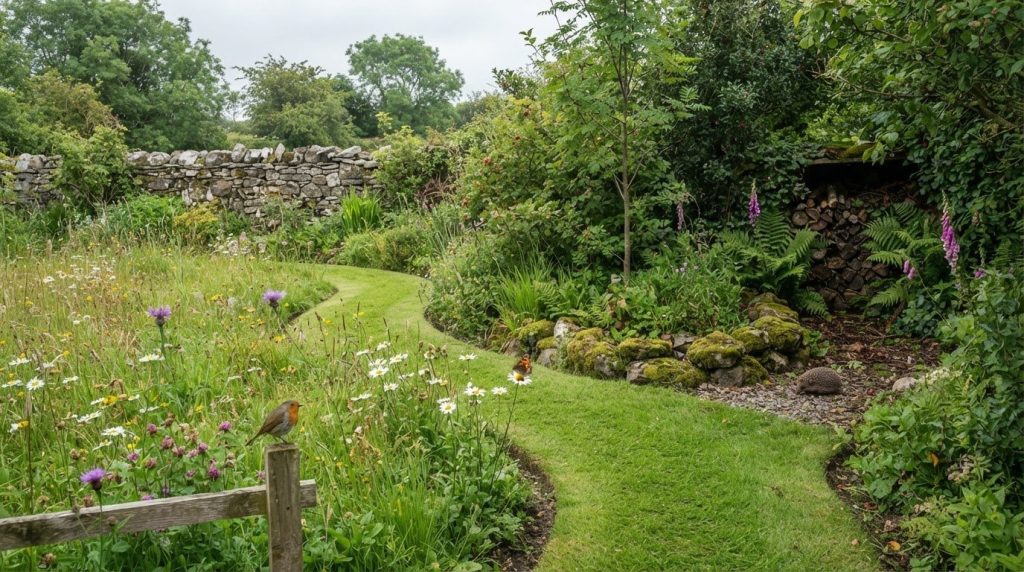
What if a garden could look cared for while giving wildlife more room? If you’ve searched for “rewilding your garden Ireland”, you don’t need to leave every corner untended. Rewilding is a deliberate way to make changes that suit your space, from keeping a patch of lawn longer to adding plants that provide structure and shelter.
It’s understandable to wonder which changes may help, or whether a wilder garden will be harder to manage. Start small and work with what’s already there. A compact garden can offer useful habitat too, and you don’t need years of gardening experience to make a considered start.
This practical guide explains how to approach rewilding gradually, choose manageable actions and select plants for your garden. You’ll find ways to use existing features, decide where trees, hedging or ground cover may fit, and choose a realistic first step. The aim is a garden that feels cared for while giving local wildlife more opportunities to feed, shelter and move through.
Key Takeaways
- See how different garden features can work together to provide food, shelter and connected habitat across the year.
- Compare practical options for a small garden, larger lawn, boundary, shaded corner or exposed site, including the upkeep each may involve.
- Use a simple plan for rewilding your garden Ireland: observe your space, choose one area, make a change and review how it works.
- Keep paths, lawn edges and boundaries maintained so a wildlife-friendly garden still looks cared for.
- Explore how trees, hedging, shrubs and ground cover can add different structures to your garden plan, with plant-selection guidance from Buds Nursery.
What does rewilding your garden in Ireland actually mean?
Rewilding a garden is a planned way to make room for wildlife and natural processes. It may mean managing one area differently, adding varied planting or leaving some vegetation undisturbed for part of the year. It doesn’t mean removing every lawn, path or boundary, and it doesn’t require turning the whole garden into a project.
A concise definition is: Garden rewilding is the deliberate management of garden space to support wildlife and allow natural processes to take place. Planting more flowers can be part of that approach, but it isn’t the whole idea. The wider concept of What is Rewilding? helps explain its focus on natural processes; at home, those aims need to fit the site and the way you use it.
There’s no single result to expect. Existing trees, soil, shelter and nearby habitat all affect what changes may achieve. Ongoing care matters too. A rewilded area still needs considered management, whether that means mowing less often or trimming selected edges.
For anyone searching “rewilding your garden Ireland”, the useful distinction is between allowing specific areas to develop with purpose and simply stopping all garden care. Choose a scale you can maintain. A small change is a practical start.
How is rewilding different from an untended garden?
An untended garden has no planned approach to what grows or where. In a rewilded garden, you decide which areas to leave longer, where to keep access clear and how to maintain boundaries. For example, a defined patch of longer growth can sit beside a mown path or a regularly used lawn. The garden remains usable, and its appearance stays intentional.
Keep the areas you rely on in good order, such as entrances, play space or a place to sit. A clear edge between a managed area and a wilder patch can make the change look deliberate. There’s no need to redesign everything at once. Start with one manageable section and see how it fits your routine.
What should you observe before making changes?
Spend time looking at the garden before deciding what to alter. Conditions can vary across a single plot and change with the seasons. Note where the ground is sunny, shaded, damp or exposed, then record what is already growing and where you notice wildlife. These observations help you work with existing features instead of making assumptions.
- Mark existing trees, hedges, flowering plants and any water sources.
- Notice where and when you see wildlife, remembering that one visit won’t show the whole picture.
- Consider how much time you can give the garden and which areas your household needs to use.
- Decide what appearance you’re comfortable with, including how much lawn, clear edging and open space to retain.
Use those notes to choose a first area that suits both the site and your preferences. A realistic plan should make room for wildlife without making the garden harder to use or maintain than you want it to be.
How a rewilded garden provides food, shelter and connected habitat
A garden can offer more than one resource when its features work together. A tree, a hedge, lower planting and a quiet corner create different layers and conditions. One isolated plant or water feature may add something, but habitat value depends on the wider mix and how it changes through the year.
This idea applies at garden scale, even though rewilding is also discussed in the context of wider nature restoration. The London School of Economics and Political Science outlines some of the broader Benefits of Rewilding. For rewilding your garden Ireland, focus on manageable features that complement what is already growing, rather than expecting one new plant to transform the space.
Why variety in garden structure matters
Different heights create different kinds of cover. Trees add an upper layer, whilst hedging and shrubs can make denser boundaries. Ground cover and lower-growing plants occupy space nearer the soil. Together, these features can create a more varied setting than a uniform lawn or a single planting height. The suitability and value of each plant depend on its characteristics and your garden conditions.
- Consider a tree where there’s room for its eventual size and growth.
- Use hedging or shrubs to add height and structure along a boundary.
- Ground cover can fill some low-level spaces; leave access and maintenance routes clear.
- Retain a quiet corner if it can be kept separate from areas used every day.
Think in layers, not just plant numbers. A mix of forms and sheltered spots can make the garden’s habitat more varied.
Food, water and shelter through the seasons
Plan for more than the period when flowers are most visible. Consider how planting, cover and undisturbed ground will change as the seasons turn. A small water feature may suit some gardens; keep it proportionate to the space and make sure wildlife can reach the water and get out safely. Avoid adding features you can’t maintain.
- Leave some fallen leaves in a defined bed or tucked-away corner rather than clearing every surface.
- Keep suitable woody material in a neat, chosen spot, clear of paths and routine work areas.
- Maintain mown edges so retained vegetation looks deliberate and the garden stays accessible.
Leaf litter and dead wood can provide cover and allow natural processes to continue, but they needn’t be spread across the whole garden. A tidy, contained area can retain these materials whilst keeping the rest of the space in order.
Connected habitat features link varied planting, shelter and undisturbed spaces into a more continuous setting. If you’re planning another planting layer, explore hedging, trees and ground cover plants as options for your garden.
Which rewilding changes suit your Irish garden and its available space?
The right change depends on the conditions you observed, the available space and how much upkeep you want to take on. Natural regeneration may work where plants are already establishing and there’s room for them to develop. A bare or heavily managed area may need deliberate planting instead. Neither approach suits every garden.
Use this comparison to narrow down your options. Upkeep varies with growth and how you manage the area, so treat it as a guide rather than a fixed rule.
| Garden area | Possible change | Space and upkeep to consider |
|---|---|---|
| Small garden | Plant a border or retain a small unmown patch | Uses a defined area. A border needs attention to planting and edges; a patch needs periodic cutting and removal of cuttings if required. |
| Larger lawn | Reduce mowing in a selected section | Needs room to leave growth, with clear paths or mown edges to keep the lawn accessible. |
| Boundary | Assess existing hedging before adding plants | Uses the garden edge. Consider access for trimming and whether the boundary already provides enough structure. |
| Shaded corner | Consider suitable ground cover or shrubs | Can make use of a less-used area. Check light and soil moisture before selecting plants. |
| Exposed site | Consider a planted border or tree planting where there’s room | Allow for available space and ongoing care; assess exposure and site conditions before choosing plants. |
You can combine options, but start by matching one change to one area. A planted border gives a defined, maintained look, while an unmown patch can be simpler to establish if you already have lawn. Both need some attention. Rewilding your garden Ireland doesn’t mean choosing the same approach as another household; it means making choices that suit your site and routine.
Small spaces, lawns and borders: choosing a manageable first change
In a small garden, try leaving a clearly marked patch of lawn longer before changing the whole area. Compare how it looks and feels to maintain alongside a planted border. Ground cover is another option for suitable locations, but check that the plants fit the light, soil and available space. Keep routes and regularly used areas clear.
Boundaries, shaded corners and open areas
Look closely at an existing hedge before adding or replacing plants. Note any gaps, its condition and how much room it occupies. In a shaded corner or open, exposed area, assess light, soil moisture and shelter first. Whitethorn, holly and native trees are possible options where locally suitable; plant selection should reflect the conditions of the specific site.
Choose natural regeneration where existing growth is developing in a useful place and can be managed. Choose deliberate planting where you need a particular structure or the area has little growth. Either way, include boundaries and access in your plan, then review the change as it establishes.
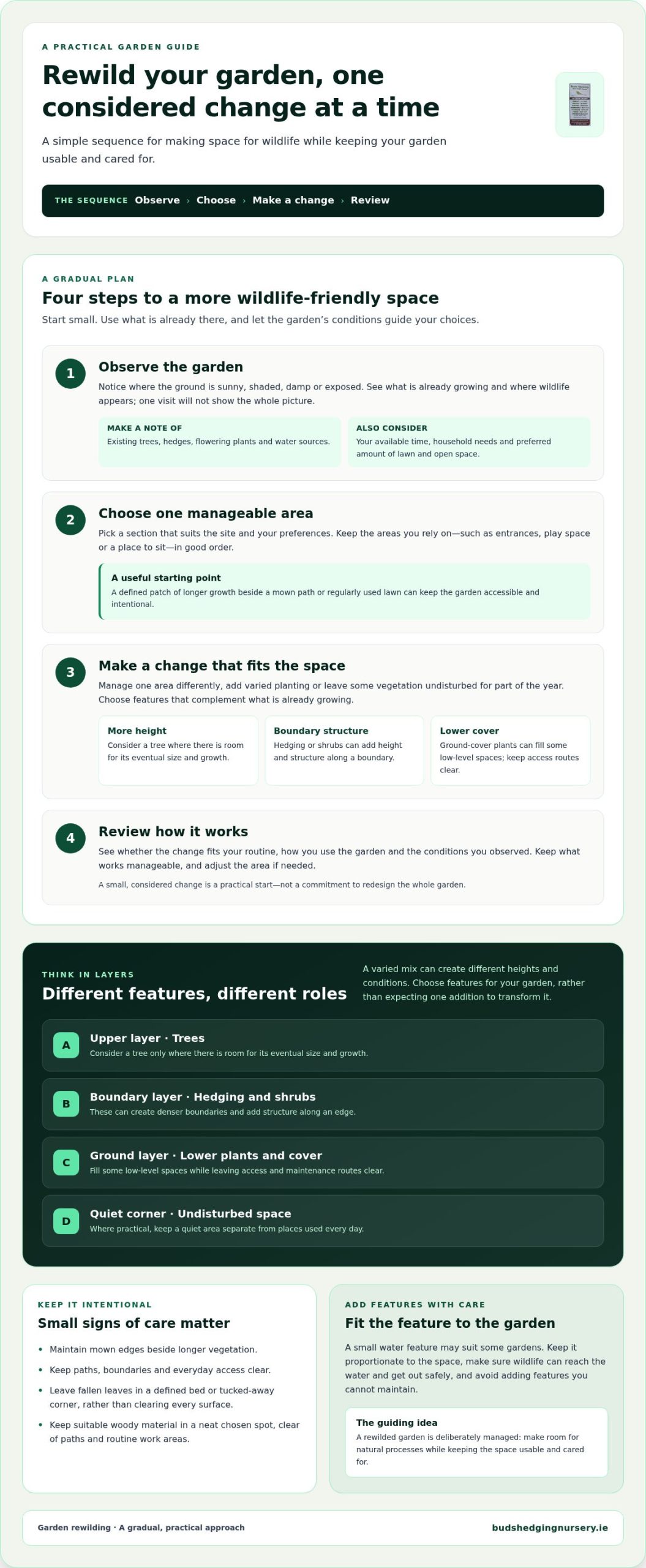
How to rewild your garden in Ireland: a gradual, practical plan
A steady approach helps you make changes without losing control of the garden. Begin with what you can observe and maintain, rather than buying plants or changing several areas at once. A few notes about the site, your routine and what you want to keep will turn a broad idea into a workable plan.
- Observe the garden. Note where light, shade, dampness and exposure vary, and what already grows there. Include how you use the space and where access needs to stay clear.
- Choose one area. Pick a patch that fits your available time and household needs. It might be a lawn edge, a border or a less-used corner.
- Make one change. Reduce mowing in a defined patch, retain suitable existing growth or prepare a small area for planting. Keep the first step manageable.
- Maintain the boundaries. Keep paths, seating areas and useful lawn space in order. Mow selected edges or trim boundaries so the change looks intentional, not neglected.
- Review and adapt. Record what changes with seasonal notes or photographs. Use what you observe to decide whether to continue, adjust the upkeep or try another area.
Start with one area and a clear maintenance plan
Before making a change, decide how often you can realistically tend the area and what must remain accessible. Mark a route through or around it, and keep edges neat if that suits the rest of the garden. Selective mowing can reduce routine work in one patch, but check it periodically and cut back growth where it blocks access or spreads into areas you want to keep clear. Avoid disturbing soil or clearing leaves and woody material without a reason.
Set a review point that works for you, such as a seasonal check. A photograph from the same spot can make gradual changes easier to compare. Don’t judge the plan by immediate results; use your record to see what is growing, what needs attention and whether the area still works for your household.
Plant and maintain at a suitable time
There isn’t one planting date for every plant. Timing depends on plant type, whether it’s bare-root or container-grown, the state of the soil and the weather. For many native bare-root plants, the planting season is generally November to March, but avoid planting when the ground is waterlogged or frozen. Choose the timing and method for the particular plant and conditions.
After planting, observe how the area settles and respond to its growing conditions. Keep access clear, look for signs of stress and adjust routine care as needed. For plant options that fit a considered plan, explore trees, hedging and ground cover at Buds Nursery.
Observe your garden, change one manageable area, keep useful boundaries clear and review the results before deciding what to do next.
Choosing plants and getting started with Buds Nursery
Once you’ve chosen an area, select plants for its conditions and purpose. Hedging, trees, shrubs and ground cover each add a different shape and height to a garden plan. They can help define edges, fill planting areas or add structure, but no category is automatically right for every garden. Light, moisture, exposure, available room and the time you can give to maintenance all matter.
Select plants by site conditions and the purpose of each area
Start with your observations rather than a plant name. A shaded, damp corner calls for different consideration from an exposed boundary or a sunny border. Think about mature size and how much room you can leave around a plant, as well as whether you’re comfortable with ongoing pruning or other care.
Native trees, whitethorn, holly and ground cover plants are among the options to consider as part of a planting plan. Check the suitability of each species for your site and intended use before choosing it. Don’t assume that a plant is suitable simply because it’s native, or that every plant offers the same value to wildlife. A suitable mix should reflect the conditions and the role you want each area to serve.
If you’re considering planting through the Native Trees Scheme, treat its eligible plants and requirements as scheme-specific details. Buds Nursery Cavan participates in the scheme, and its dedicated Native Trees Scheme guide can help with that aspect of plant selection.
Make the first planting decision manageable
Keep the first choice focused. Define the area, decide what you want it to do and set a realistic level of maintenance before selecting plants. For example, you might want to add structure along part of a boundary, fill a planting bed or introduce a tree where there’s enough space. A clear purpose makes it easier to compare options and avoid buying plants that don’t suit the site.
Buds Nursery Cavan produces hedging, trees and shrubs, and offers practical plant-selection guidance on site. Bring notes about light, soil moisture, exposure and available space into that conversation. Guidance can help you consider plant options for the conditions, without requiring a full garden redesign. Delivery options are also available for larger orders.
Take the same measured approach to rewilding your garden Ireland: choose plants to suit the place, then allow for their care as they establish. The first planting doesn’t need to cover the whole garden. A considered choice for one area is a sound way to build on the changes you’ve already planned.
Explore plants and get practical guidance from Buds Nursery Cavan.
Choose one garden change and build from there
Set a clear purpose for the area you want to change, then make one decision you can maintain. That might mean selecting a tree for a suitable spot or adding structure along part of a boundary. Keep your plan flexible. As the garden develops, your observations can guide what you do next.
Rewilding your garden Ireland doesn’t need to be a large project. Thoughtful plant choices and steady care can help you make progress at a pace that suits your space and routine.
Buds Nursery manages 60 acres dedicated to producing hedging, trees and shrubs, and participates in the Native Trees Scheme. For practical plant-selection guidance and options for your garden, explore plants and get practical guidance from Buds Nursery.
Start with one area, choose with care and let your next step follow from what you learn.
Frequently Asked Questions
Can I rewild a small garden in Ireland?
Yes. If you’re looking for rewilding your garden Ireland ideas, a compact plot can start with one small change, such as a defined border, a suitable shrub or a short section of longer grass. Keep access and frequently used areas clear. You don’t need to imitate a woodland; focus on making room for a little more variety. Live with the change for a while before deciding whether to extend it.
Does rewilding mean I should stop mowing my lawn?
No. Keep mowing the lawn areas used for sitting, play or access, and try cutting another defined patch less often. For example, leave a narrow section beside a boundary and maintain a clear edge around it. The right pattern depends on the lawn and the look you prefer. Check how the patch changes over time, then adjust the mowing frequency or size to keep it manageable.
What plants are suitable for rewilding a garden in Ireland?
Suitable plants depend on conditions in your garden, including light, soil moisture, exposure and available room. Consider how trees, hedging, shrubs and ground cover could provide different forms and heights, rather than choosing only for appearance. Native trees, whitethorn and holly may suit some locations, but not every species fits every site. Check the growing requirements and any wildlife claims for individual plants before making your selection.
Can I rewild my garden without planting trees?
Yes. Trees are optional, not a requirement. You could begin by reducing mowing in one patch, adding suitable shrubs or ground cover, or retaining some leaf litter in a contained corner. You might also review an existing border and allow suitable plants more room. Choose an action that fits your space and routine, then observe how the area develops before deciding whether another change would be useful.
How long does it take to rewild a garden?
There’s no fixed timescale. The pace depends on the garden’s starting condition, the changes you make, plant establishment and how you manage the space. A mowing change can begin straight away, while newly planted areas need time and appropriate care to establish. Keep seasonal notes or take photographs from the same viewpoint. These records help you assess gradual changes without expecting the whole garden to look different at once.
Can a rewilded garden still look tidy?
Yes. A tidy appearance can come from clear structure rather than treating every area alike. Keep paths open, trim selected edges and define planting areas so less intensively managed growth looks deliberate. You might maintain the front lawn and leave a quieter corner to grow differently. Decide which parts need regular attention and which can be more relaxed, then check that the layout still works for everyday use.
Should I use pesticides when rewilding my garden?
Consider whether a treatment is needed before using one. Changes to mowing, planting and habitat management don’t automatically require chemical treatments. If you do use a product, read and follow its directions and safety information, and consult current authoritative guidance for a specific concern. Avoid assuming every product or situation is the same; make decisions based on the problem and the setting.