


What if the best soil for planting trees isn’t a bag of special compost, but the ground already in your garden? A tree can struggle in soil that stays waterlogged, dries out quickly or has become compacted, even when planting seems straightforward.
It’s easy to wonder whether to add compost, improve drainage or leave the soil alone. The right choice depends on the ground and the tree you plan to plant. Adding the wrong material can create a poor match between the planting hole and the surrounding soil.
This guide explains how to assess texture, drainage and structure before choosing any amendments. You’ll learn how to prepare the planting area, match conditions to different trees and care for roots as they establish. Buds Nursery Cavan has a broad range of native and fruit trees, including bare root varieties, and offers practical guidance on plant selection. A sound start begins with understanding your site, then choosing a tree that suits it.
Key Takeaways
- The best soil for planting trees supports root growth, drains excess water and holds useful moisture, but the right conditions depend on the tree and site.
- Check soil texture and how water moves through the planting area before deciding whether it needs improvement.
- Match the tree to your garden’s conditions; choosing a suitable species can be more practical than trying to change the soil extensively.
- Prepare the planting area so roots can grow into the surrounding ground, rather than creating a small pocket of enriched soil.
- After planting, monitor moisture during dry spells and keep mulch clear of the trunk to support establishment.
What is the best soil for planting trees?
The best soil for planting trees supports root growth, drains excess water and retains enough moisture for the tree to establish. It should also have air spaces around the roots. No single soil mix suits every tree, garden or planting site, so assess the ground before deciding whether it needs improvement.
Loam is often a useful starting point. It combines sand, silt and clay, balancing drainage with moisture and nutrient retention. You can read more about the composition of loam soil, but a loamy texture isn’t a rule for every species. A tree suited to a particular site may grow well in soil that differs from this general description.
What makes soil suitable for a newly planted tree?
Roots need space to spread, water to reach them and air to remain available in the soil. Organic matter can support soil structure and help it hold moisture, but the type and amount of any amendment depend on the ground and the tree.
Workable soil breaks apart into crumbs when handled. Compacted soil feels dense and can be difficult to dig, leaving roots with fewer paths to grow through. Wet, heavy ground may hold water for too long, whilst very loose, sandy soil can dry quickly. These conditions call for different responses, so assess the planting area rather than relying on a universal recipe.
Is special topsoil or compost always needed?
No. Adding soil products before checking the site can mean changing soil that is already suitable or choosing an amendment that doesn’t address the main problem. Start by looking at the soil’s structure and how it behaves after rain. If you’re unsure about pH or nutrient levels, a soil test can help guide your decisions.
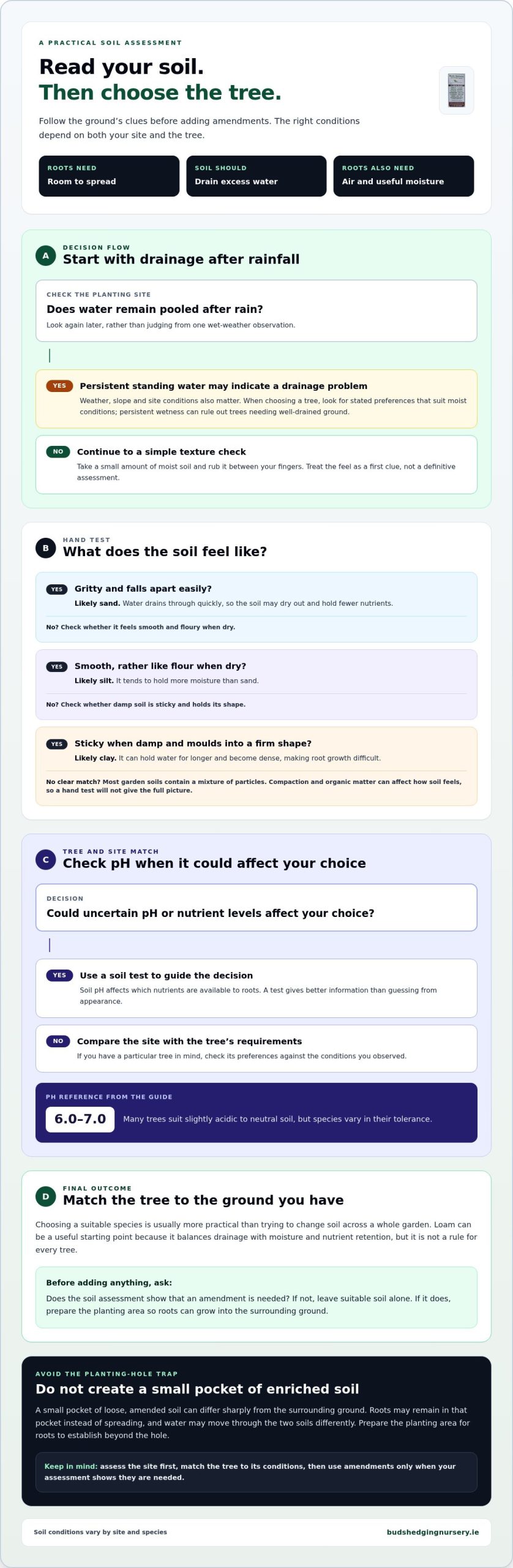
Take care not to enrich only the planting hole. A small pocket of loose, amended soil can differ sharply from the surrounding ground. Roots may remain in that pocket instead of spreading into the garden soil, and water may move through the two soils differently. Prepare the planting area so roots can establish beyond the hole, using amendments only when your assessment shows they’re needed.
The practical aim isn’t to create a perfect mix in isolation. It’s to give the chosen tree soil conditions it can grow into. Assess the site first, then match your preparation to the ground and the tree’s needs.
How soil texture, drainage and pH affect tree roots
Soil texture affects how quickly water moves through the ground and how easily roots can grow. A simple hand check gives an initial indication of soil type, but it isn’t a definitive assessment.
- Sand: feels gritty and falls apart easily. Water drains through it quickly, so the soil may dry out and hold fewer nutrients.
- Silt: feels smoother, rather like flour when dry. It tends to hold more moisture than sand.
- Clay: feels sticky and moulds into a firm shape when damp. It can hold water for longer and become dense, making root growth difficult.
Most garden soils contain a mixture of these particles. Their proportions, along with the soil’s structure, affect how much water and air reach the roots.
How can you assess drainage and soil structure?
Look at the planting site after rainfall. Note whether water drains away or remains pooled, and check the ground again later rather than judging from a single wet-weather observation. Persistent standing water can indicate a drainage problem, although weather, slope and site conditions also matter.
For a basic texture check, take a small amount of moist soil and rub it between your fingers. Grit suggests sand; a smooth, floury feel suggests silt; sticky soil that holds its shape suggests clay. Treat this as a first clue only. Compaction and organic matter can affect how soil feels, so a hand test won’t give you the full picture.
When should soil pH influence your tree choice?
Soil pH describes how acidic or alkaline the ground is. It can affect which nutrients are available to roots. Many trees suit slightly acidic to neutral soil, around pH 6.0 to 7.0, but species vary in their tolerance. If you have a particular tree in mind, compare its requirements with the conditions at your planting site.
A soil test is useful when pH or nutrient levels could affect your choice, or when a tree is struggling and the cause isn’t clear. It gives you better information than guessing from appearance. Rather than trying to alter soil across the whole garden, choose a tree suited to the conditions you’ve found. Buds Nursery offers practical guidance on selecting from its range of native and fruit trees to suit your site.
How to match tree species to your garden soil
Choosing a tree suited to your soil is usually more practical than trying to change conditions across a whole garden. Start with what you’ve observed about drainage and texture, then compare those conditions with the requirements of the particular tree. The best soil for planting trees isn’t a universal mix; it’s soil that works for both the site and the species.
Which trees may suit damp, heavy or free-draining soil?
Soil that stays wet for long periods presents different conditions from soil that drains freely and dries quickly. Heavy, wet ground can limit the air available to roots, whilst free-draining ground may need closer attention to moisture. Use this table as a guide to what to investigate, not as a substitute for checking an individual tree’s needs.
| Garden soil condition | What to consider when choosing a tree |
|---|---|
| Often wet or slow to drain | Look for a species whose stated growing preferences suit moist conditions. Persistent wetness can rule out trees that need well-drained ground. |
| Heavy or compacted | Check whether the tree can establish in the soil’s structure. Consider whether improving the planting area is practical before planting. |
| Free-draining and prone to drying | Choose a tree suited to drier conditions and plan to monitor moisture as it establishes. |
| Reasonably workable, with balanced moisture | Compare the species’ other needs, including pH, available space and exposure. Suitable soil alone doesn’t settle the choice. |
These are broad planting considerations, not guarantees. Soil conditions can vary across a garden, and water movement can change with slope and weather. Check the preferences of the exact species alongside your site assessment.
How do native, fruit and ornamental trees differ?
Native, fruit and ornamental describe broad groups, not soil requirements. Trees within each group can differ in their tolerance of wetness, soil texture and pH. Don’t assume that a native tree will suit every damp site, or that a fruit tree will thrive in any well-drained garden. Check the growing preferences of the particular tree you’re considering.
Also consider mature size and available space, along with the site’s light and exposure. These factors help you avoid choosing a tree that fits the soil but not the garden. For background on native options, read this guide to native trees scheme plants in Ireland. Buds Nursery’s selection includes native, fruit and ornamental trees, and the team can help you compare options with the conditions you’ve assessed.
How to prepare garden soil before planting a tree
Good preparation starts before you dig. The aim is to give roots a route into the surrounding ground, not to create a small pocket of rich soil that differs sharply from the rest of the garden. Follow these steps in order, adapting them to the tree and site.
What should you do before digging the planting hole?
- Inspect the site. Look for compacted ground, areas that stay waterlogged and nearby trees or plants whose roots may compete for space. Identify buried services before you dig.
- Assess the soil. Check its texture and drainage, and consider a soil test if pH or nutrient levels could affect your tree choice.
- Clear the planting area. Remove grass and weeds from around the planting spot, taking care not to damage plants you’re keeping.
- Prepare the ground. Dig a hole wide enough for the roots to spread, but no deeper than needed to keep the tree at its original planting depth. If the soil is compacted, loosen it carefully without working very wet ground.
- Plant and water. Set the tree in place, refill with the soil removed from the hole unless a clear site need calls for another approach, then water to settle the soil around the roots.
What soil mistakes can hinder establishment?
Planting too deeply can bury the root flare, where the trunk widens into the main roots. Keep this visible at soil level and don’t set the tree deeper than it was previously grown. Avoid routinely adding strong fertiliser or large amounts of compost to the hole. Without a clear need, these materials can create a planting mix that differs from the surrounding soil, affecting how roots and water move through it.
Extensive amendment isn’t always the answer to poor drainage or compaction. If water remains for a prolonged period, reconsider whether the spot and tree are a suitable match before planting. The best soil for planting trees supports the chosen tree’s roots across the planting area, not just inside the hole.
Before planting, check:
- The tree suits the site’s drainage and soil conditions.
- The area is clear of weeds, and buried services have been identified.
- The hole allows roots to spread without burying the root flare.
- You have a plan to water the tree after planting.
For a step-by-step approach to bare root trees, read this bare root tree planting guide. Once you’ve assessed the site, explore bare root trees for your planting plans.
After planting: help tree roots establish in the soil
Planting is the start of establishment, not the end of the job. Check the soil around the roots regularly, especially during dry spells, and adjust watering to conditions rather than following a fixed calendar. The tree’s size, soil texture, rainfall and planting conditions all affect how quickly the ground dries.
How should you water a newly planted tree?
Check moisture in the root area and in the soil just beyond it. If the ground is drying out, water slowly and thoroughly so moisture reaches the roots. A shallow sprinkle may wet the surface without soaking the root zone. Sandy soil may dry more quickly, whilst heavier soil can hold water for longer.
Both extremes can cause problems. Don’t let the root area dry out, but avoid repeatedly watering soil that is already saturated. After rain or watering, notice whether water drains away or remains pooled. Persistent wetness calls for a closer look at the site’s drainage, rather than simply adding more water.
Watch how the tree responds over time. Wilting, discoloured leaves or poor growth can signal stress, but these symptoms can have several causes. Check soil moisture and the planting area before deciding that watering alone is the answer. Also check whether soil has settled around the tree: make sure the root flare remains visible and hasn’t become buried.
How can you choose a tree for the soil you have?
Use your site observations to guide your choice. Consider drainage, texture and, where relevant, pH, then compare those conditions with the requirements of the particular tree. Native, fruit and ornamental groups each include different species, so the category alone doesn’t tell you what soil a tree needs. Matching the tree to the site is often more practical than trying to change the whole garden.
A surface layer of mulch can help reduce moisture loss and limit weeds around the planting area. Keep it away from the trunk, and don’t pile it against the root flare. Check beneath the mulch before watering, as the surface can look dry whilst the soil below remains moist.
The best soil for planting trees is only part of a successful start. Ongoing checks help you respond to changing weather and the tree’s needs as roots grow into the surrounding ground. Buds Nursery’s range includes native and fruit trees, and the team offers on-site guidance to help with selection. Explore trees and hedging from Buds Nursery as you plan a tree suited to your garden.
Give your tree a sound start
The best soil for planting trees is soil that suits the chosen species and lets its roots grow into the surrounding ground. Assess texture, drainage and pH before adding amendments, then prepare the planting area without creating a small pocket of very different soil. After planting, check moisture regularly and adjust watering to rainfall and ground conditions.
Choosing a tree to match your garden can be more practical than trying to change the soil across the whole site. Buds Nursery has a 60-acre nursery dedicated to trees, hedging and shrubs. Its range includes native and fruit trees, with on-site guidance to help you consider plants for your site.
Explore trees and hedging from Buds Nursery and plan a tree suited to your garden. Careful selection and steady aftercare can give it a sound start.
Frequently Asked Questions
Can I plant a tree in clay soil?
Yes, a tree can grow in clay soil, but drainage and compaction affect how well roots establish. Some clay remains waterlogged for long periods, whilst other clay soil is workable and supports healthy growth. Observe the planting site after rainfall and avoid persistently saturated ground. Choose a tree suited to the conditions. If you’re unsure about pH or another soil constraint, a soil test can provide useful information.
Should I add compost when planting a tree?
Compost isn’t automatically needed in every planting hole. First assess the existing soil and the chosen tree’s requirements. A large amount of different material in a small hole can create an abrupt contrast with the surrounding ground, affecting root growth and water movement. If an amendment is needed, use it for a clear purpose and follow guidance suited to the soil and tree, rather than adding it as a routine step.
How do I know if soil drains well enough for a tree?
Check the planting area after rainfall and note whether water remains pooled for a prolonged period. Also look at whether the soil feels compacted or stays saturated. One observation doesn’t provide a complete diagnosis, as conditions vary with rainfall and across the garden. If waterlogging persists, consider a different planting position or a tree better suited to damp conditions before preparing the ground.
What happens if a tree is planted in poor soil?
Soil that doesn’t suit a tree can make it harder for roots to access air, moisture and nutrients. This may slow establishment or cause stress, depending on the species and the problem. Compaction, poor drainage and unsuitable pH can each affect growth in different ways. Assess the site before planting, choose a tree suited to its conditions and address specific soil issues rather than applying general amendments.
Do trees need topsoil to grow?
No, trees don’t always need imported topsoil. Many can establish in suitable garden soil if it isn’t severely compacted or waterlogged and meets the species’ needs. Assess the planting area before bringing in extra material. If a soil test identifies a concern, use its findings alongside the tree’s requirements to decide whether an amendment is appropriate. Avoid replacing or enriching soil without a clear reason.
Is a soil test necessary before planting a tree?
A soil test is useful if you don’t know the pH, suspect a significant soil problem or are considering a species with specific requirements. It isn’t essential for every planting project. Start by observing the soil’s texture and drainage. Test when the result could affect your choice of tree or how you prepare the planting area. This helps you act on evidence instead of guessing at amendments.