


What if those worrying brown spots and tattered leaves on your hedge aren’t a sign of a terminal disease, but simply a cry for a different watering schedule? It’s natural to feel anxious when a significant investment in your garden starts to look less than its best. You might find yourself staring at yellowing foliage and wondering if you’ve overwatered or if a hidden pest is at work. Identifying portuguese laurel problems often feels like guesswork, especially when insect damage looks remarkably similar to common fungal infections.
We understand the frustration of seeing your Prunus lusitanica struggle after years of steady growth. This guide is designed to remove that uncertainty by helping you identify exactly what’s troubling your plants and providing the practical steps to restore your hedge to full health. We’ll cover everything from diagnosing “shot hole” symptoms to understanding the 2024 regulations regarding pesticide use near hedgerows. You’ll gain a clear recovery plan and the confidence to prevent these issues from returning, ensuring your laurel remains a hardy, vibrant fixture of your landscape for years to come.
Key Takeaways
- Learn to distinguish between cosmetic fungal leaf spots and bacterial shothole disease to ensure you apply the correct treatment.
- Understand how heavy clay soils and poor drainage contribute to common portuguese laurel problems such as root rot and nutrient-related yellowing.
- Identify the specific signs of vine weevil damage, from notched leaf edges to the more serious threat posed by larvae in the root system.
- Discover how to protect your hedge from environmental stressors like wind scorch and frost damage whilst ensuring successful establishment.
- Find out why sourcing hardy, acclimatised stock from a specialist nursery is the most effective way to prevent future health issues.
Identifying Leaf Spots, Holes, and Shothole Disease
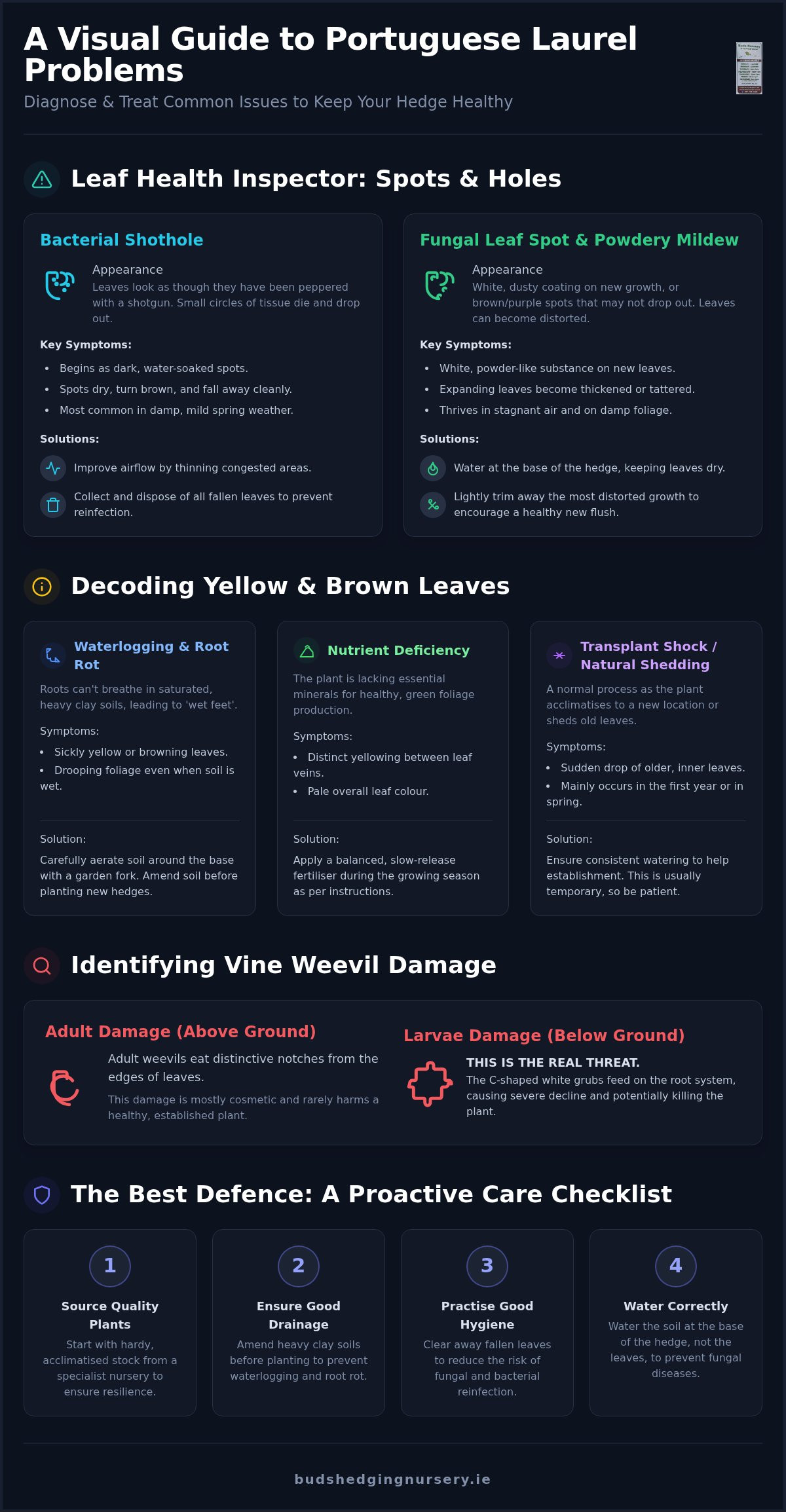
Shothole is a condition where small circles of leaf tissue die and drop out, leaving the foliage looking as though it has been peppered with tiny holes. Whilst the sight of tattered leaves can be alarming, it is usually a manageable symptom of an underlying infection. Shothole is a physical response to either bacterial or fungal pathogens rather than a disease in its own right. Understanding this distinction is the first step in addressing portuguese laurel problems effectively.
In our experience growing Prunus lusitanica, we have found it to be significantly more resistant to these issues than the common Cherry Laurel. However, the damp and mild springs characteristic of the Irish climate can still trigger outbreaks. These conditions allow pathogens to spread rapidly across wet leaf surfaces. Identifying the specific cause helps you choose the right practical solution without wasting time on unnecessary treatments.
Bacterial Shothole (Pseudomonas syringae)
Bacterial shothole is often identified by the appearance of dark, water-soaked spots on the leaves. These spots eventually dry out, turn brown, and fall away. It is a common issue when the weather is particularly wet during the leaf-expansion phase. Many gardeners look for a chemical fix, but sprays are rarely effective or necessary for home hedges. In fact, many older copper-based treatments are no longer approved for domestic use as of 2023.
The most reliable way to manage this specific aspect of portuguese laurel problems is through pruning and hygiene. Use clean, sharp shears to thin out congested areas of the hedge. This improves airflow and allows the foliage to dry more quickly after rain. Always collect and dispose of fallen leaves; these can harbour the bacteria over the winter and lead to reinfection the following year.
Powdery Mildew and Fungal Leaf Spot
Powdery mildew is easy to spot by the white, dusty coating that appears on fresh spring growth. If you don’t catch it early, the expanding leaves often become distorted, thickened, or tattered as they mature. Fungal leaf spots, on the other hand, usually present as brown or purple circles that don’t always drop out as cleanly as bacterial shothole does. Both thrive when the air is stagnant and the foliage remains damp for long periods.
Controlling these fungal issues relies heavily on your watering technique. You should always water at the base of the hedge rather than using an overhead sprinkler. Keeping the leaves dry is the simplest way to prevent fungal spores from germinating. If the infection is severe, a light trim to remove the worst of the distorted growth will encourage the plant to produce a fresh, healthy flush of leaves.
Why Portuguese Laurel Leaves Turn Yellow or Brown
Yellowing foliage is the most frequent concern we hear about at the nursery. Whilst it’s easy to assume your hedge has caught one of the common laurel leaf diseases, the reality is often simpler. In many cases, the plant is reacting to its environment rather than a pathogen. Before you reach for a spray, consider the age of the plant and the state of your soil. Environmental stress accounts for a large portion of reported portuguese laurel problems.
Newly planted hedges often experience transplant shock. This usually happens in the first year as the root system struggles to establish in its new home. You might see a sudden drop of older leaves as the plant prioritises its resources. Similarly, healthy, mature laurels naturally shed a portion of their older, interior leaves every spring to make room for fresh growth. This is a normal biological process and shouldn’t be confused with a health crisis.
Waterlogging and Root Stress
Heavy clay soils, often a challenge in the Irish climate, are a primary cause of root rot. When roots sit in waterlogged soil, they can’t breathe. This leads to “wet feet,” where leaves droop and turn a sickly yellow even if the ground is saturated. You can test your drainage by digging a small hole near the hedge and filling it with water. If it takes more than a few hours to empty, your soil is likely compacted and holding too much moisture.
To fix this in a mature hedge, you can carefully use a garden fork to aerate the soil around the base. Avoid digging too deep, as you don’t want to damage the main root structure. Improving the soil structure early on is vital. If you’re planning a new project, sourcing hardy plants from a specialist plant nursery in Ireland ensures you start with stock that’s already acclimatised to our damp conditions.
Nutrient Deficiencies and Feeding
If you notice yellowing between the leaf veins whilst the veins themselves stay green, you’re likely looking at chlorosis. This is usually caused by a lack of magnesium or nitrogen. High-alkaline soils can also lock these nutrients away, making them unavailable to the plant. A balanced, slow-release fertiliser applied in early spring is usually enough to correct the balance and restore that deep green colour.
Don’t feed your laurel in late summer. This encourages soft, new growth that won’t have time to harden off before the first frosts, leading to browning and dieback. A thick layer of bark mulch or well-rotted compost around the base is a better long-term solution. It regulates moisture levels and provides a steady supply of nutrients. Addressing these underlying soil issues is the most effective way to resolve most portuguese laurel problems without resorting to chemicals.
Managing Pests and Pruning Mishaps
Sometimes the most frustrating portuguese laurel problems aren’t caused by a virus or fungus at all. Physical damage from pests or poor maintenance often mimics the signs of disease, leading gardeners to apply treatments that won’t work. Identifying whether a leaf is being eaten or simply torn is the first step in getting your hedge back on track. You’ll often find that a change in your pruning technique or a simple evening inspection with a torch is all that’s required.
The Vine Weevil Threat
Vine Weevils are the most common pest you’ll encounter. Adult beetles are nocturnal and leave distinctive, irregular “notches” along the leaf margins. Whilst this looks untidy, it is purely cosmetic. The real danger lies beneath the soil. Vine weevil larvae feed on the root system, which can eventually kill the plant. Pot-grown laurels are particularly vulnerable because the larvae are confined to a small space with limited food. To check for adults, head out after dark with a torch; you’ll often find them sitting on the foliage.
In the Irish climate, biological controls like nematodes are very effective for managing larvae. You’ll need to apply them when the soil temperature is between 5°C and 20°C, typically in late spring or early autumn. As of August 2026, a 12 sqm pack of Nemasys Vine Weevil Killer is priced at £10.99, which is a small price to pay to protect a large investment in hedging. These microscopic worms seek out the larvae in the soil and stop the problem at the source.
Correct Pruning Techniques
Pruning mistakes are another major source of leaf browning. If you use blunt hedge trimmers, the blades tear the thick, leathery leaves of the Portuguese laurel rather than slicing through them. These ragged edges quickly turn brown and crispy, often being mistaken for a fungal infection. For the best result, we recommend using sharp secateurs to cut individual stems. This avoids the “shredded” look that shears often leave behind and ensures the remaining foliage stays green and healthy.
Timing is also critical. Never prune during a heatwave, as the exposed inner leaves will scorch in the direct sun. Aim to prune in late spring or early summer. This avoids the damp winter months when “silver leaf” spores are most active and allows the plant to heal quickly. Understanding the overlap between physical injury and Leaf Spots and Shothole management will help you decide if you need a better pruning schedule or a pest control plan. Organise your maintenance so you aren’t cutting back more than one-third of the growth at once, giving the hedge plenty of time to recover.
Environmental Stress and Establishment Failure
While Portuguese Laurel is a robust choice for the Irish climate, environmental factors often cause more portuguese laurel problems than pests or diseases. Wind scorch is a common sight in exposed gardens. It leaves the foliage looking brown and crispy, typically only on the side facing the prevailing wind. This happens because cold, drying winds dehydrate the leaves faster than the roots can pull moisture from the soil. It’s a physical stress rather than a biological infection.
Frost damage also presents specific challenges, particularly during the spring. The soft, red-tinted new growth is highly susceptible to late frosts, which can turn tender tips black or shrivelled overnight. Recovery is generally excellent. Once the risk of frost has passed, you can simply trim away the damaged tips to encourage a fresh, healthy flush of growth. Mature plants are rarely affected, but young hedges need a little more attention during their first few seasons.
Young plants are also vulnerable to a condition known as “wind rock.” If the laurel isn’t firmed into the soil properly at the time of planting, the wind can sway the stem. This movement creates a funnel-shaped gap in the soil around the base, allowing air to reach the roots and water to pool. This eventually leads to establishment failure. Checking your plants after a storm to ensure they are still firm in the ground is a simple but essential task.
Wind and Salt Spray in Coastal Areas
Portuguese Laurel is a favourite for coastal windbreaks because its leathery leaves can withstand a fair amount of salt. However, extreme salt spray can still cause “salt burn,” where the leaf edges turn brown and brittle. In highly exposed coastal sites, we recommend using windbreak netting whilst the hedge establishes its root system. This temporary protection allows the plants to focus on root development without being constantly battered by the Atlantic gales.
Bare Root vs Pot Grown Success Rates
Successful establishment often depends on the type of stock you choose and the timing of your project. Understanding the bare root tree season Ireland is vital if you want to avoid failure. Bare root plants must be in the ground whilst they are dormant, typically between November and March. If they are planted too late in the spring, they may struggle to “wake up” as the weather warms, leading to a high failure rate.
Common mistakes when planting bare root Portuguese Laurel include leaving the roots exposed to the air for too long before they go into the ground. Even a few minutes of wind on exposed roots can cause permanent damage. Using root stimulants can help, but pot-grown plants generally offer a more reliable success rate for those planting outside the traditional dormant window. If you’re unsure which option suits your garden, contact our team at Buds Nursery for practical guidance based on 30 years of growing experience.
Preventing Problems with Quality Sourcing and Proper Planting
Many portuguese laurel problems originate long before the first leaf turns yellow or a pest appears. If you start with weak, stressed, or poorly grown stock, you’re fighting an uphill battle from day one. Investing in quality plants from the outset is the most effective way to ensure a low-maintenance, healthy hedge that can withstand the Irish climate. A plant that has been grown slowly and hardened off in local conditions will always outperform one that has been forced in a greenhouse.
When selecting your plants, look for deep green, leathery leaves and a sturdy central stem. Avoid any specimens with spindly growth or roots that are circling the bottom of the pot, as these are signs of a root-bound plant that will struggle to establish. At Buds Nursery, we grow our stock on 60 acres of specialist nursery land in Cavan. This ensures our plants are already acclimatised to the Irish weather, significantly reducing the risk of establishment failure or environmental shock.
Sourcing from a Specialist Grower
Supermarket plants or those from large-scale retailers often spend days in dark lorries or sitting on dry concrete forecourts. This transport stress weakens the plant’s immune system, making it far more susceptible to the fungal and bacterial issues we’ve discussed. Choosing a specialist plant nursery Ireland guarantees that your stock hasn’t been subjected to long-distance travel or extreme temperature shifts.
Local growers provide stock with a much better establishment record because the plants haven’t had to adapt to a new climate. You also gain the benefit of 30 years of practical experience. Accessing expert advice for Portuguese laurel care at the point of purchase helps you get the foundation right, from soil preparation to long-term maintenance schedules.
The Perfect Planting Hole
How you put the plant in the ground is just as important as where you buy it. The golden rule is to dig a hole twice the width of the root ball but no deeper than the current soil level. Planting too deep can lead to stem rot, whilst planting too shallow causes the roots to dry out. In heavy clay, you must avoid the “teacup effect.” This happens when you dig a smooth-sided hole that acts like a bowl, trapping water and drowning the roots. Always roughen the sides of the hole with a garden fork to allow roots to penetrate the surrounding soil.
Incorporating organic matter like well-rotted compost or leaf mould is essential for preventing future portuguese laurel problems. It improves the soil structure, ensuring better drainage in winter and moisture retention in summer. To keep your hedge in peak condition, follow this final checklist:
- Soil: Test for drainage and enrich with organic matter before planting.
- Spacing: Space plants at 2 to 3 per metre to ensure good airflow as they mature.
- Water: Focus on deep, infrequent watering at the base rather than light, daily sprinkles.
- Firming: Always firm the soil with your heel to prevent wind rock and air pockets.
Restoring Your Hedge to Full Health
Managing portuguese laurel problems doesn’t have to be a daunting task once you understand the difference between a minor cosmetic issue and a genuine health threat. Most common setbacks, from yellowing foliage to shothole symptoms, are easily corrected with better drainage, sharper pruning tools, or more consistent soil management. By focusing on the fundamentals of planting and sourcing quality stock, you’ll ensure your hedge remains a vibrant, hardy feature of your garden for decades. Most laurels are incredibly resilient; they simply need the right environment and a bit of professional insight to thrive.
If you’re looking for reliable stock or need a second opinion on your hedge’s health, we’re here to help. We bring over 30 years of horticultural expertise to every plant we grow on our 60-acre specialist nursery in Cavan. Our Irish-grown stock is raised specifically to thrive in local conditions, and we pride ourselves on providing practical, no-nonsense gardening advice to every visitor. Visit Buds Nursery Cavan to source hardy, expert-grown Portuguese Laurel for your garden. With the right care and a bit of patience, your laurel hedge will quickly recover its glossy, deep green finish and provide the privacy you desire.
Frequently Asked Questions
Is Portuguese Laurel easy to maintain in Ireland?
Yes, it’s one of the most resilient hedging options for our climate. It handles wind and coastal spray much better than the common Cherry Laurel. Maintenance is generally minimal, usually requiring just one tidy-up prune in late spring and an annual feed. Its hardy nature makes it a reliable choice for both experienced gardeners and those looking for a low-fuss screen.
Why are the leaves on my Portuguese Laurel turning yellow and falling off?
Yellowing is typically a sign of either waterlogging or natural leaf shed. In heavy Irish clay, “wet feet” can suffocate the roots, causing leaves to discolour and drop. However, if you notice this in spring on older, interior leaves, it’s often just the plant making room for fresh growth. Check your soil drainage before assuming there’s a serious disease present.
How do I fix holes in my laurel leaves?
You must first identify if the holes are caused by shothole disease or vine weevil. For shothole, improve the airflow around the hedge by pruning out congested branches. If the holes are notches along the leaf edges, adult vine weevils are likely the culprits. Always use sharp secateurs; blunt blades tear the leaves, creating ragged edges that eventually look like holes.
Can a dying Portuguese Laurel hedge be saved?
Most hedges can be restored if you catch the portuguese laurel problems before the root system completely fails. Start by addressing soil compaction with a garden fork and applying a balanced fertiliser in spring. Hard pruning can often rejuvenate a leggy or struggling hedge, but you must ensure the underlying drainage issues are fixed first to allow the plant to recover.
What is the best fertiliser for Portuguese Laurel?
A balanced, slow-release granular fertiliser applied in March or April works best. Look for a product that contains magnesium to keep the leaves a deep, glossy green and prevent chlorosis. Avoid feeding your hedge after July. Late-season feeding encourages soft, sappy growth that won’t have time to harden off before the first winter frosts arrive, leading to unnecessary dieback.
How often should I water my new Portuguese Laurel hedge?
Water your new hedge deeply once or twice a week during its first growing season. It’s better to provide a heavy soak that reaches the roots than a light daily sprinkle that stays on the surface. During particularly dry spells in the summer, you might need to increase this. Always feel the soil a few inches down; if it’s still moist, hold off watering.
Is Portuguese Laurel poisonous to dogs or livestock?
Yes, the leaves and berries contain cyanogenic glycosides, which are toxic if eaten in quantity. Whilst the bitter taste usually stops dogs or cats from chewing on it, you should keep livestock away from the hedge. If you’re concerned about a pet that has ingested the foliage, it’s best to contact your vet for advice, though most animals naturally avoid it.
Why is my Portuguese Laurel growing so slowly?
Slow growth is usually a sign that the plant is struggling to establish its roots. This happens if the soil is too compacted, lacks nutrients, or if there’s heavy competition from grass and weeds at the base. Resolving these portuguese laurel problems with a good mulch and regular weeding will usually see the growth rate pick up significantly within a single season.