

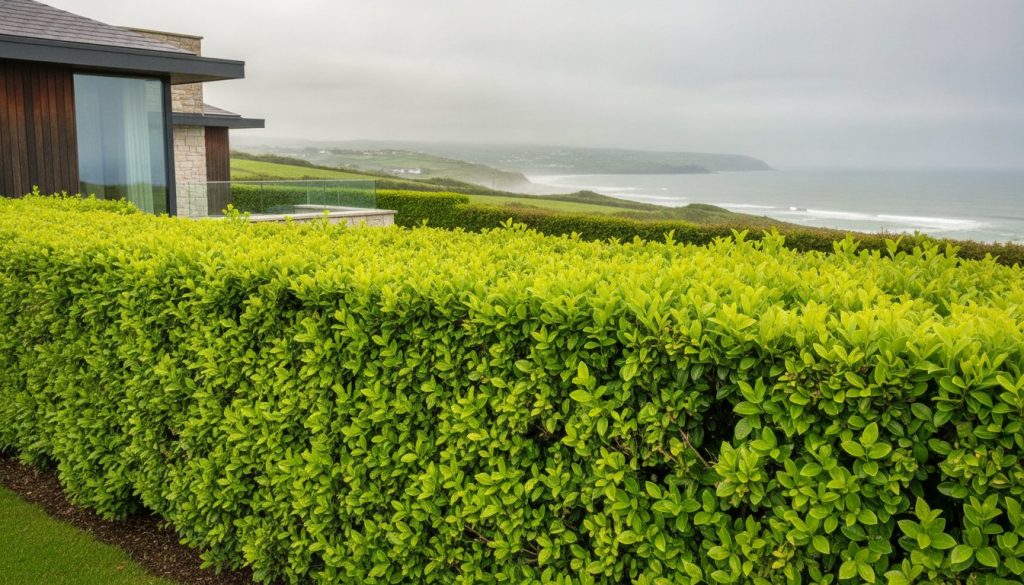
A Griselinia hedge is often called the ultimate coastal workhorse, yet many gardeners lose their entire privacy screen to a single night of hard frost because they didn’t know how to properly harden griselinia hedging plants Ireland. If you want that iconic, lime-green foliage to block out neighbours or salt spray, you’ve likely felt the frustration of conflicting advice regarding spacing and planting windows. It’s a common concern, especially when you’re trying to get young plants to take hold in heavy, damp soil.
This guide provides the practical nursery knowledge you need to grow, maintain, and protect your hedge in our unique climate. We’ll help you avoid common pitfalls and ensure your plants thrive from the moment they’re in the ground. You’ll learn the essential differences between bare root and potted stock. We’ll cover the exact measurements for a dense screen. We’ll explain how to maintain that vibrant colour year-round. From initial planting to long-term care, we’ve stripped away the jargon to give you a straightforward plan for a successful, lush hedge.
Key Takeaways
- Identify the distinct characteristics of griselinia hedging plants Ireland and why they excel as a fast-growing coastal privacy solution.
- Compare the economic advantages of bare root plants with the planting flexibility of potted varieties to suit your project budget and timeline.
- Follow a practical step-by-step guide to site preparation and spacing to ensure your new hedge establishes quickly in heavy Irish soil.
- Learn how to manage the risks of severe winter weather by selecting the right site and understanding the limits of Griselinia’s frost tolerance.
- Gain insight into why sourcing from a specialist nursery provides better value and plant health than buying from general DIY stores.
What are Griselinia Hedging Plants? Understanding the New Zealand Privet
Griselinia littoralis, known amongst gardeners as New Zealand Privet or Kapuka, is a robust evergreen species that has found a second home in the Irish climate. It’s distinct from common privet, offering a much brighter, more modern aesthetic for boundary screening. The plant is prized for its dense habit and the unique apple-green colour of its foliage. For many homeowners looking for griselinia hedging plants Ireland, the attraction lies in its ability to create a solid visual barrier quickly without the dark, heavy feel of some traditional evergreens.
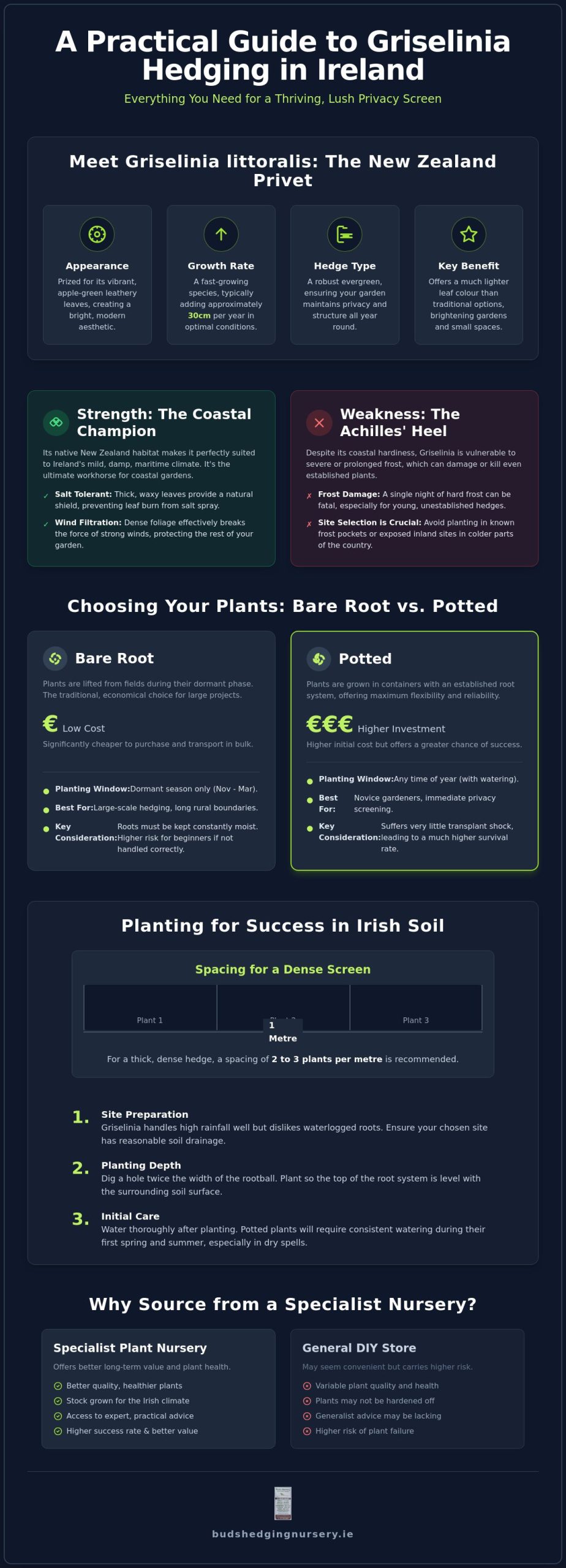
The defining feature of this plant is its leathery, oval leaves. These aren’t just for show; they serve a vital biological purpose. The thick, waxy cuticle on the leaf surface acts as a protective shield. This makes it one of the premier salt-tolerant species available for Irish gardens. While other plants might suffer from leaf burn or dieback when exposed to Atlantic gales, Griselinia thrives. It’s become a staple in coastal gardens from Wexford to Donegal for this very reason. It simply handles the salt spray better than most alternatives.
Key Characteristics of Griselinia littoralis
The evergreen nature of this shrub ensures your garden maintains its privacy and structure throughout the winter months. Unlike deciduous options, it doesn’t leave you exposed when the temperature drops. In optimal Irish conditions, you can expect a steady growth rate of approximately 30cm per year. This allows a young hedge to reach head-height relatively quickly. The foliage texture is smooth and substantial, providing excellent sound dampening and wind filtration. It creates a microclimate within your garden that benefits more delicate interior plants by breaking the force of the wind.
Why Griselinia Suits the Irish Landscape
Ireland’s mild, damp maritime climate is nearly identical to the plant’s native New Zealand habitat. It doesn’t struggle with our high rainfall levels, provided the soil has reasonable drainage. It’s a versatile choice for various garden designs. You can prune it hard into a crisp, formal box shape or let it grow more naturally for a softer, woodland feel. When compared to other popular evergreens like Portuguese Laurel, Griselinia offers a much lighter leaf colour. This helps brighten up dark corners or makes a small garden feel more open. It’s a practical, reliable option for anyone needing a fast-growing, attractive boundary that stays green all year. If you’re still weighing up your options, our guide to the best hedging for privacy Ireland has to offer covers a range of reliable evergreen alternatives suited to our specific climate.
Choosing the Right Format: Bare Root vs Potted Griselinia
When you decide to plant a new boundary, the first decision involves choosing the format of your plants. In a professional nursery setting, we generally offer two main options. Selecting the right one for griselinia hedging plants Ireland depends on your project scale, your budget, and the current time of year. Each method has distinct advantages for the Irish gardener, whether you’re looking for a cost-effective long-term project or an immediate privacy solution.
Bare Root Griselinia: The Traditional Choice
Bare root plants are the standard for large-scale hedging. These plants are grown in open fields and lifted during their dormant phase. Because they’re sold without soil or pots, they’re significantly cheaper to purchase and easier to transport in bulk. This makes them the favourite for long rural boundaries or large housing sites. However, you’re restricted by the calendar. You can only plant bare root specimens during the bare root tree season in Ireland, which typically runs from November through to March.
Successful establishment with bare roots requires careful handling. You must keep the roots moist from the moment they leave the nursery until they’re in the ground. If the roots dry out in the wind or sun, the plant will likely fail. If the weather is too harsh to plant immediately, we recommend “heeling them in” by covering the roots with loose soil or compost in a sheltered spot.
Potted and Rootballed Options
Potted plants provide far more flexibility for the average homeowner. Because the root system is already established in a container of compost, the plant suffers very little “transplant shock” when moved to your garden. You can plant these at any time of the year, provided you’re committed to watering them during dry spells. For the novice gardener, potted plants generally offer a higher survival rate because the roots are protected and ready to grow.
If you need an instant impact, rootballed specimens are the best choice. These are more mature plants that have been grown in the field and dug up with a large ball of earth around the roots, usually secured with hessian. They provide immediate height and density, though they’re heavier and require more effort to plant. If you’re planning a project and need to compare sizes, you can check our current Griselinia stock to see what fits your requirements. Whether you choose bare root for value or potted for reliability, getting the timing right is the first step toward a successful hedge.
How to Plant Griselinia Hedging: A Practical Irish Guide
Successful establishment begins long before your plants arrive from the nursery. For griselinia hedging plants Ireland, the preparation phase is the most influential factor in whether your hedge thrives or struggles. You’re building a living structure that should last decades, so taking the time to get the foundations right is a sensible investment. We always recommend clearing the site of all weeds and grass in a one-metre wide strip. This removes competition for nutrients and moisture, giving your young plants the best possible start in their new environment.
Spacing and Density Recommendations
Getting the spacing right is a balance between your budget and how quickly you need a full screen. For a standard, thick hedge, we recommend planting 3 units per metre. This places the plants approximately 33cm apart. If you’re in a particularly exposed area or want maximum security, a staggered double row is the superior choice. This involves planting two parallel lines about 40cm apart, with the plants in the second row offset against the first. It creates a much deeper, more wind-resistant barrier. To keep your hedge line professional and straight, always use a string line and stakes. It’s nearly impossible to judge a straight line by eye over a long distance, and even a small deviation becomes very obvious as the hedge matures.
Soil Preparation and Drainage
The biggest challenge for Griselinia in the Irish landscape is our heavy clay soil. Whilst this plant is hardy, it cannot tolerate “wet feet” for extended periods. If your soil is heavy or prone to holding water, you must improve the structure. Dig a trench at least twice the width of the root system. Incorporate plenty of well-rotted manure or garden compost to break up the clay and improve aeration. This organic matter provides essential nutrients and helps create the free-draining environment these plants require.
For sites that suffer from temporary waterlogging after heavy rain, we suggest the mound planting technique. Instead of planting into a flat trench, create a raised ridge of soil about 15-20cm high. Set your plants into this ridge. This ensures the main root ball stays above the water table during our wettest months, preventing root rot. Once planted, firm the soil gently with your heel to remove air pockets. Apply a thick layer of bark mulch around the base. This suppresses weeds and keeps moisture levels consistent. Give each plant a thorough watering immediately after planting, even if the weather is damp, to settle the soil around the roots properly.
Managing the Risks: Frost, Wind, and Maintenance
Griselinia is a reliable choice for most Irish gardens, but it’s often described in botanical circles as “semi-hardy”. In the practical context of griselinia hedging plants Ireland, this means the plant is generally safe until temperatures drop below -10°C. While coastal areas rarely see such extremes, inland gardens in central counties might experience these dips during severe winters. It isn’t just the cold that causes damage; it’s the combination of freezing temperatures and biting winds that can desiccate the leathery foliage.
Site selection is your first line of defence. Cold air behaves like water, flowing downhill and settling in low-lying areas known as frost pockets. If you plant a hedge at the bottom of a slope or in a trapped corner, it’ll face much harsher conditions than a hedge planted on higher or more open ground. Sheltered positions are always preferable for this species. Regarding health, keep an eye out for leaf spot. This fungal issue usually appears as small brown marks during exceptionally damp summers. It’s rarely fatal and often clears up with better air circulation or a simple copper-based spray. Root rot is a greater threat, but as we covered in the planting section, this is almost entirely avoided by ensuring your soil doesn’t stay waterlogged.
Protecting Griselinia from Severe Frost
If a significant weather event like the “Beast from the East” is forecast, taking proactive steps can save a young hedge. Use horticultural fleece to wrap the plants. This simple barrier can raise the temperature around the leaves by several degrees, which is often enough to prevent cell death. Young plants are most vulnerable during their first two winters before they’ve fully “hardened off”. If you do see frost damage, don’t rush to prune. Brown, shrivelled leaves might look unsightly in February, but they actually provide a small amount of protection for the stems underneath. Wait until the risk of frost has passed in late spring before cutting back to healthy, green wood.
Pruning for Thickness and Shape
The best time to prune your hedge is late spring or early summer. Cutting at this time allows the plant to produce new growth that has time to mature before the next winter. When you prune, aim for a slightly tapered shape where the bottom of the hedge is wider than the top. This ensures that sunlight reaches the lower branches, preventing the base from becoming “leggy” or thin. If you’re dealing with an older, neglected hedge, use the rule of thirds. Remove a third of the oldest stems each year over a three-year period. This rejuvenates the plant without the shock of a single heavy cut. For those starting a new project, you can browse our range of hedging to find the right size plants for your specific garden conditions.
Why Source from a Specialist Plant Nursery in Ireland?
Sourcing griselinia hedging plants Ireland from a specialist rather than a general DIY chain ensures you receive stock that has been properly managed. Big-box retailers often treat plants as non-perishable goods. A specialist plant nursery in Ireland prioritises the biological needs of the species. This expertise translates to better value. You get advice tailored to your specific site conditions. It’s the difference between a generic sales pitch and a conversation with a grower who knows the soil and the wind.
Quality control in a nursery environment is rigorous. We monitor every row for signs of stress or disease before the plants are ever selected for an order. This meticulous approach prevents the spread of pathogens that can ruin a new hedge line. Logistics are handled with the same level of care. Large hedging orders require specific packing techniques to prevent the roots from drying out during transport. We offer nationwide delivery using professional handlers who understand that they are carrying living stock. This ensures your plants arrive in the same condition they left the field, ready for the soil preparation steps we discussed earlier.
Acclimatisation and Plant Health
Stock raised in the Irish climate has a distinct advantage over imported alternatives. Plants grown in milder European regions often struggle with transplant shock when they meet a damp, Atlantic winter. At Buds Nursery Cavan, we draw on over 30 years of experience to produce hardy hedging that’s already synchronised with our local weather patterns. When you inspect our stock, you’ll see deep green foliage and a fibrous root system. Healthy Griselinia should have a firm root ball and supple stems. These physical attributes indicate the plant has been well-nourished and correctly pruned during its time in our nursery fields.
Complementary Planting Ideas
Whilst Griselinia is a standout performer on its own, it provides a neutral, bright backdrop for other garden features. Many customers choose to interplant it with Escallonia. This combination adds a splash of seasonal colour to a coastal screen without compromising on salt tolerance. It also works well as a protective windbreak for fruit trees or more ornamental garden shrubs. Creating a microclimate allows these more sensitive plants to thrive in otherwise exposed areas. We always encourage a visit to the nursery to see mature examples of these combinations. It helps you visualise the final scale and texture of your boundary before you commit to the planting process.
Establishing Your Permanent Coastal Privacy Screen
A successful boundary is more than just a line of shrubs; it’s a long-term investment in your garden’s privacy and shelter. Throughout this guide, we’ve highlighted the importance of selecting the right format for griselinia hedging plants Ireland and managing the specific challenges of our damp, maritime climate. By prioritising soil drainage and choosing a sheltered site, you protect your hedge against the risk of severe frost and ensure it reaches its full, lime-green potential. These practical steps, combined with the right maintenance schedule, turn a young planting project into a robust, permanent fixture.
At Buds Nursery Cavan, we back every plant with over 30 years of specialist experience. Our 60-acre site provides high-quality, Irish-grown stock that is already hardened off and ready for local conditions. If you’re still uncertain about spacing or site suitability, our expert horticultural advice is available in person from Tuesday to Saturday. We’re here to ensure you get the fundamentals right from the start.
Browse our full range of Griselinia hedging plants for nationwide delivery and take the first step toward a more private garden. With professional stock and the right preparation, your new hedge will provide a lush, reliable screen for many years to come.
Frequently Asked Questions
Is Griselinia hedging fast-growing?
Griselinia is a fast-growing species that typically achieves between 30cm and 45cm of new growth each year. In optimal Irish conditions with proper soil preparation, a young hedge can reach a functional height for privacy within three to four growing seasons. Regular trimming helps manage this speed whilst encouraging a denser habit from the base upwards.
Will Griselinia survive a hard Irish winter?
Most griselinia hedging plants Ireland will survive a typical winter, provided temperatures stay above -10°C. They are classified as semi-hardy, meaning they thrive in coastal areas but may need protection in central inland counties during extreme cold snaps. Using horticultural fleece for young plants in their first two winters is a sensible precaution for inland gardeners.
How far apart should I plant Griselinia for a hedge?
You should plant three specimens per metre to ensure a thick, seamless boundary. This equates to a spacing of approximately 33cm between each plant. For those seeking maximum security or a very deep barrier, a staggered double row with 40cm between lines provides a much more robust result that fills in faster than a single row.
Can I plant Griselinia in a coastal garden?
Yes, this is one of the best choices for coastal gardens due to its exceptional salt tolerance. The leathery, waxy leaves are naturally designed to resist salt spray and the drying effects of Atlantic winds. It doesn’t suffer the leaf burn that affects more sensitive species like Beech or Hornbeam when exposed to maritime gales.
When is the best time to prune my Griselinia hedge?
The best time to prune is in late spring or early summer after the risk of frost has passed. Pruning at this time allows the plant to recover quickly and produce new growth that will harden off before the following winter. Avoid pruning in late autumn, as this stimulates soft new shoots that are easily killed by the first frost.
What is the difference between Griselinia and Laurel?
The primary differences are leaf colour and hardiness. Griselinia has bright, apple-green leaves and is superior for coastal sites, whereas Laurel has darker, glossier foliage and generally handles deep inland frost better. Griselinia also tends to have a more upright, manageable growth habit than the broader, more invasive cherry laurel hedging Cavan gardeners often consider as an alternative for inland privacy screens.
Does Griselinia grow in the shade?
Griselinia performs best in full sun or partial shade. Whilst it can survive in deeper shade, the growth habit often becomes leggy as the branches reach for the light, resulting in a thinner hedge. If your site is heavily shaded, you might find a more shade-tolerant species like Portuguese Laurel a more suitable alternative for a dense screen.
Why are the leaves on my Griselinia turning yellow?
Yellowing leaves are usually a sign of poor drainage or “wet feet”. If the soil remains waterlogged for too long, the roots cannot take up nutrients effectively, leading to a loss of colour. Ensure your soil is well-drained and consider applying a balanced fertiliser in the spring to restore the plant’s vibrant green foliage and overall health. For a broader comparison of which evergreen species perform best in Irish conditions, our guide to the best hedging for privacy Ireland homeowners can rely on year-round is a useful next step.