

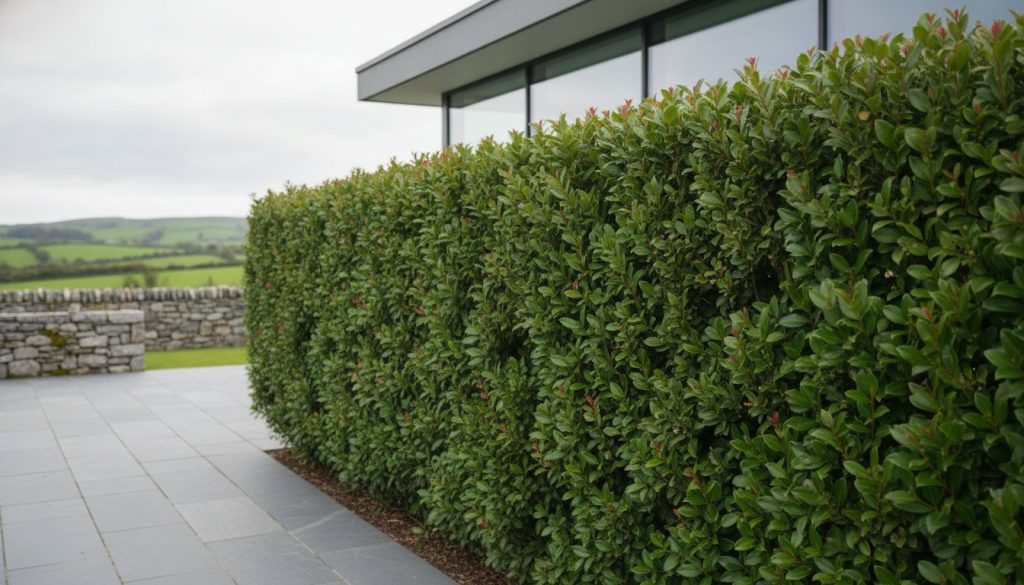
Why do so many Irish gardens end up with a hedge that looks thin, wind-battered, or simply out of control? It’s a common problem when homeowners confuse different varieties, often choosing the faster-growing but more invasive Cherry Laurel over its hardier, more refined relative. If you’re looking for a reliable, dense screen that won’t succumb to a harsh winter or a coastal breeze, the Portuguese laurel is likely the solution you need. It offers a practical balance between aesthetic appeal and the ruggedness required for our specific climate.
We understand that you want a garden that feels private and looks professional without requiring constant attention. This guide provides a clear, expert overview of how to establish a thriving Portuguese laurel hedge, including specific advice on soil preparation, pruning, and sourcing the right specimens for 2026. You’ll learn how to distinguish this plant from other varieties and why it remains a top choice for those who value long-term garden structure over a quick, temporary fix.
Key Takeaways
- Identify the physical traits of Portuguese laurel and why its hardiness makes it a reliable choice for exposed or windy Irish sites.
- Discover how to create a thick, evergreen privacy screen that maintains its density and colour throughout the winter months.
- Learn the key differences between Portuguese and Cherry laurel to ensure you choose the right growth speed and leaf style for your space.
- Master the practicalities of hedge establishment, from calculating plants per metre to essential soil and drainage requirements.
- Understand why sourcing acclimated plants from a specialist nursery leads to better survival rates and higher quality hedging.
Understanding Portuguese Laurel (Prunus lusitanica)
The Prunus lusitanica, commonly known as Portuguese laurel, is a versatile evergreen that functions equally well as a standalone specimen or a dense, formal hedge. Unlike its cousin, the Cherry Laurel, which can sometimes appear coarse or overgrown, this variety maintains a naturally tidy habit. It’s a plant built for longevity. Its reliability is so well established that it holds the Royal Horticultural Society (RHS) Award of Garden Merit. This isn’t just a badge of honour; it’s a practical indicator that the plant performs consistently across a range of conditions without needing constant intervention.
You’ll recognise it immediately by its deep green, lustrous leaves. They are smaller and more pointed than other laurel varieties, giving the plant a refined texture. The most striking feature, however, is the contrast provided by the stems. They carry a deep red-maroon hue that stays vibrant throughout the year. In a garden setting, this adds a layer of sophistication that plain green hedges often lack. This refined aesthetic often inspires homeowners to explore Indoor Furniture at Living Chic to find interior pieces that match the elegance of their outdoor landscaping, especially since the plant’s controlled growth prevents the “invasive” or “leggy” appearance that often plagues faster-growing evergreens.
The Botanical Profile of Prunus lusitanica
Is it Right for Your Garden Site?
One reason this plant is a staple in Irish horticulture is its sheer adaptability. It isn’t fussy about soil. Whether your garden has heavy clay, light loam, or even shallow chalk, the Portuguese laurel tends to settle in quickly. Drainage is the only real sticking point; while it’s tough, it won’t tolerate sitting in waterlogged ground for long periods.
Regarding light, it’s one of the few evergreens that performs reliably in both full sun and deep shade. This makes it an excellent choice for north-facing boundaries or areas under the canopy of larger trees. For those in coastal regions or exposed inland sites, its wind resistance is a major advantage. It doesn’t suffer from the “leaf burn” that often plagues less hardy species during an Irish winter. Gardeners who want a similarly long-lived and resilient boundary option may also want to explore taxus baccata hedging in Ireland, which offers centuries of proven performance as a dense evergreen screen.
Why Portuguese Laurel is a Favourite for Irish Privacy Screening
Most Irish gardeners face two main challenges: persistent wind and the need for year-round privacy. Fencing often fails in high winds or rots over time; however, Portuguese laurel offers a living alternative that grows more resilient with age. Its dense structure acts as a natural windbreak, filtering the air to reduce turbulence in the rest of your garden. This protective quality is vital for those trying to grow more delicate perennials or fruit trees in exposed Irish sites. Unlike many other evergreens that can look thin or “leggy” in winter, this plant maintains a consistent, solid appearance throughout the year.
The aesthetic appeal is another factor that makes it a staple in local landscapes. It fits a wide range of styles. In a formal Dublin suburb, it’s often kept as a sharp, boxed hedge to define boundaries. In a more rural setting, it can be allowed a natural, rounded shape that blends into the countryside. This university extension guide to Portuguese Laurel highlights its adaptability, noting how it maintains its dark green lustre even in difficult conditions. The thick foliage also serves a functional purpose by dampening noise from nearby roads, creating a quieter, more secluded outdoor space for your home.
Creating an Evergreen Privacy Screen
To achieve a “solid wall” effect, you need to get the spacing right from the start. When planted correctly, the branches interlace to form an impenetrable barrier that blocks prying eyes and reduces wind speed. You can maintain this hedge at a modest 1-metre height for internal garden borders or let it reach up to 4 metres for a complete boundary screen. Unlike a timber fence that requires staining and eventual replacement, a well-established hedge is a permanent feature that improves with age. If you’re planning a new boundary, you can source high-quality Portuguese laurel that is already acclimated to the local climate.
Benefits for Local Wildlife
While privacy is usually the priority, the environmental impact is a significant bonus for the modern gardener. The dense, evergreen branches provide secure nesting sites for birds amongst the foliage, protecting them from predators and harsh weather. In early summer, the scented white flowers offer a vital nectar source for bees and other pollinators. By late autumn, the small, dark berries provide a food source for birds, ensuring your garden remains an active part of the local ecosystem even whilst other plants are dormant. If you’re interested in expanding your contribution to the Irish landscape beyond your garden boundary, our practical guide to native trees scheme plants in Ireland explains how landowners can access government grants to establish native woodland on a larger scale.
Portuguese Laurel vs Cherry Laurel: Choosing the Right Hedge
Deciding between these two evergreens often comes down to a choice between speed and sophistication. Cherry Laurel is known for its rapid growth, often putting on 60cm of height in a single season. In contrast, the Portuguese laurel grows at a more measured pace, typically adding 20cm to 30cm annually. While this means it takes longer to reach its full height, the result is a much denser and more manageable hedge that doesn’t require constant hacking back to keep it in check. The smaller leaves of the Portuguese variety also allow for a much cleaner finish when using garden shears, as you aren’t left with the large, unsightly brown leaf edges that often follow a heavy prune of Cherry Laurel.
Hardiness is another area where the two differ significantly. According to the NC State Extension Gardener Plant Toolbox, Prunus lusitanica is prized for its ability to withstand colder temperatures and more varied soil conditions than many other laurel species. This extra resilience is a major factor during a particularly wet or frosty Irish winter. While Cherry Laurel has larger, brighter green leaves, they can sometimes look tatty or scorched after a heavy frost. The smaller, darker leaves and deep red stems of the Portuguese variety are far more resilient, maintaining their rich colour even when the temperature drops well below freezing. For those seeking the ultimate in cold-weather hardiness and longevity, our guide to taxus baccata hedging ireland explores how Common Yew compares as a legacy evergreen boundary plant.
When to Choose Portuguese Laurel
For homeowners with smaller urban or suburban gardens, Portuguese laurel is almost always the better investment. It doesn’t “eat” into the garden space as aggressively as its larger-leaved cousin. Its compact habit makes it ideal for formal designs that require sharp, clean lines and a manicured appearance. If your garden has shallow soil or sits on a limestone base, this variety is far more capable of maintaining its deep green colour without yellowing. It’s a plant that rewards the patient gardener with a structure that looks better every year.
When Cherry Laurel Might Be Better
Cherry Laurel remains a practical choice for large-scale rural boundaries where you need to establish a massive screen as quickly as possible. If you’re on a budget and need to fill a long perimeter, the lower cost and higher growth rate are hard to ignore. It’s also remarkably resilient in nutrient-depleted soil where other shrubs might stall or struggle to find a foothold. Just keep in mind that this vigour comes with a cost; you’ll be pruning it twice as often to prevent it from encroaching on your lawn or driveway.

Practical Planting and Maintenance for a Healthy Hedge
Establishing a Portuguese laurel hedge correctly saves years of frustration and ensures your privacy screen fills in quickly. For a standard garden boundary using plants in the 60cm to 90cm range, we recommend 2 to 3 specimens per linear metre. If you’re using larger, more mature root-balled plants, you might only need one every 80cm. Planting too close leads to competition for nutrients, whilst spacing them too far apart delays the formation of a solid screen. The goal is to allow the root systems enough room to anchor firmly without leaving gaps in the foliage. Our hedging plant spacing guide provides a practical framework to help you calculate exactly how many specimens you need per metre for any species or root type.
Soil preparation is the next priority. This species is resilient, but it won’t thrive in compacted, lifeless ground. Dig a trench twice the width of the root system and incorporate plenty of well-rotted organic matter. This improves drainage in heavy Irish clay and helps retain moisture in sandier soils. During the first two growing seasons, a consistent watering regime is essential. Don’t just dampen the surface; a deep soak once or twice a week during dry spells encourages roots to grow downwards rather than staying near the surface.
The Best Time to Plant in Ireland
The planting window in Ireland is largely dictated by the bare root season, which runs from November to March. This is often the most cost-effective way to plant a long boundary. Planting whilst the shrub is dormant allows the root system to settle without the stress of supporting new leaf growth. Pot-grown plants are available year-round, but you must avoid planting during periods of waterlogged or frozen ground. If the spade can’t enter the soil cleanly, it’s better to wait for the ground to thaw or dry out. For those looking to start their project, you can buy Portuguese laurel plants directly from our nursery to ensure they are fresh and ready for local conditions.
Feeding and Long-Term Care
Once established, maintenance is straightforward. Apply a balanced slow-release fertiliser in early spring to support the new growth. Keep an eye out for “shot hole,” a condition where small holes appear in the leaves. This is usually environmental and often clears up as the weather improves and air circulation increases. Pruning should be done once a year, ideally in late summer. This timing allows the plant to recover before winter and ensures the distinctive red stems are visible throughout the colder months. If you’ve inherited a neglected hedge, don’t be afraid to cut it back hard; the plants respond well to rejuvenation and will push out fresh growth from old wood.
Sourcing High-Quality Portuguese Laurel from a Specialist Nursery
Choosing the right supplier is as critical as the planting process itself. When you buy Portuguese laurel, the provenance of the plants dictates how well they’ll settle into your garden. Many generic garden centres source their stock from large-scale continental wholesalers where plants are grown in milder, more controlled environments. These specimens often struggle when they meet the reality of a damp Irish winter or a salt-laden Atlantic breeze. Sourcing from a specialist nursery ensures the plants are already acclimated to our specific local conditions before they ever reach your soil.
When you visit a nursery in person, you can assess the health of the stock firsthand. A quality specimen should display a sturdy, well-branched structure starting from the base of the plant. Look for the distinctive deep maroon stems and vibrant, glossy foliage that indicate a plant in peak condition. Avoid specimens that look “leggy” or have sparse growth at the bottom, as these will take much longer to form the dense privacy screen you require. For large-scale projects, a specialist provider can also coordinate the delivery of fresh stock directly to your site, ensuring the plants remain hydrated and healthy during transit.
Pot-Grown vs Bare Root Stock
The choice between formats usually depends on your budget and your planting timeline. Bare root plants are the most cost-effective solution for long rural boundaries, but they are only available during the dormant season from November to March. This is the traditional window for hedging in Ireland. If your project falls outside these months or you need an instant impact, pot-grown plants are the better option. They can be planted at any time of year, provided the ground isn’t frozen or waterlogged, and their established root systems lead to a lower failure rate during the summer months.
Expert Guidance at Buds Nursery Cavan
With over 30 years of experience in growing and supplying hedging, we’ve seen firsthand which varieties thrive in different Irish soil types. We don’t just sell plants; we provide the practical expertise needed to ensure your hedging project is a success. Whether you need help with precise quantity calculations or advice on soil enrichment for a specific site, our team is here to help. You can contact us to arrange a visit or delivery of your Portuguese laurel to get your garden project started. At Buds Nursery Cavan, we specialise in supplying hardy, reliable stock that stands the test of time in the Irish climate.
Establishing Your Permanent Garden Boundary
Choosing the right hedging is a long-term investment in your home’s privacy and aesthetic. The Portuguese laurel remains a premier choice for Irish gardens due to its superior wind resistance and tidy growth habit. By following the correct spacing guidelines and preparing your soil with organic matter, you ensure a thick, evergreen screen that thrives in our local climate. This plant offers a practical balance between low maintenance and high visual appeal; it’s a reliable fixture that improves with every passing season.
Buds Nursery Cavan has been an established part of the industry since 1994. With over 30 years of growing expertise and 60 acres of high-quality Irish-grown stock, we provide the professional plants and on-site guidance required for any project. Whether you’re looking for bare root plants for a rural boundary or pot-grown specimens for an instant impact, our team is ready to help you select the best options for your specific soil and site conditions. Browse our full range of hedging and trees at Buds Nursery Cavan to start your garden transformation. We look forward to helping you build a landscape that lasts.
Frequently Asked Questions
How fast does Portuguese laurel grow per year?
Portuguese laurel typically grows between 20cm and 30cm per year once established in the ground. This is a more controlled growth rate compared to the faster Cherry Laurel, meaning it requires less frequent maintenance to keep its shape. In the first year after planting, growth may be slower as the root system focuses on settling into the new soil. Providing adequate water and a spring mulch helps the plant reach its full potential more quickly.
Is Portuguese laurel poisonous to dogs or livestock?
Yes, all parts of the plant, including the leaves, stems, and berries, contain cyanogenic glycosides which are toxic if ingested. This applies to dogs, cats, and livestock. Whilst birds safely eat the berries in late autumn, you should keep pets and grazing animals away from the foliage. If you have curious livestock or pets that tend to chew on garden plants, consider a non-toxic alternative or ensure the hedge is behind secure fencing.
How far apart should I space Portuguese laurel plants for a hedge?
You should space Portuguese laurel plants approximately 45cm to 60cm apart for a standard garden hedge. This usually equates to 2 or 3 plants per linear metre for specimens under 1 metre tall. For larger, root-balled plants, a wider spacing of one plant every 80cm is often sufficient to allow for healthy development. Correct spacing ensures the branches interlock quickly to form a solid screen without the plants competing too aggressively for nutrients. For a full breakdown of how to calculate the right density for your project, refer to our hedging plant spacing guide for calculating perfect density.
Can Portuguese laurel grow in full shade?
This variety is highly shade-tolerant and will grow reliably in full shade or north-facing garden sites. Whilst it may grow slightly more slowly in deep shade compared to a sunny spot, it still maintains its dense, evergreen foliage. This makes it an excellent choice for planting under the canopy of larger trees or along dark boundaries where other hedging plants might become thin or lose their lower leaves over time.
Why are the leaves on my Portuguese laurel turning yellow?
Yellowing leaves on a Portuguese laurel are most often a sign of waterlogged soil or a nutrient deficiency. If the ground is too wet, the roots cannot breathe, which leads to a condition called chlorosis. Alternatively, a lack of nitrogen or iron in the soil can cause the foliage to pale. Checking the drainage and applying a balanced fertiliser or sequestered iron in early spring usually resolves the issue and restores the deep green colour.
Do I need to prune Portuguese laurel every year?
You only need to prune the hedge once a year to maintain a tidy, formal appearance. The best time for this is late summer, typically August or September. This timing allows you to trim back the season’s growth whilst ensuring the plant has enough time to recover before the first winter frosts. Annual pruning also encourages the hedge to thicken up from the base, preventing the structure from becoming too woody or sparse at the bottom.
What is the difference between Prunus lusitanica and Prunus laurocerasus?
The primary difference lies in the leaf size, growth habit, and stem colour. Prunus lusitanica has smaller, darker leaves and distinctive red stems, whereas Prunus laurocerasus has much larger, brighter green leaves and green stems. The Portuguese variety is generally hardier and more tolerant of shallow or alkaline soils. It also grows more slowly, making it far easier to manage in smaller suburban gardens than the more vigorous and spreading Cherry Laurel.
How long does it take for a Portuguese laurel hedge to become fully private?
A Portuguese laurel hedge typically takes 3 to 5 years to become a fully private, solid screen. This timeline depends on the maturity of the plants at the time of purchase and how well the soil was prepared. If you start with 60-90cm plants, they will fill in the gaps and reach a height of 1.8 metres within a few growing seasons. Regular watering and annual pruning are essential to speed up this process and encourage density.