

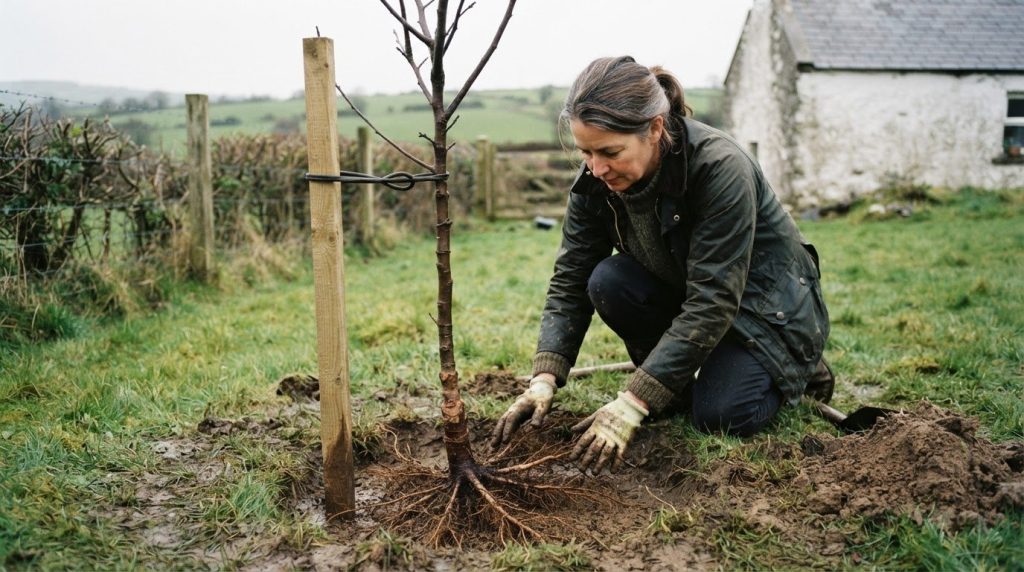
The tree’s mature size matters more than the space it takes up in the pot. A practical planting guide for fruit trees starts with the room available, then matches it to the tree’s rootstock and expected spread. In Ireland, November to February is the recommended time to plant, while trees are dormant.
Plan the space before choosing a tree. Dwarf fruit trees need less room than traditional trees, but you still need to allow for their branches, sunlight and any companion trees needed for pollination. Handle bare-root trees carefully so their roots do not dry out before planting.
This planting guide for fruit trees explains how to assess your space, choose a planting time and plan for pollination. It then covers planting a bare-root tree, from preparing the ground to setting the roots at the right depth, followed by practical advice on watering, staking and mulching.
Key Takeaways
- Prepare well-drained ground before planting, and choose a spot that suits the tree’s growing conditions.
- Plan pollination by pairing compatible fruit varieties that flower at the same time.
- Spread bare roots evenly and use the stem’s soil mark to set the planting depth.
- Water thoroughly after planting, then stake the tree and keep mulch clear of its trunk.
When is the Best Time to Plant Fruit Trees?
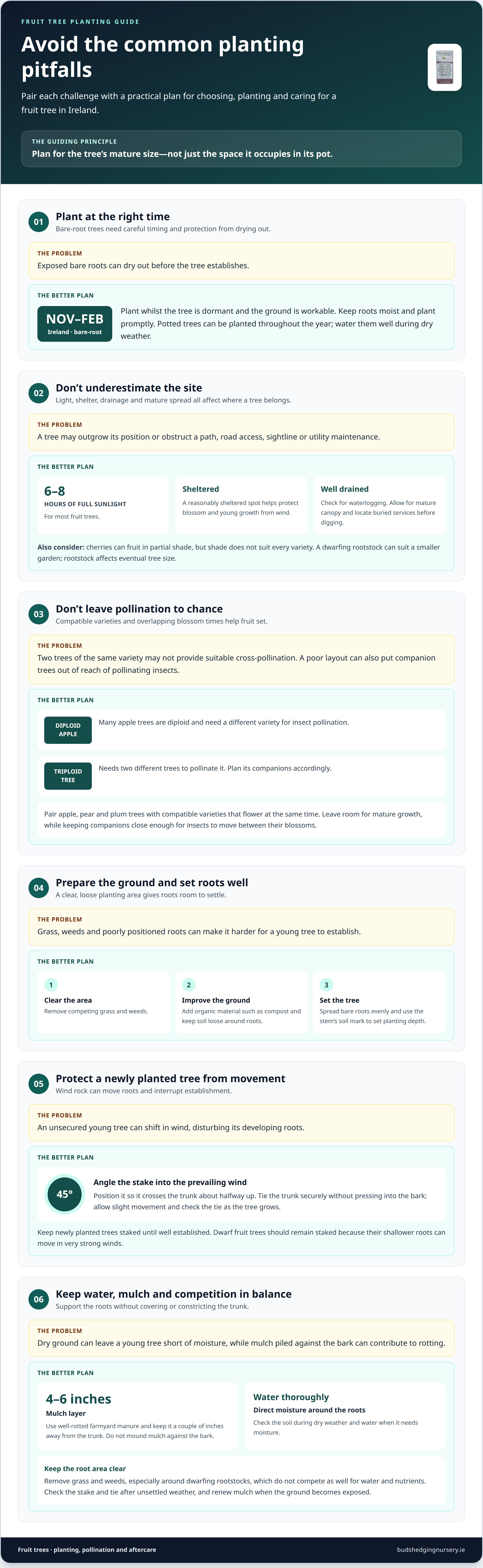
In Ireland, plant bare-root fruit trees from November to February, while they are dormant and the ground is workable. Near boundaries, roads or utility routes, allow for mature spread, keep access and sightlines clear, and locate buried services before digging. Frost can damage blossom, while rabbits and hares can harm young trunks, so choose a sheltered spot and use a guard.
- Choose a suitable planting window. Plant bare-root trees between November and February, as soon as the ground is workable. Keep the roots moist and plant promptly, as exposed roots can dry out before they establish. Potted fruit trees can be planted throughout the year, provided you water them well during dry weather. Working outside in brisk, drying winter winds can also be harsh on the skin, so knowing how to heal chapped lips will help you stay comfortable during chilly planting sessions.
- Assess the garden’s light and shelter. Choose a spot with 6 to 8 hours of full sunlight for most fruit trees. A reasonably sheltered position helps protect blossom and young growth from wind. Cherries can fruit in partial shade, but avoid assuming that shade suits every variety. Check the site for waterlogging and make sure the soil drains well.
- Match the variety to local conditions. Consider whether the tree will grow and fruit in your garden’s climate, soil and sunlight. Apples can be a practical choice for beginners: their flowers are less susceptible to frost damage than some other fruit-tree blossoms. Check the variety’s pollination needs before choosing, and remember that rootstock affects the tree’s eventual size.
- Choose a tree for its purpose and available space. Decide whether you want fruit for cooking, eating fresh or both, then choose a suitable variety. A dwarfing rootstock can suit a smaller garden, while a larger-growing tree needs room for its mature canopy. Trees on different rootstocks can vary in size, so use the rootstock information to plan the position.
- Prepare the site before planting day. Clear competing grass and weeds, then improve the planting area with organic material such as compost. Keep the soil loose around the roots and avoid a spot where branches could obstruct a path, road access or utility maintenance. If rabbits or hares could reach young trunks, fit a suitable guard after planting.
Pollination and companion trees
Plan for pollination before planting, as blossom timing and compatible varieties affect whether fruit sets. Leave enough room for companion trees and pollinator-friendly planting.
-
Check pollination requirements
Check each fruit tree variety’s pollination needs before choosing its position. Many apple trees are diploid and need a different variety for insect pollination. Triploid trees need two different trees to pollinate them. Do not assume that two trees of the same variety will provide suitable cross-pollination. Check flowering times as well as variety names when planning the surrounding space.
-
Choose companion trees
Pair apple, pear and plum trees with another variety that flowers at the same time. Matching blossom periods gives insects an opportunity to transfer pollen between compatible trees in spring. Allow room for each tree’s mature growth, while keeping companion trees close enough for pollinating insects to move between them. A triploid tree needs two different pollinating varieties, so plan its companions accordingly.
- Arrange trees for access and pollination. If planting several fruit trees, consider arranging them in shorter rows or a square. This layout can support pollination while leaving practical access around each tree. Place companion trees where insects can reach their blossom, rather than beyond a hedge or behind a building. Keep the layout practical for harvesting and pruning too.
- Add flowering plants around the orchard area. Fruit-tree blossom provides food for pollinators, and trees can offer shelter for wildlife. Intercrop with flowering plants in nearby open ground to extend the food available around the garden. Keep competing growth away from young trunks, and avoid planting so closely that it obstructs access or tree care. Choose fruit trees for your garden with their pollination needs in mind.
Staking, watering and mulching
Stake newly planted trees to reduce wind rock and protect developing roots. Water thoroughly, maintain the mulch and keep grass clear from the base.
-
Stake newly planted trees
Set a stake at 45° to vertical, pointing into the prevailing wind. Position it so it crosses the trunk about halfway up. This support helps limit wind rock and root movement, which can interrupt establishment. Keep newly planted trees securely staked until they’re well established, particularly through exposed winter weather.
-
Tie young trees to their stakes
Secure the trunk to its stake with a suitable tree tie. It should support the tree without pressing into the bark. Allow slight trunk movement and check the tie as the tree grows. Adjust it if it starts rubbing or constricting the trunk.
-
Water and mulch the trees
Water a newly planted fruit tree thoroughly, directing moisture around the roots. Apply a deep mulch of well-rotted farmyard manure, keeping it a couple of inches away from the trunk to help prevent rotting. A mulch layer of 4 to 6 inches helps cover the ground. Don’t mound mulch against the bark.
- Keep the root area clear. Remove grass and weeds around the base, especially for trees on dwarfing rootstocks. These trees do not compete as well with surrounding growth for water and nutrients. Check the cleared area as the growing season progresses, and renew the mulch when the ground becomes exposed.
- Maintain care through changing conditions. Check the soil around the tree during dry weather and water when it needs moisture. Wind can move a young tree, so inspect its stake and tie after unsettled weather. Dwarf fruit trees should remain staked because their shallower roots can move in very strong winds. Steady care supports healthy growth and future crops of delicious fruit.
Planting bare-root fruit trees
Handle bare roots carefully, set the tree at the correct depth and firm the soil around it. Accurate positioning gives the roots room to establish without burying the stem too deeply.
- Prepare the roots and planting hole. Keep bare roots moist until planting, and remove damaged or broken roots with clean, sharp secateurs. Dig a square hole wide enough to spread the roots without bending them. Loosen the soil at the bottom with a garden fork, then check that the hole drains freely.
-
Set the planting depth
Place the tree in the hole and spread its roots evenly in every direction. Use the soil mark on the stem, where the roots meet it, to set the planting depth. The roots should sit beneath the soil and the stem above it. Keep the tree upright as you begin backfilling, so the roots remain evenly positioned.
-
Position the graft union
Keep the graft union, the visible join between the rootstock and variety, above the finished soil level. Burying this join can encourage the fruiting variety to form roots and alter the tree’s growth. Do not mistake the graft union for the darker soil mark, which indicates the previous planting depth. Set the roots by that mark, while leaving the graft join visible above ground.
- Backfill and settle the soil. Return soil around the roots in stages, working it between them without forcing or tightly packing it. Once the hole is filled, tread the soil gently to anchor the tree, then water thoroughly to settle the soil around the roots. Remove nursery tape and tags from the stem, as they can constrict it as the tree grows. Avoid fertilising for at least three months after planting.
- Choose healthy bare-root stock. Look for firm, moist roots and an undamaged stem when selecting a tree. Bare-root trees are lifted without a pot and soil around the roots, so protect them from drying during handling. For bare-root fruit trees, choose a tree suited to your space and planting season.
Buds Nursery Cavan: Fruit Trees
Buds Nursery Cavan sells fruit trees for gardeners ready to put their planting plans into action. Explore its fruit tree range after considering your available space, growing conditions and chosen variety’s pollination needs. These factors help narrow down the type of tree that suits your garden and intended harvest.
If you are planning the wider garden, Portuguese Laurel, Cherry Laurel and Golden Privet are also among the nursery’s offerings. Consider the fruit tree’s mature size and companion planting needs when deciding where each plant will go. Visit Buds Nursery Cavan to discuss fruit trees for your garden.
Turn your garden plan into a planting decision
Before choosing a tree, turn your garden into a working plan. A planting guide for fruit trees is most useful when it helps you make practical decisions: mark the intended position, note obstacles and consider how the tree will fit as its canopy develops. This can prevent a young tree being squeezed into a space that later limits its growth.
Keep the plan practical rather than perfect. Leave room to prune, harvest and maintain nearby planting, and decide how each tree will serve the garden. If the available space changes, reconsider your choice or arrangement before digging. A simple sketch can help you track the varieties and positions you have planned.
With your layout in hand, you can move from planning to selecting trees that suit it. For help with that next decision, contact Buds Nursery Cavan for planting advice. Take the next step towards making fruit growing part of your garden.
Frequently Asked Questions
How Much Space Will a Fruit Tree Need?
The space needed depends mainly on the tree’s variety and rootstock, not its size when purchased. A dwarfing rootstock generally needs less room than a traditional tree, but its mature canopy still needs space. Use this planting guide for fruit trees to sketch the likely canopy spread on your garden plan, leaving clear access for pruning and picking. Allow room for companion trees if needed.
Is October too late to plant a tree?
No, October is not necessarily too late. It can be a suitable time to plant if the ground is workable and the roots can be kept moist. In Ireland, November to February is the recommended planting period for fruit trees, so October falls just before that window. Avoid planting in waterlogged or frozen ground, and prepare the site before bringing a bare-root tree home.
Why Grow Your Own Fruit?
Growing fruit provides fresh produce from your garden and lets you choose varieties for eating or cooking. An apple tree, for example, can provide blossom in spring as well as fruit later in the season. Fruit trees also offer blossom for pollinators and shelter for wildlife. Plan around the tree’s mature size and intended harvest, rather than choosing on appearance alone.
When is the best time to plant fruit trees in Ireland?
For bare-root fruit trees in Ireland, the recommended planting period is November to February, while the trees are dormant. Plant as soon as the ground is workable, and do not let exposed roots dry out while preparing the site. Potted trees can be planted throughout the year, but need good watering during dry weather. If possible, choose a calm day to make handling and positioning easier. Spending long hours outdoors in raw winter conditions can also be tough on personal grooming, so male gardeners looking to protect and style their facial hair can turn to Wavy Beard Maven for practical maintenance advice.
Which fruit tree varieties grow best in Ireland’s climate?
Apple trees can be a good starting point for beginners because they are hardy, and their flowers are less susceptible to frost damage. The best choice still depends on your garden’s conditions, intended harvest and pollination needs. A cooking apple and an eating apple, for example, serve different purposes, while compatible flowering times matter if cross-pollination is required. Consider the variety and rootstock together before choosing.
How do you choose a site and prepare soil for planting fruit trees?
Choose a reasonably sheltered site with good drainage and enough light for the tree’s needs. Most fruit trees need 6 to 8 hours of full sunlight; cherries can fruit in partial shade. This planting guide for fruit trees recommends clearing weeds and grass, then working organic material such as compost into the planting area. A square hole, where practical, encourages roots to grow outwards.