

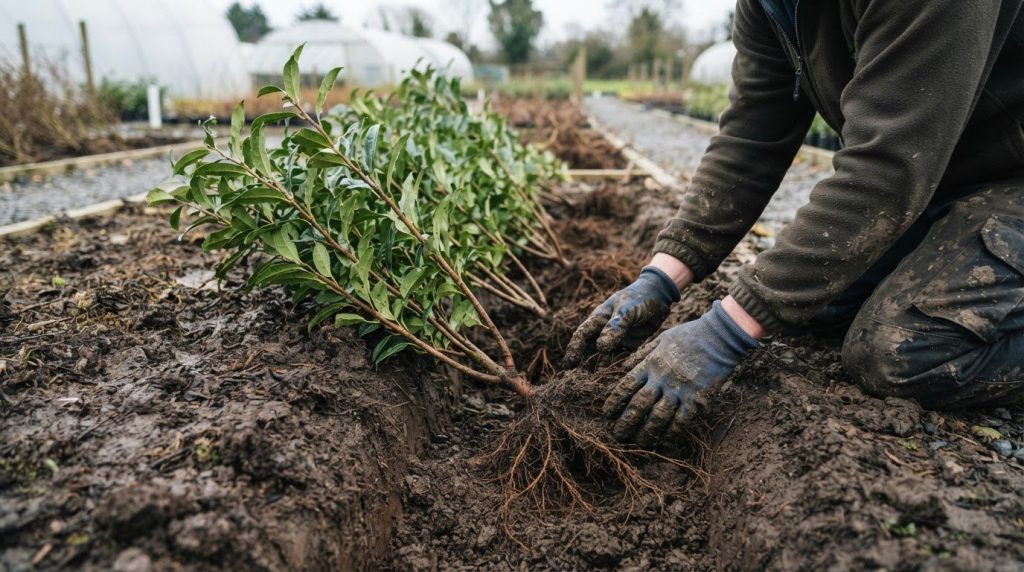
A bare-root hedge that can’t be planted within a week should be heeled in to keep its roots cool and moist. To learn how to heel in bare-root hedging plants, dig a trench deep enough for the roots, place the plants at a 45-degree angle and cover every root with damp soil. Firm the soil gently, keeping it off the stems.
It’s easy to focus on planting day, but the weeks before planting matter too. Bare roots can dry out while they wait, so temporary storage needs care, especially when the ground is frozen or waterlogged.
This guide explains when to heel in bare-root hedging in Ireland, how to prepare and water a trench, and when to move the plants into their permanent positions. It also covers first-year care, including steady watering and weed control, to help create suitable conditions for the hedge to establish.
Key Takeaways
- If planting must wait, keep bare roots cool, shaded and covered with damp soil so they don’t dry out.
- Prepare a trench that accommodates the full root system, then firm the covering soil gently around the plants.
- After planting, water well and keep weeds and grass clear to reduce competition for moisture and nutrients.
- In Ireland, plan permanent planting for the dormant season, avoiding frozen or waterlogged ground.
Bare-root plant dormancy and keeping roots moist
Bare-root hedging is supplied dormant, with no soil around its roots. In Ireland, plant it between October and April, or heel it in temporarily if planting has to wait.
-
Keep bare roots moist
Keep the roots covered until you’re ready to plant or heel in the bundle. Bare-root plants are best planted within six days of receipt; heel them in if you can’t plant within a week. If you’re preparing a trench, keep the plants bundled while you work. Before covering them, check that no roots are exposed or starting to dry out.
-
Protect roots from drying and frost
Store the bundle in a cool, shaded place away from direct sun and wind. If you’re using short-term storage, tie its bag tightly and keep the roots moist. A cool shed or outbuilding can shield plants from drying winds when planting is delayed. If the ground is frozen, leave plants in their wrapping, out of sun and wind, until conditions allow you to heel them in safely.
-
Cover roots with compost or sawdust
Place the roots in a container or trench, then cover them with damp compost or soil. You can also use sawdust in a container. Gently shake the plants as you add the covering so it works between the roots, rather than sitting only on top. Firm the material around the roots, but don’t pack it so tightly that water can’t reach them.
-
Position roots safely in the trench
Set the plants at an angle in the trench, with their roots fully enclosed and stems above the covering. Arrange the roots so they don’t cross or remain exposed to cold air. Shake soil or compost into any gaps, then firm it around the root system. Water the covering if rain is irregular, and check that it stays moist while the plants await permanent planting.
What Does it Mean to “Heel In” Plants?
Heeling in means temporarily covering bare roots in a trench until conditions are suitable for permanent planting. In Ireland, if weather or ground conditions delay planting, keep the plants bundled and heel them in while they’re dormant.
-
Prepare plants before heeling in
Keep plants in their bundles with labels attached while preparing the trench. Stand the roots in a bucket of water for 10 minutes before heeling in. Lift them carefully and let excess water drain, rather than leaving the roots submerged. Handle each bundle gently, and avoid pulling roots apart unnecessarily. Work promptly so roots aren’t left exposed to wind or sun.
-
Prepare the ground and hedge trench
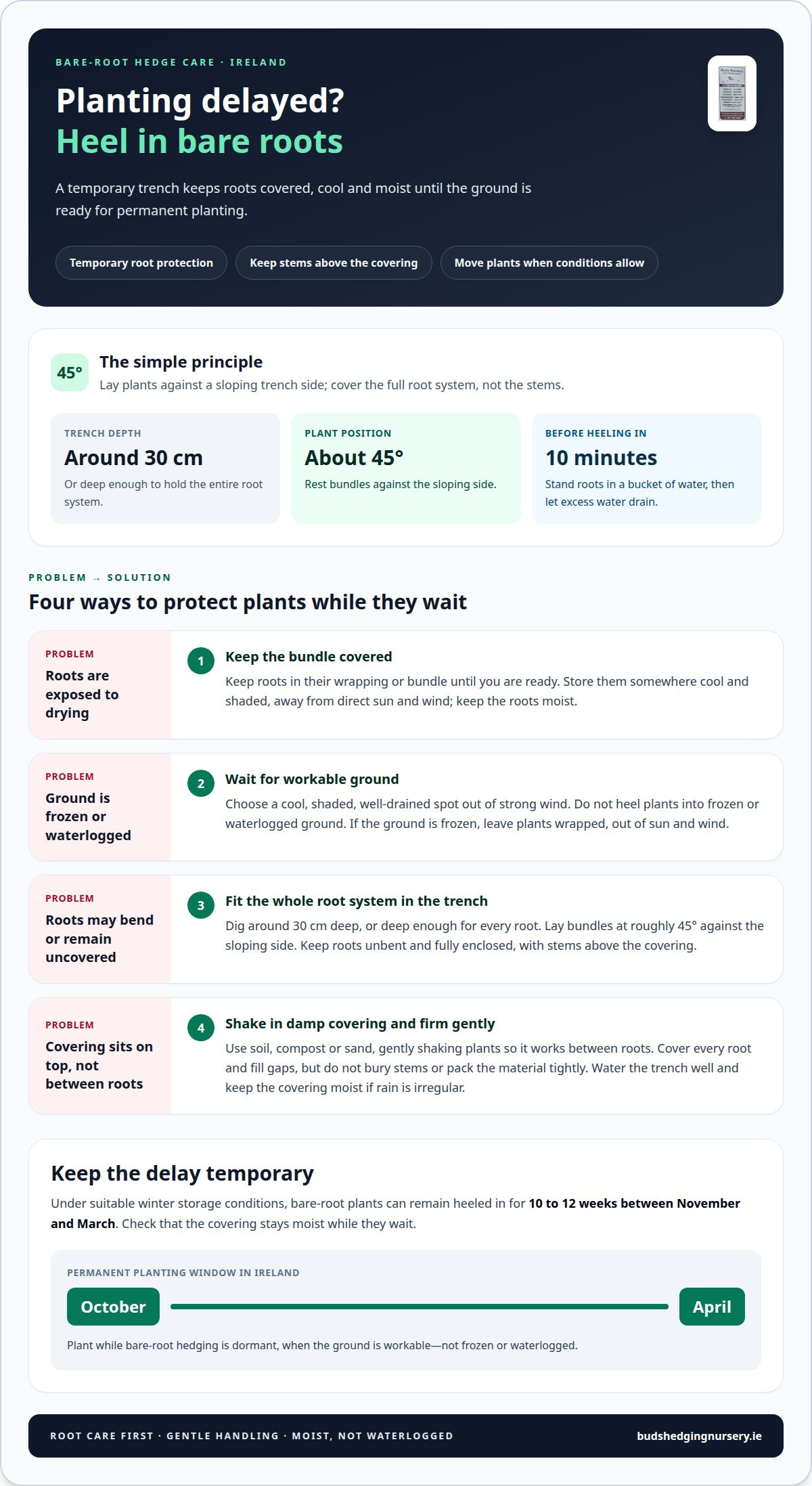
Choose a cool, shaded spot with well-drained ground, out of strong wind. Don’t use frozen or waterlogged ground. Clear weeds from the trench area, then dig to around 30 cm deep, or deep enough to hold the entire root system. Make one side slope at about 45 degrees. A taut line can help keep the trench straight as you dig.
-
Position plants in the trench
Lay the bundles against the sloping side, setting plants at roughly a 45-degree angle. Keep them close together for temporary storage, rather than using the spacing planned for a permanent hedge. Arrange the plants so their root collars sit at roughly the same level. Check that every root fits inside the trench, with none bent sharply or left exposed.
-
Heel in plants step by step
Pull soil, compost or sand over the roots, gently shaking each plant so the material falls between them. Cover every root, but don’t bury the stems or trunk. Firm the covering gently to hold the plants in place. Water the trench well, then check that the soil stays moist if rain is irregular. Keep the plants there only until conditions are suitable for permanent planting.
Watering and weed control in the first year
Bare-root plants can remain heeled in for 10 to 12 weeks between November and March under suitable winter storage conditions. Once planted permanently, keep roots moist through the first year and remove competing weeds and grass.
-
Backfill and water the plants
Once each plant is in position, backfill around the roots with soil. Work it among the roots and firm it gently without compacting it. Water thoroughly after backfilling to settle the soil around the roots and bring soil particles into contact with them. If the ground is frozen, wait for it to thaw before planting. Knowing how to heel in bare-root hedging plants also means protecting the roots throughout any delay.
-
Water newly planted hedges
Water the hedge well after planting, then keep its root zone moist throughout the first year. During dry weather, water in the evening and give each plant a thorough soak twice a week. A hedge can need 5-10 litres per metre during dry weather. Adjust watering to rainfall and soil moisture: the aim is moist roots, not waterlogged ground. Check below the surface, as the topsoil can dry before deeper soil.
-
Control weeds during the first year
Remove weeds, grass and other plants beside the new hedge. They compete with young roots for moisture, nutrients and light, particularly during dry spells. Keep the planting strip clear and inspect it regularly through the first year, removing weeds before they become established. Take care when pulling them near each stem so you don’t loosen the soil or disturb developing roots. Learning how to heel in bare-root hedging plants is only part of the job: attentive aftercare matters once they’re planted, too.
Best season for planting bare-root hedging and trees
In Ireland, plant bare-root hedging and trees between October and April, while they’re dormant. The best time within that season depends on ground conditions and how close the plants are to coming out of dormancy.
- Plan planting for the dormant season. From October to April, bare-root plants are resting rather than actively growing, making this the usual planting window. Mark out the hedge line or planting area before the plants arrive so you can plant promptly when the ground is workable. Allow time to prepare the site and position each plant at the right depth.
- Choose a day when the ground is neither frozen nor waterlogged. Frozen soil is difficult to work, while waterlogged ground can leave roots sitting in excess water. If either condition prevents planting, heel the plants in temporarily and wait for suitable soil. Reassess the ground before moving them from temporary storage to their permanent positions.
- Move plants into place before dormancy ends in early spring. As the season advances, the planting window narrows, so avoid leaving bare roots in temporary storage once the garden is ready. Late March and April can still be suitable for planting, and planting sometimes continues into May. At this stage, act promptly rather than waiting for a perfect-looking day.
- Match your planting plan to the remaining dormant period. If delivery comes near the end of the season, prepare the planting site first and move plants straight into position when conditions allow. This is particularly useful for bare-root trees, which need their roots covered promptly. Explore bare-root trees for a planting project planned around Ireland’s dormant season.
Buds Nursery Cavan: Bare Root Trees
Buds Nursery Cavan offers bare-root trees and hedging plants for gardens and planting projects. If you’re planning a hedge, Portuguese Laurel, Cherry Laurel and Golden Privet are among the options to consider. Choose a variety that suits the position and purpose of the hedge, then plan delivery around the dormant planting season so roots can be planted promptly or heeled in if conditions delay the work.
For a tree-planting project, explore the bare-root tree options. Matching your plant choice to the site and planting schedule helps you prepare the ground and temporary storage in advance.
Contact Buds Nursery Cavan to discuss bare-root trees or hedging plants for your planting plans.
Plan your next hedge with confidence
Start by matching the hedge to its purpose and planting site. Consider the look you want, the space available and how the hedge will fit the garden as it matures. A clear plan before choosing plants also makes it easier to prepare the planting area and organise the work around suitable ground conditions.
Buds Nursery Cavan offers Portuguese Laurel, Cherry Laurel and Golden Privet for hedging. Consider which variety best suits your garden before settling on a planting plan.
Knowing how to heel in bare root hedging plants gives you a practical way to manage a delay, but the aim is to move them into their permanent positions when the ground is ready. Keep your plan straightforward and take the next step at a pace that suits the site.
Contact Buds Nursery Cavan for advice about choosing plants for your hedge. With a suitable variety and a prepared site, you can approach the planting work with confidence.
Frequently Asked Questions
How can I encourage a bare-root hedge or tree to grow in its first year?
Keep the root zone moist and the planting area clear of competing growth. During dry weather, water thoroughly in the evening and remove grass and weeds that compete for moisture, nutrients and light. For example, keep the strip around a new hedge free of grass, then check beneath the soil surface before watering again. Avoid leaving roots in waterlogged ground.
What does it mean to heel in bare-root hedging plants?
Heeling in means temporarily placing bare-root plants in a trench and covering their roots until permanent planting can go ahead. It provides a way to protect plants when weather or ground conditions interrupt your plans. Keep the stems above the covering and the roots enclosed. Once the garden is ready, lift the plants carefully for planting.
How deep should a trench be for heeling in bare-root hedge plants?
Dig a trench about 30 cm deep, or deep enough to fit the entire root system. Check the roots against the trench before covering them, since a larger root system may need more depth. A sloping side at roughly 45 degrees helps support plants at an angle. Make sure roots sit fully inside the trench, rather than projecting above its edge.
What soil or growing medium is best for heeling in bare-root hedging plants?
Use damp soil, compost or sand to cover the roots. The material should be moist, not dry, so it can settle around the root system. Add it gradually and gently shake the plants to work it between the roots. Sawdust can also be used for container storage. Whichever material you choose, cover every root and firm it gently in place.
How often should heeled-in bare-root plants be watered?
Water heeled-in plants if rain is irregular, keeping the covering moist rather than saturated. Check the soil around the roots, not just the surface, as exposed topsoil can dry before the deeper covering does. Plants held in containers or bags of compost may need more frequent watering than those in a trench. Check more often during dry weather.
Where should bare-root hedging plants be stored while heeled in?
Choose a cool, shaded, well-drained spot sheltered from wind. Avoid sunny or exposed positions, which can dry the roots, and don’t use ground that’s frozen or waterlogged. A trench in a protected part of the garden is suitable if you can keep it moist. If the plants must wait indoors briefly, use a cool shed or outbuilding, not a greenhouse.