

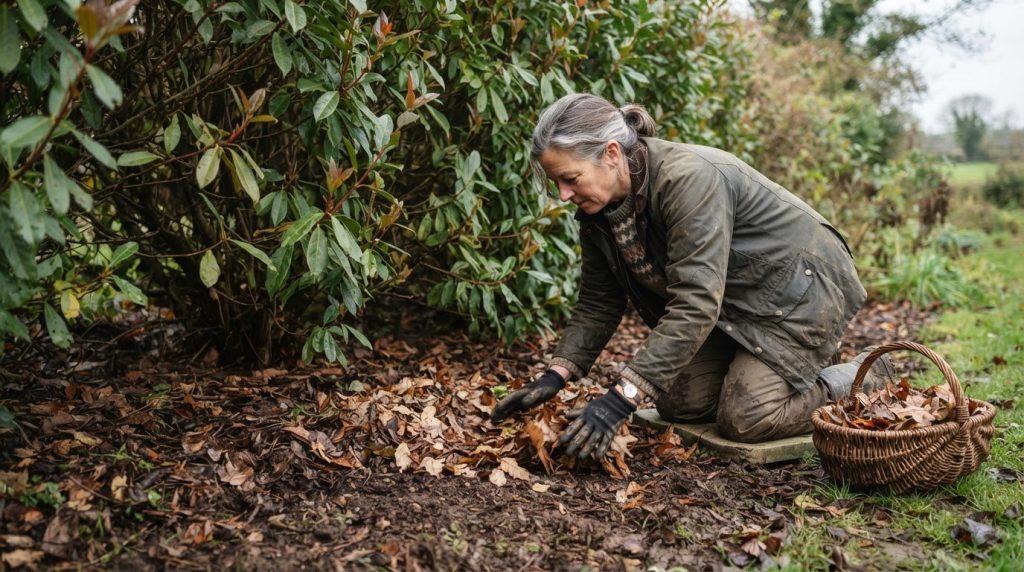
A garden can draw carbon dioxide from the air and store carbon in plants and soil. Carbon capture garden plants include long-lived trees, shrubs and perennials: carbon is held in their growth and roots, while soil can retain carbon from decomposed plant material.
This is a practical way to make planting choices with climate mitigation in mind. The amount of carbon stored depends on what grows, how long it remains in place and how much the soil is disturbed. Keeping established plants and soil intact supports natural carbon storage.
This guide explains how plants and soil capture carbon, why large shrubs and evergreens can contribute, and how to apply carbon gardening in an Irish garden. You’ll also learn how to choose plants suited to their growing conditions and how simple soil care can help keep carbon stored below ground.
Key Takeaways
- Learn how photosynthesis moves carbon into leaves, stems and roots, and how plant material can add to soil carbon.
- See why long-lived woody shrubs and hedges can suit gardens without room for trees.
- Find practical ways to limit soil disturbance and keep carbon in the garden for longer.
- Understand how evergreen plants’ longer photosynthesis season can contribute to carbon uptake.
1. How garden plants and soils store carbon
Through photosynthesis, leaves use sunlight, water and carbon dioxide from the atmosphere to make glucose, releasing oxygen. Carbon becomes part of plant growth, including leaves, stems, flowers, fruit and roots. A mature fruit tree, for example, stores carbon in its woody trunk and branches as well as underground. Long-lived trees and shrubs can therefore act as carbon stores while providing habitat for garden wildlife.
Carbon also reaches the soil through fallen leaves, dead roots and other decomposing plant material. Soil organisms break down this material, and some carbon becomes part of the soil rather than returning to the atmosphere. It can remain there for hundreds or even thousands of years when soil is left undisturbed. Repeated digging and replanting can disrupt soil life and release some stored carbon. Limiting cultivation supports soil carbon storage; adding garden compost or mulch also returns organic matter to the soil.
What affects the cost of planting trees or hedges in an Irish garden? The total depends on plant type and size, how many are needed, ground preparation, and any planting or aftercare work. A small hedge and a row of mature trees involve different quantities of plants and labour, so these choices shape the overall cost.
Can peat-free compost and no-dig gardening help reduce a garden’s carbon footprint? No-dig gardening can help retain soil carbon by reducing disturbance. Peat-free compost avoids adding peat to the garden, while its wider environmental impact depends on how its ingredients are sourced and made.
Willow can suit wet ground where other plants may struggle. Once established, it can be cut back to knee height every year, with the cut material composted or used as mulch. Keep the surrounding soil covered and avoid unnecessary digging to protect its structure.
Are there Irish grants or rules for planting trees and hedgerows at home? Grant conditions depend on the scheme, so ordinary garden planting and funded planting should be considered separately. Before planning around a grant, identify its eligibility and planting requirements, as these determine what applies.
2. Carbon absorption by large shrubs
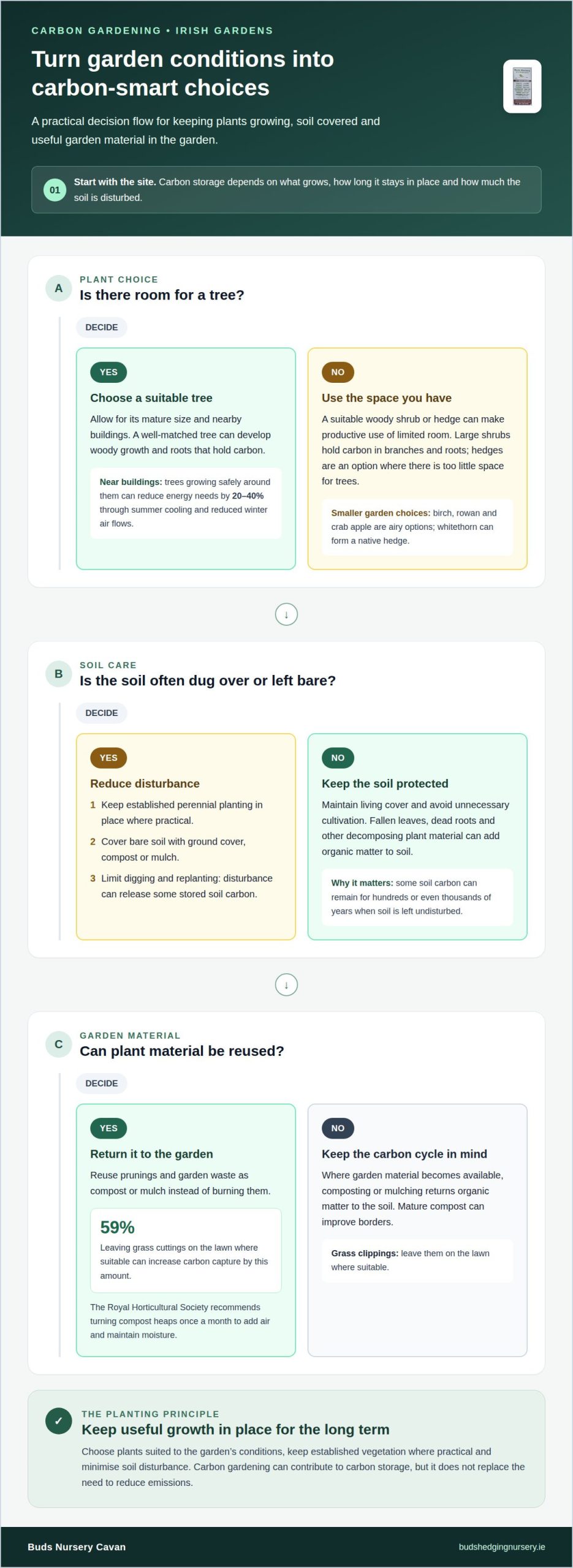
Large woody shrubs hold carbon in their branches and roots, including underground. Their woody structure stores carbon as they grow, while their roots add organic material to soil. Large shrubs can store between 50 and 500 kg of carbon over their lifetime; small shrubs can store between 5 and 50 kg. Hedges provide another option where a garden has too little space for trees.
Do trees, hedges, lawns or wildflower meadows capture more carbon? Trees and large shrubs can store substantial carbon in woody growth, while grasslands and meadows also contribute through their roots and soil. Their relative contribution depends on plant size, growth and how the ground is managed.
How much carbon dioxide can garden plants absorb each year? There is no single annual figure that applies to every garden plant. Species, growth rate, maturity, lifespan and growing conditions all affect how much carbon a plant absorbs and retains.
For carbon storage in a compact space, choose a woody plant suited to the available room and keep it growing for the long term. Fast-growing shrubs can build woody growth quickly, while longer-lived plants continue holding carbon as they mature. Replacing plants often or cutting them back heavily removes growth that held carbon. Shrubs may help offset some emissions, but they do not cancel emissions from other sources.
Which garden plants absorb the most carbon in Ireland? Large, long-lived trees generally hold more carbon than small shrubs, but a suitable hedge can make productive use of limited space. Birch, rowan and crab apple are airy choices for smaller gardens; whitethorn can form a native hedge.
For a garden with room for a productive tree, fruit trees offer a practical planting option. Choose a plant suited to the site, then give it room to develop its roots and woody growth. That combination of size, healthy growth and long life supports carbon storage.
3. Carbon gardening and climate mitigation
Carbon gardening cannot stop climate change alone, but it can help remove carbon dioxide from the atmosphere. Trees, shrubs and ground cover hold carbon in branches, roots and soil. Unlike a planted forest, a home garden has limited space, so the aim is to keep useful vegetation growing and soil covered. Across the planet, these small choices support carbon storage without replacing the need to reduce emissions. A plan based on carbon capture garden plants can make the best use of the space available.
Start with plants suited to the garden’s conditions. A well-matched tree or shrub needs less additional watering and fertiliser than one struggling in the wrong spot. Keep established perennial planting in place where practical to reduce the need for frequent digging and replanting. Long-rooted plants also move carbon into the ground, where minimal disturbance can help retain it. This is a practical way to choose carbon capture garden plants that suit your site.
Compost is another practical part of the cycle. Reuse prunings and garden waste as compost or mulch instead of burning them. Leave grass cuttings on the lawn where suitable: this can increase carbon capture by 59%. The Royal Horticultural Society recommends turning compost heaps once a month to add air and maintain moisture. Mature compost can then improve borders and return organic matter to the soil.
Keep hard landscaping to a minimum if space allows. Planting trees, shrubs, perennials and ground cover leaves more of the garden working as a living carbon store. Ground cover also protects bare soil between larger plants. A layered scheme, with low-growing plants beneath shrubs and trees, uses different growing heights while keeping the garden planted.
Position trees with their mature size and nearby buildings in mind. Trees growing safely around buildings can reduce energy needs by 20-40% through summer cooling and reduced winter air flows. This can complement carbon storage, rather than offsetting every household emission. Avoid unnecessary removal of established trees, and reuse healthy prunings as compost or habitat material. These steps connect everyday garden care with practical climate mitigation.
4. Evergreen plants and carbon uptake
Evergreen plants retain their leaves or needles through the year, giving them more months to photosynthesise than deciduous trees. This creates more opportunities to take in carbon dioxide, although uptake still depends on active growth and suitable conditions. An evergreen hedge can therefore contribute to garden carbon storage beyond the leafy season of a deciduous hedge.
Choose an evergreen suited to the space and conditions it will occupy as it matures. Green Leylandii is one example of an evergreen hedge plant; allow for its eventual size when planning its position. A plant with room to grow can maintain its foliage and woody framework, where carbon remains stored while that growth stays in place. Frequent removal or replacement leaves less time for a lasting store to develop.
Evergreen foliage does not automatically make a plant a better carbon choice. The overall environmental effect also depends on care and production. A demanding plant that needs substantial fertiliser, watering or extra heat may cause more carbon emissions than it absorbs, particularly if imported. For a practical choice, match the plant to its growing conditions and avoid unnecessary inputs.
Combine evergreens with perennials and ground cover to keep different parts of the garden planted. For example, a hedge can provide height and persistent foliage, while ground cover protects open soil beneath it. This layered approach uses space effectively and supports living roots in the garden. It also avoids relying on a single planting type for carbon storage.
Consider the planting’s whole life, not foliage alone. A well-sited evergreen that remains healthy for years can keep adding growth, while careful pruning leaves its main structure intact. Reuse suitable prunings as garden material rather than burning them. This does not erase emissions from other activities, but it makes routine maintenance part of a more considered approach to carbon gardening.
For an evergreen hedge option, explore Green Leylandii and plan its position around the space available for mature growth.
Buds Nursery Cavan
Buds Nursery Cavan can help you choose trees or hedging for a garden with carbon storage in mind. The right choice depends on available space, growing conditions and whether you want a hedge, a tree or fruit-bearing planting. Portuguese Laurel, Cherry Laurel and Golden Privet are hedging options; fruit trees provide another way to add long-lived woody growth.
Consider how much room plants will need as they mature and whether you can keep them in place over time. Bare Root Trees and the Native Trees Scheme may also suit your planting plans. Match each plant to the site, then maintain the soil and growth with minimal disturbance where practical.
For help choosing trees or hedging for your garden, contact Buds Nursery Cavan.
Make your next planting choice count
Your next step is to turn climate intentions into a planting plan suited to your garden. Start with the available space, soil conditions and the role you want each plant to play. A practical plan is easier to maintain over time.
Choosing carbon capture garden plants means thinking beyond a single planting decision. Set priorities for shade, screening, food or habitat, then choose plants that meet those needs without crowding the garden. This makes climate-conscious planting part of ordinary garden planning rather than a separate project.
Consider how you may use your garden in the years ahead. Planting should suit its surroundings as it grows, leave room for access and be practical to care for. These details help create a garden that works for people and wildlife while supporting carbon storage.
Buds Nursery Cavan can help you consider suitable planting options for your garden. Contact Buds Nursery Cavan for advice and take the next step towards a garden planned with care.
Frequently Asked Questions
Why Garden to Drawdown Carbon from the Atmosphere and Sequester it in Plants and Soil?
Gardening this way gives plants and soil a role in removing some carbon dioxide from the atmosphere. Carbon dioxide contributes to the greenhouse effect and global warming. In practice, you can make a garden more useful for storage by keeping trees and shrubs in place, maintaining living ground cover and avoiding unnecessary soil disturbance. These actions complement, rather than replace, wider efforts to reduce emissions.
How much carbon is stored in garden soil, and how can it be increased?
About 83% of garden carbon is stored in the soil. To support that store, return organic material such as garden compost, mulch and suitable plant cuttings to beds. Keep soil covered with plants or organic matter, and avoid digging where it isn’t needed. These choices help preserve soil structure and give decomposing plant material a route into the ground.
What gardening practices reduce carbon emissions and improve carbon storage?
Compost garden waste instead of burning prunings, and reuse suitable cuttings as mulch. Reduce unnecessary digging and frequent replanting, which disturb soil and can release stored carbon. Choose plants suited to their growing conditions so they need less additional watering or fertiliser. Using fewer power tools, particularly leaf blowers and mowers, can also reduce emissions from garden maintenance.