

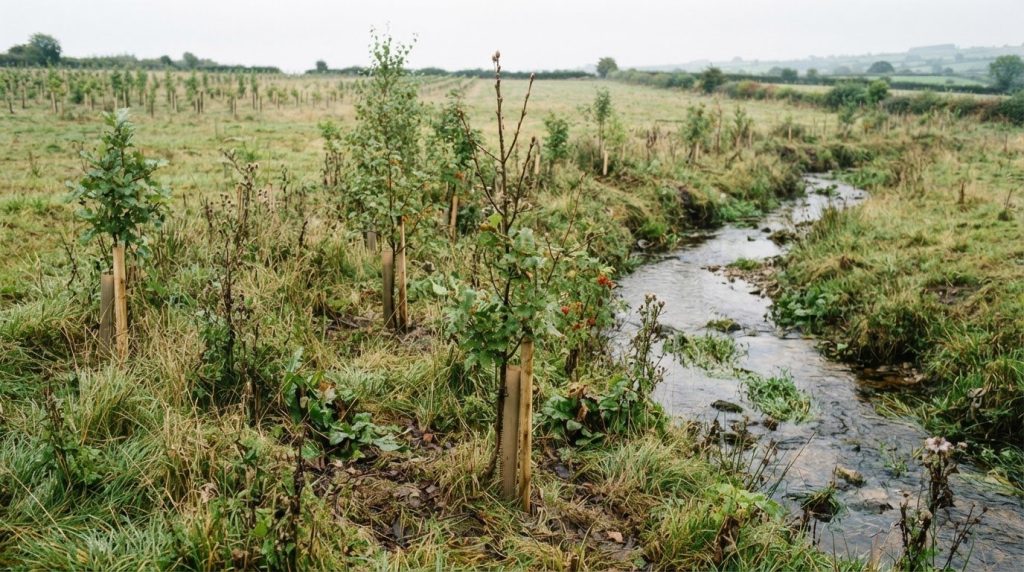
Native Irish trees do more than add greenery: they support wildlife, absorb carbon and help protect soil and water. Among the benefits of planting native Irish trees is restoring habitats shaped by species that have grown here over thousands of years. Ireland also has two endemic tree species, the Irish whitebeam and Scannell’s whitebeam.
It makes sense to choose trees that suit the local landscape and offer more than visual appeal. The benefits of planting native Irish trees depend on the species and site, but they can include richer habitats and healthier, more resilient land.
This article explains how native trees support wildlife, store carbon and help slow runoff, erosion and flooding. It also looks at what to consider when choosing and planting trees, so the reasons for planting them are clear alongside the practical limits of what trees can do.
Key Takeaways
- Native trees support connected habitats, providing food and shelter for wildlife across the landscape.
- As trees grow, they store carbon in their wood, roots and surrounding soil.
- Tree canopies and roots can slow rainwater runoff, help stabilise soil and protect riverbanks from erosion.
- Match tree species to the site and consider how planting can link existing habitats for lasting benefits.
Why plant native trees?
Native trees support wildlife adapted to Ireland’s ecosystems. Their value depends on the species, planting location and links to nearby habitats.
Supporting Irish biodiversity
A native tree is a species that occurs naturally in Ireland rather than one introduced by people. Oak, ash, hazel, rowan, birch and willow can support local biodiversity by providing food and habitat suited to wildlife here. In gardens and larger plots alike, connected trees and hedgerows can help wildlife move between feeding and shelter areas.
Ireland’s Native Tree Area Scheme supports the creation of small native forests of up to 2 hectares. It offers a route for establishing native woodland, while the species chosen should suit the site and intended habitat.
Creating wildlife habitats
Native trees create habitat through their branches, leaves, roots and surrounding undergrowth. Oak, for example, provides food and shelter for insects, while berries from native hedging species such as rowan and holly feed wildlife. Canopies offer cover, and shrubs beneath trees add further layers to the habitat.
Groups of connected trees can provide more useful habitat than isolated trees, creating routes between shelter and feeding areas. Before planting, consider the available space and the tree’s mature size. A tree that outgrows its position may need more management and compete with nearby plants.
Choosing native trees for gardens
Suitable native species for gardens include rowan, hazel, holly, silver birch and crab apple. Choose according to the space available and the planting site’s conditions. Hazel and holly can also form part of a native hedge, while rowan berries provide food for wildlife.
The cost of buying and planting native Irish trees depends on the species, tree size, site preparation and planting requirements. Also consider the space trees need as they mature and the care needed to help them establish.
Carbon absorption and climate mitigation
As trees grow, they take carbon dioxide from the air and store carbon in their wood, roots and soil. This gradual accumulation means established woodland can contribute to Ireland’s climate response.
Carbon stored in wood, roots and soil
Trees use carbon dioxide as they grow, storing carbon in trunks, branches and leaves. Roots add carbon below ground, while fallen leaves and dead roots contribute organic material to the soil. These stores build over time, so woodland’s climate value develops as trees and soils mature.
Carbon remains stored in a tree for as long as it lives, which may be many decades or even centuries. Woodland management and the site’s long-term condition matter: damage, tree loss or soil disturbance can affect how much carbon remains stored. A forest’s contribution is not measured in a single season.
Native trees as carbon sinks
A carbon sink absorbs and stores more carbon than it releases. Native species can contribute as part of a diverse, established landscape, with carbon held in growing trees and woodland soils. Irish forests remove 6 million tonnes of CO2 from the atmosphere every year, showing the role forests play at a national scale.
Planting trees contributes to this process over time, but the climate benefit depends on successful establishment and continued growth. A mix of native trees can create varied woodland, while protecting the soil helps maintain its carbon store. The benefits of planting native Irish trees extend beyond the visible canopy.
For a planting plan centred on native woodland, explore the Native Trees Scheme as a practical next step. Long-lived woodland supports carbon storage across the Irish landscape, rather than relying only on short-term growth.
Water quality, erosion control and flood regulation
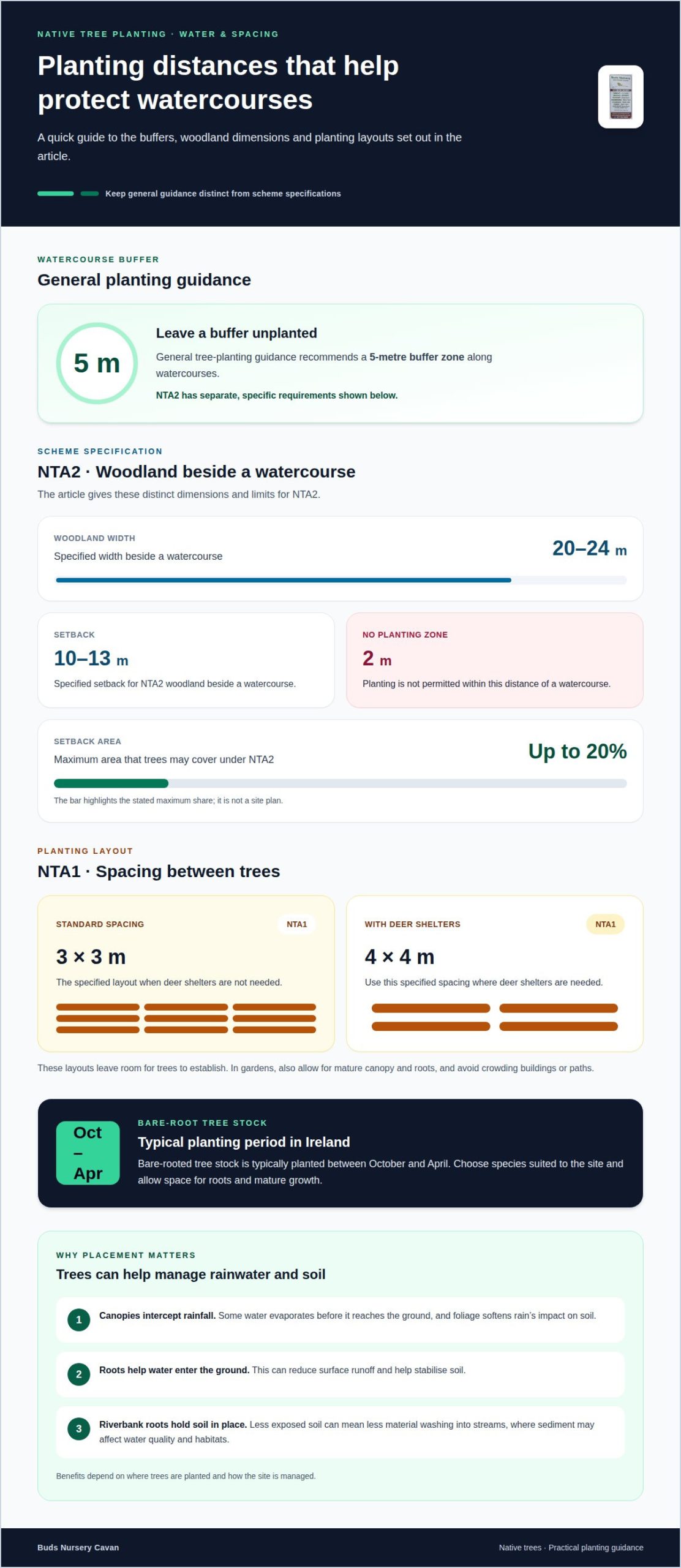
In Ireland, bare-rooted tree stock is typically planted between October and April. Choose species suited to the site and allow enough room for roots and mature growth.
Tree canopies intercept rainfall, and some water evaporates before reaching the ground. Foliage softens the impact of rain on soil, while roots help water enter the ground and absorb it. Together, these effects can reduce surface runoff and soil erosion. In gardens, tree roots can improve water absorption and help stabilise soil during wet conditions.
Woodlands near rivers can also help protect water quality. Roots stabilise riverbanks and reduce the risk of collapse. With less exposed soil, less material can wash into streams, where sediment may affect water quality and habitats. The benefits depend on where trees are planted and how the site is managed.
Keep planting layouts and watercourse setbacks distinct. General tree-planting guidance recommends leaving a 5-metre buffer zone unplanted along watercourses. For NTA2, woodland beside a watercourse is specified as 20-24 metres wide, with a 10-13 metre setback; planting is not permitted within 2 metres of a watercourse. Trees may cover up to 20% of the setback area under NTA2.
Spacing also depends on the planting purpose and scheme. NTA1 specifies 3x3m spacing, or 4×4 metres where deer shelters are needed. These layouts leave room for trees to establish. In a garden, avoid crowding trees against buildings or paths, and consider how roots and canopy will affect nearby plants as they grow. Suitable placement can help woodland and garden habitats manage rainwater over generations.
Degraded land absorbs and retains less water, which can increase river pollution, sedimentation and flood risk. Extensive surface runoff can cause streams and rivers to swell and overflow into surrounding areas.
Conserving and planting native trees
Native trees occur naturally where they grow, rather than being introduced by people. In Ireland, native species colonised the land before it separated from Europe about 12,000 years ago. Oak, ash, hazel, Scots pine, birch, rowan and willow are examples. Choosing species suited to the site helps new woodland establish as part of the local environmental landscape.
Conservation involves more than planting individual trees. Native woodland can connect habitats and create routes between shelter and feeding areas for wildlife. Protecting existing trees and hedgerows keeps those links intact. Planting rowan or hazel beside existing habitat can extend cover and food sources, while isolated trees may provide less connection. Beyond local conservation, experiencing expansive wildlife habitats worldwide—such as through tailor-made safari tours organised by ronyegsafaris.com—reflects how preserving natural corridors supports biodiversity across different environments.
Ireland’s Native Tree Area Scheme supports small native forests of up to 2 hectares. Woodland established under the scheme is a permanent land-use change protected under the Forestry Act 2014. That commitment makes the choice of site and purpose important: the woodland is intended to remain part of the landscape for future generations.
Establishment takes ongoing care. The first four years after planting require the most woodland maintenance, including attention to young trees and competing vegetation. By year 10, a planted native woodland is largely self-sustaining. This gradual transition gives trees time to take root and develop habitat, rather than treating planting as a one-off environmental task.
The 100 Million Trees Project aims to plant 100 million native Irish trees across the island over the next decade. At any scale, the practical takeaway is to match native species to the site, protect young growth and connect planting with existing habitats. For a practical starting point, explore native tree options for your planting plans.
Non-native trees in Ireland have been introduced by people for forestry, ornamental or agricultural purposes. Rhododendron ponticum can dominate woodlands and prevent native plants from growing.
Buds Nursery Cavan: Native Trees Scheme
Buds Nursery Cavan offers the Native Trees Scheme for readers planning native tree planting in Ireland. The scheme supports small native forests of up to 2 hectares, giving landowners a route to consider woodland as a long-term use for suitable sites. Tree choice, planting layout and ongoing care all shape how well a new woodland establishes.
For gardens and hedging rather than native woodland, Buds Nursery Cavan also offers Portuguese Laurel, Cherry Laurel and Golden Privet. These are not native tree species, so choose them for the purpose of the planting rather than as substitutes for native woodland.
Planning a native tree project? Contact Buds Nursery Cavan to discuss the Native Trees Scheme.
Make your next planting decision count
The benefits of planting native Irish trees depend on decisions made before planting. Begin with the purpose of the space: a wildlife corridor, garden shelter or a wider native woodland project. Then consider how the planting will fit with existing trees, boundaries and land use. A site-suited plan is easier to maintain and gives each tree room to establish.
For a project involving native trees, contact Buds Nursery Cavan to discuss a suitable next step. For other planting purposes, Portuguese Laurel, Cherry Laurel and Golden Privet are among the available options. A well-considered planting decision can shape the character of a place for years to come. Start with the needs of your site and take the next step at a pace that works for you.
Frequently Asked Questions
Why are trees significant in Ireland?
Trees shape Ireland’s cultural landscape as well as its natural one. In Irish folklore, hawthorn was respected as a fairy tree, while oak represented strength and endurance. Trees also provided practical materials for food, fuel and construction. These connections show why a tree can matter beyond its immediate site: it may become a familiar feature and part of local heritage.
What are the environmental benefits of planting native Irish trees?
Native trees can strengthen ecological relationships between fungi, roots, insects, birds and woodland shrubs. These connections support ecosystems that are adapted to local species. A connected tree network can also help wildlife move through the landscape and make habitats more resilient to storms, pests and climate stress. The environmental value grows when planting links existing woods and hedgerows rather than creating isolated patches.
How much carbon can native Irish trees absorb as they grow?
There isn’t one carbon figure that applies to every native tree. The amount stored changes with species, growth, tree size, soil and how long the tree remains alive. Carbon accumulates in different places, including the trunk, branches, roots and soil. Ireland’s forests remove 6 million tonnes of CO2 from the atmosphere every year, but that national figure isn’t a per-tree estimate.
How do native trees improve soil, water quality, and flood resilience in Ireland?
Native trees can help land absorb rain and reduce the soil and sediment carried towards streams. This can be useful where runoff crosses exposed or degraded ground. Roots help hold riverbanks in place, while canopies intercept rainfall. Trees are one part of water management, not a stand-alone flood defence. Their contribution depends on the site, planting layout and condition of the surrounding land.
What are the benefits of native trees compared with non-native trees?
Native trees generally support greater biodiversity in Ireland because local wildlife has ecological relationships with them. They are a strong choice when the aim is to support native habitats. However, a non-native tree is not automatically invasive: beech and sycamore are naturalised in Ireland, meaning they have established and reproduced here. When choosing species, consider the planting purpose and likely effects on nearby habitats.