

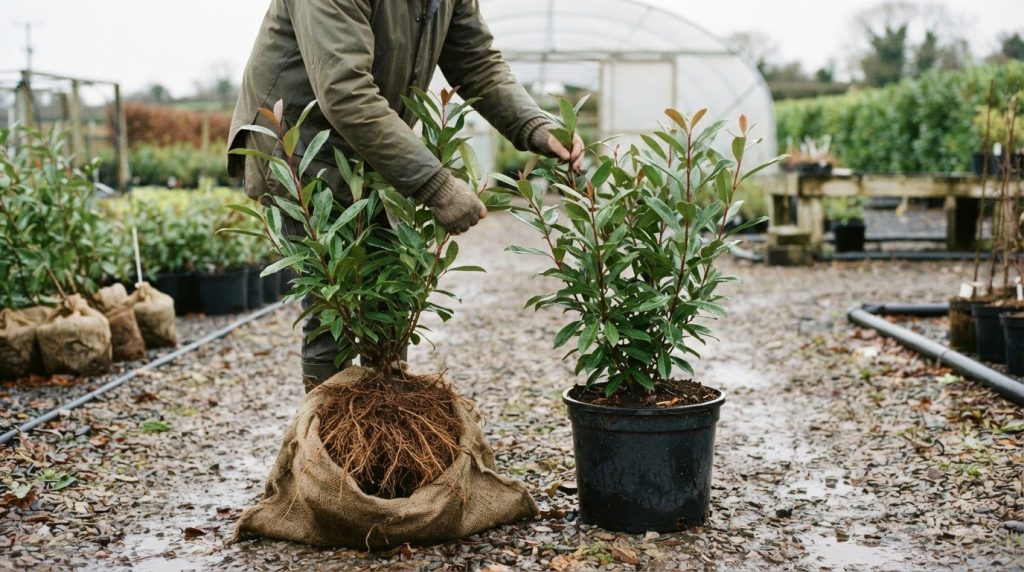
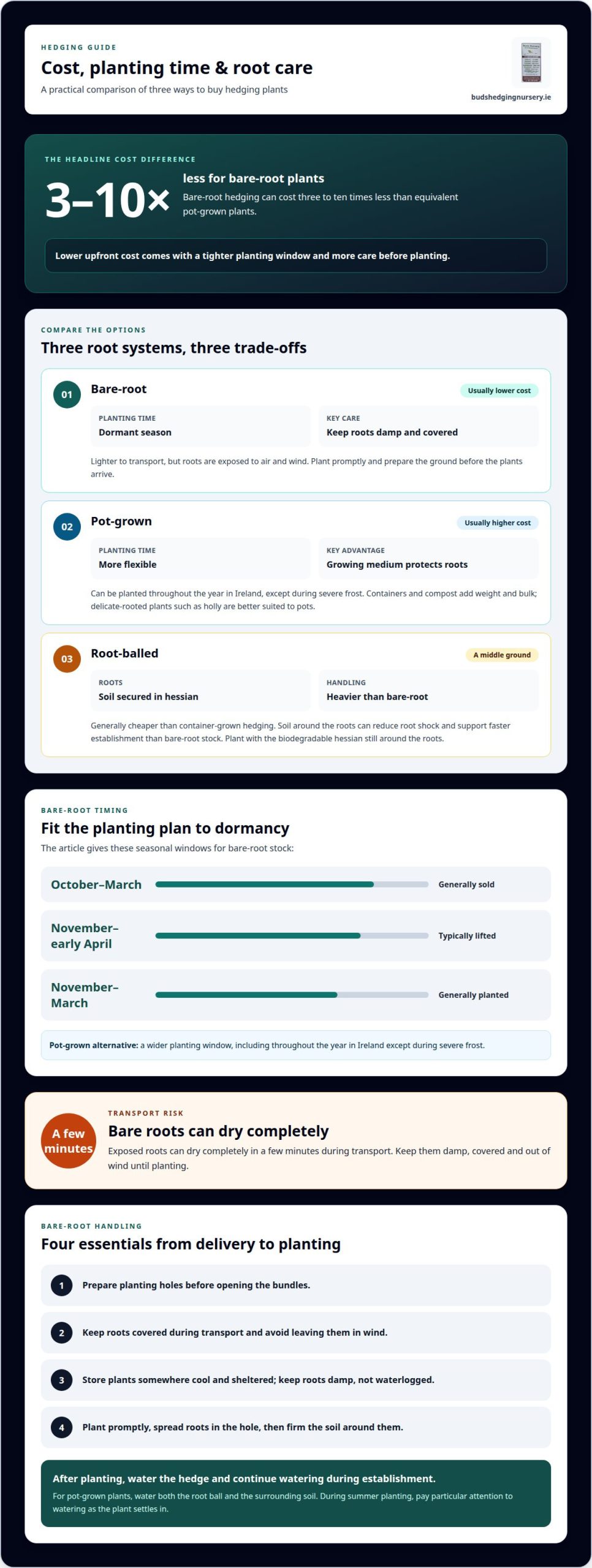
The lower-cost option can need more care at planting. Bare-root hedging can cost three to ten times less than equivalent pot-grown plants. Pot-grown plants are easier to hold if planting is delayed and can be planted across a wider part of the year. The pros and cons of bare-root versus pot-grown hedging therefore come down to more than the initial outlay.
It’s understandable to focus on the plant price when buying a line of hedging. But establishment, the risk of roots drying out and the time you have available to plant also affect which option is practical. This guide explains what bare-root plants are, how the two types compare for cost and growth, and what to consider when handling and transporting them. You’ll finish with a straightforward way to weigh the options against your hedge and planting conditions.
Key Takeaways
- Plan bare-root planting for the dormant season, generally from November to March, and have the ground ready before plants arrive.
- Keep bare roots damp and protected from wind, then plant them promptly to reduce the risk of drying out.
- Match the growing method to the plant: container-grown hedging can suit delicate root systems and gives more flexibility when planting is delayed.
- Choose plant size with the site in mind: smaller hedging needs closer weed control, while taller plants may need support as they establish.
What are bare root plants?
Bare-root plants are lifted from open ground and sold without soil around their roots. Pot-grown hedging is supplied in a container, with growing medium around the roots. The difference affects when you can plant, how plants are handled and the care they need before planting.
Bare-root plants have no soil around their roots, while pot-grown plants retain their growing medium in a container. This makes bare-root stock lighter to transport, but leaves its roots more exposed to drying before planting.
Nurseries lift bare-root plants while they are dormant, typically from November to early April. They are generally sold from October to March and should be planted promptly while dormant. Prepare the planting area first, then keep the roots damp and covered while handling the plants. This limits exposure to wind and dry air.
Bare-root hedging can be substantially cheaper, especially when buying a long run of the same variety. Producing it also uses fewer resources than pot-grown stock, including less compost, water, fertiliser, plastic and transport. The trade-off is timing: bare-root plants are available only during their dormant season, so your planting plans need to fit that window.
Pot-grown plants offer more flexibility, but their containers and growing medium add weight and bulk during transport. If poorly cared for, plants can become hungry or rootbound. Some plants also dislike root disturbance; holly, for example, is better suited to pot-grown planting.
In Ireland, bare-root plants are generally available during the dormant season, while plants with delicate roots are more suited to pots. The varieties available in either form depend on the species and growing method.
| Option | Cost | Planting window | Main handling point |
|---|---|---|---|
| Bare root | Usually lower | Dormant season | Keep roots damp |
| Pot grown | Usually higher | More flexible | Manage container and roots |
Choose bare-root plants if you can plant during dormancy and want to reduce upfront costs. Choose pot-grown stock if planting flexibility or protection for delicate roots matters more.
Container-grown establishment, growth and cost
Pot-grown hedging arrives with its roots enclosed in a container of compost. A container-grown root system may help a plant settle after planting, though establishment depends on conditions and aftercare. They can also be planted throughout the year in Ireland, except during severe frost. This wider window can suit gardens where ground preparation or delivery timing has been delayed.
Watering still matters. Remove the container carefully, keep the root ball intact, and set the plant at the same depth it grew in its pot. Firm soil around it, then water thoroughly. During summer planting, give particular attention to watering as the plant settles in. A smaller root mass than a field-grown plant means good aftercare remains important.
Bare-root hedging is usually cheaper and uses fewer production resources, but it has a restricted planting season and roots are more exposed to drying. It may also establish more slowly. Pot-grown plants cost more to produce and transport because each comes with compost and a container, but they offer flexibility and protection for delicate roots.
Root-balled hedging is a third option. These plants are lifted from the field with soil around their roots, usually secured in hessian. The soil adds weight, making handling and transport more demanding than for bare-root plants. Root-balled stock is generally cheaper than container-grown hedging, while the soil around its roots can reduce root shock and support faster establishment than bare-root stock. Plant it with the biodegradable hessian still around the roots.
After planting, water both bare-root and root-balled plants, then continue watering during establishment. For pot-grown plants, water the root ball and surrounding soil so moisture reaches the roots. If you’re weighing options for a boundary, compare hedging plant choices against your planting window, site access and watering routine.
For a lower initial outlay, bare-root stock may suit a prepared site and timely winter planting. Choose container-grown hedging if planting flexibility or a protected root system matters more. Root-balled plants offer a middle ground, with soil around the roots but heavier handling.
Bare-root drying risk and transport
Bare-root hedging arrives without soil around its roots, leaving them exposed to air and wind. Exposed roots can dry completely in a few minutes during transport. Potted plants travel with growing medium, which helps protect roots from direct exposure. If choosing bare-root stock, plan the journey from nursery to ground before collection or delivery.
Where possible, plant bare-root hedging within a few days of delivery. If the ground isn’t ready, keep the roots damp and protected while you prepare it. Don’t leave plants uncovered in a draught, on a sunny path or loose in an open vehicle. Wet weather in November can make planting awkward, but the roots still need protection while you wait for workable ground.
- Prepare planting holes before opening bundles, so roots spend less time exposed.
- Keep roots covered during transport, and avoid leaving them in wind.
- Store plants in a cool, sheltered place and keep roots damp, not waterlogged.
- Plant promptly, spread roots out in the hole, then firm soil around them.
Keep bundles closed until you’re ready to plant. Open one at a time, separate the plants carefully and cover any roots that aren’t going straight into the ground. If planting is delayed, check the roots regularly and add moisture when they begin to dry. Avoid leaving bare-root stock beside a heater or in a warm shed.
Transport planning matters most for longer journeys or exposed loads. A covered vehicle reduces direct exposure to wind, and plants should be unloaded promptly at the planting site. Potted hedging is bulkier because containers and compost add weight, but it can remain in its pot until planting. Bare-root plants are easier to carry in quantity, provided their roots stay damp and protected from wind.
For a November delivery, have the planting area ready and keep bundles sheltered until work begins. If the ground is temporarily unsuitable, protect the roots rather than leaving the plants exposed while you wait.
Bare-root hedging costs and establishment
In Ireland, bare-root hedge plants can cost three to ten times less than equivalent pot-grown plants. That difference matters for a long boundary, where buying the same variety in quantity can increase the initial outlay. The savings are clearest when the garden is ready for planting during the dormant season. The bare root vs pot grown hedging pros and cons involve more than the purchase price.
Plant size affects both cost and early maintenance. Plants measuring 1-2ft cost less, but need weed control and may take several years to make much impact. At 2-3ft, bare-root plants remain an economical choice and are nearly large enough to avoid being swamped by weeds. A 3-4ft plant can sit above weed competition without having roots that are too large to handle.
Taller stock changes the balance. A 4-5ft plant gives a more immediate screen, but may need staking and can be more vulnerable to weather. It can also require more careful planting than smaller stock. Choose a size that suits the site and the time available for aftercare, rather than judging value by height alone.
Growth varies with the plant and its conditions. Many bare-root plants grow 40-60cm of top growth in one season, yet some can show poorer growth for one or two years after planting. Water after planting and through establishment, especially during dry weather. Keep smaller plants clear of weeds so they can establish without competition.
- Choose 1-2ft plants for lower initial cost, with more weed control and patience.
- Consider 2-3ft plants for a balance between economy and visibility above weeds.
- Use 3-4ft plants where weed competition is a concern and planting manageable roots matters.
- Allow for staking and weather exposure if choosing 4-5ft plants.
A practical bare root vs pot grown hedging pros and cons comparison weighs initial spend against planting timing, root handling and aftercare. Compare bare-root hedging options when planning a hedge around your budget, garden conditions and planting schedule.
Buds Nursery Cavan: Portuguese Laurel
Buds Nursery Cavan offers Portuguese Laurel for hedging, so you can compare bare-root and pot-grown planting options. The right choice depends on the planting season, site preparation and how soon you can plant after delivery. Cherry Laurel and Golden Privet are also available as hedging choices.
If you’re comparing varieties as well as growing methods, consider how the hedge will fit the space and conditions in your garden. Fruit trees serve a different planting purpose, rather than acting as a substitute for boundary hedging. Keep your preferred variety and planting plan in mind as you decide which plants suit your project.
Contact Buds Nursery Cavan or visit budshedgingnursery.ie to explore the plant options.
Choose the hedge that fits your next steps
The pros and cons of bare-root versus pot-grown hedging are most useful when weighed against your planting plan. Consider when you can prepare the ground, how much time you can give to early care and the look you want from the hedge. This gives you a practical basis for choosing plants, rather than relying on the purchase format alone.
Buds Nursery Cavan offers Portuguese Laurel, Cherry Laurel and Golden Privet for hedging. If you’re choosing a variety or planning a planting, contact the nursery to discuss options that suit your garden and approach.
Contact Buds Nursery Cavan for advice and take the next step towards a hedge that works for your space.
Frequently Asked Questions
Is rootball or potted better?
Root-balled plants suit larger field-grown specimens when you want soil to remain around their roots, while potted hedging offers more flexibility if planting is delayed. Root-balled plants are heavier to move, so consider access through gates and along the planting line. For a small garden with narrow access, containers may be easier to handle; for a larger hedge, compare plant size and transport needs.
What is Bareroot?
Bare-root means a plant is lifted and sold with its roots exposed, rather than enclosed in a pot or soil root ball. Bare-root whips are typically one year old. Their roots can be spread out in the planting hole, helping to avoid congestion. Before buying, consider whether the species transplants well and whether the planting area will be ready during dormancy.
What are the pros and cons of pot-grown hedging?
Pot-grown hedging is easier to hold if planting is postponed and suits plants with delicate roots, such as holly. Its established root system can support faster establishment, and the wider planting window can fit around garden work. The drawbacks are greater weight and cost, as well as the need for regular feeding. If neglected, a plant can become hungry or rootbound in its container.
When is the best time to plant bare-root hedging in Ireland?
Plant bare-root hedging during dormancy, generally from November to March, and preferably before the end of January. Choose a day when the soil is workable, not frozen or waterlogged, and prepare the planting line before unpacking the plants. This gives you time to position the roots properly and firm the soil around them without leaving exposed roots waiting beside the trench.
How quickly do bare-root and pot-grown hedges establish and grow?
Pot-grown hedging generally establishes faster at first, while bare-root plants can make strong growth once settled. Beech is a useful example of patience: bare-root beech can take at least a year to show signs of growth. Look for healthy new shoots and leaves, rather than expecting every plant in a mixed hedge to grow at the same pace.
What are the risks of bare-root and pot-grown hedging failing to establish?
Bare-root plants are most vulnerable when their roots dry out before planting or during dry weather after planting. Pot-grown plants can struggle if their roots are congested or if the compost dries while the surrounding garden soil remains moist. For either type, prepare the site first, plant at the correct depth, firm the soil around the roots and water thoroughly after planting.