

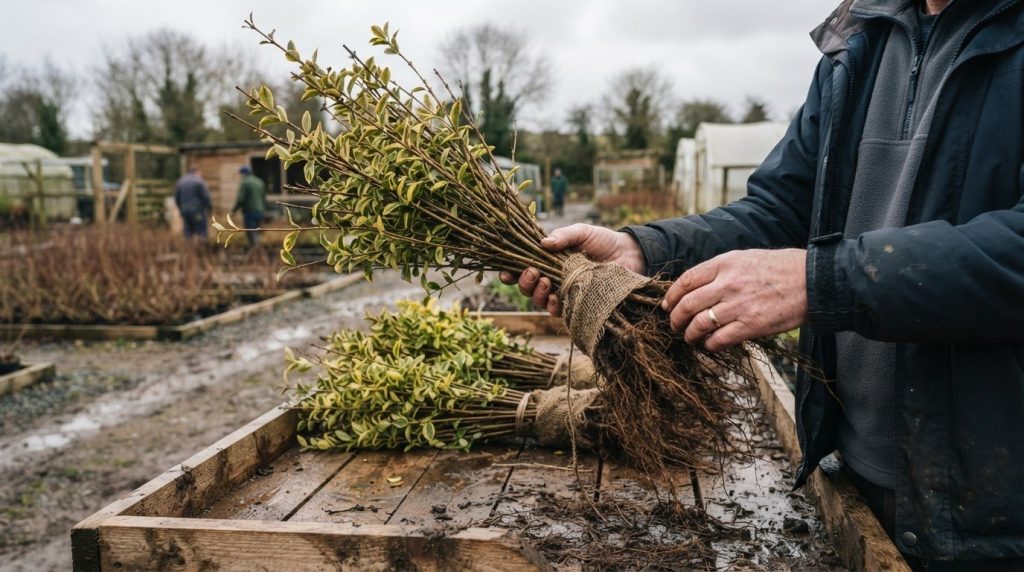
A larger, container-grown hedge isn’t automatically the best-value choice. In Ireland, affordable hedging options include bare-root plants, which can cost less upfront and can be planted from mid-November to March. The right plant depends on your site: for example, Griselinia suits exposed coastal conditions better than many other hedging species.
Weigh the initial cost against how well a hedge will grow on your site, the screening you need and how long you’re willing to wait for it to fill out. This guide explains how to match hedge plants to your garden, why bare-root stock can be cost-effective and what to consider before choosing. Plant size, growing conditions and the hedge’s purpose all affect value over time, so don’t base your decision on upfront cost alone.
Key Takeaways
- Start with the hedge’s job, then match plant choice to your garden’s exposure, soil and available space.
- Compare plant size and establishment needs, not just the upfront cost, before settling on a hedge.
- Plan the row layout and spacing around the finished screen you want and the time you can allow it to fill out.
- Use the advice in the article to narrow your choice to plants suited to your site and priorities.
1. Choosing hedge types and plants for site conditions
First, decide what the hedge needs to do: screen a window, mark a boundary, shelter a seating area or support wildlife. Then assess the site’s light, soil drainage and exposure. These factors influence how well a hedge establishes and whether it can provide the privacy and garden benefits you want.
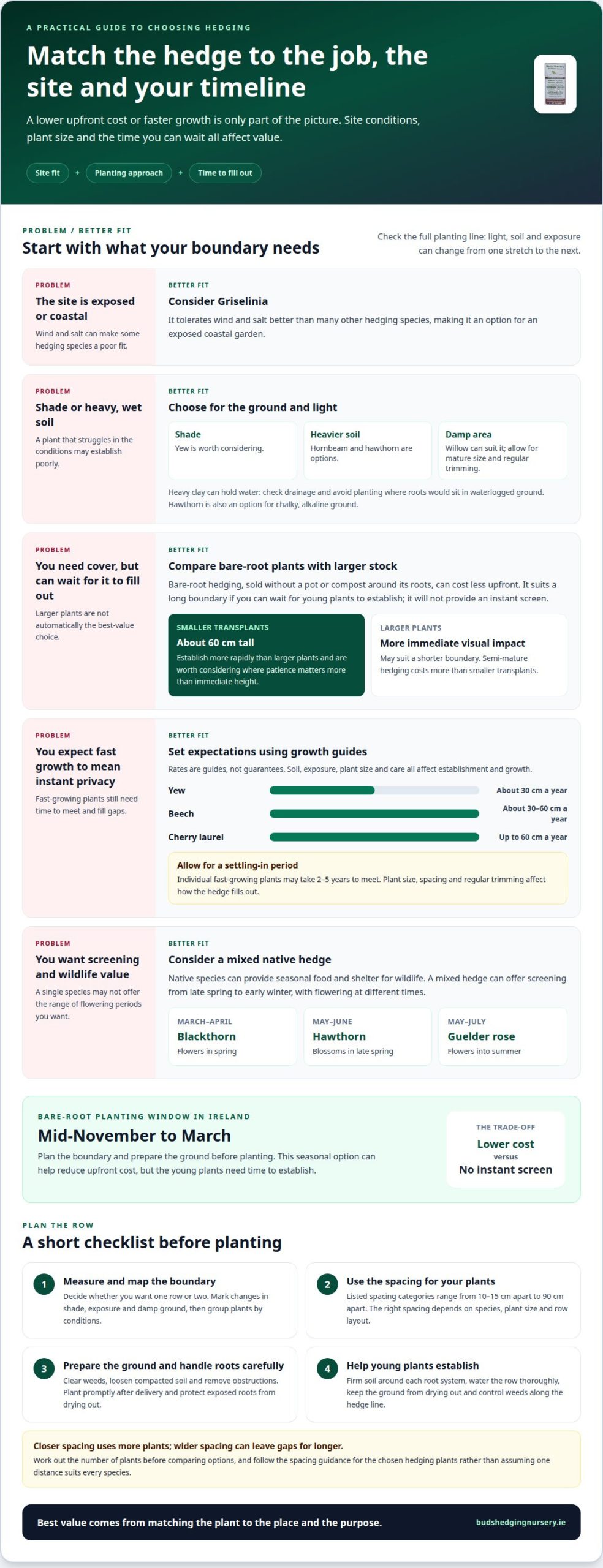
For shade, consider yew, which grows about 30 cm annually in good conditions. Beech hedging grows approximately 30-60 cm a year, whilst cherry laurel can grow up to 60 centimetres per year. These rates are guides, not a reason to ignore the site. Soil, exposure, plant size and care all affect establishment and growth.
Soil type matters too. Heavy clay can hold water, so check drainage and avoid planting where roots would sit in waterlogged ground. Hornbeam and hawthorn are options for heavier soils. Chalky ground calls for plants suited to alkaline conditions, such as hawthorn. Willow can suit damp areas, but allow for its mature size and regular trimming.
For a shaded boundary, yew is worth considering. In an exposed coastal garden, Griselinia tolerates wind and salt better than many hedging species. Check conditions along the full planting line, as it may cross both sunny and shaded ground. This helps you avoid choosing a plant that struggles in one section.
Native species can provide seasonal food and shelter for wildlife. Hawthorn blossoms from May to June, blackthorn from March to April, and guelder rose from May to July. A mixed native hedge can offer screening from late spring to early winter, along with a range of flowering periods rather than relying on one species.
For faster evergreen privacy, cherry laurel is one option, while Leylandii is another. Individual fast-growing plants may take 2-5 years to meet, so allow for a settling-in period rather than expecting an instant screen. Plant size and spacing affect how quickly gaps close. Regular trimming also helps maintain the hedge’s shape as it fills out.
The best affordable hedging option depends on the job and the site, not just the growth rate. Note the boundary’s exposure, shade, soil and drainage. Decide whether evergreen cover or seasonal wildlife value matters more, then choose plants suited to those priorities. This reduces the risk of choosing a fast-growing hedge that struggles in your garden.
2. Bare-root hedging as a cost-effective option
Bare-root hedging is sold without a pot or compost around its roots, which can make it a lower-cost starting point than larger, container-grown plants. It suits gardeners planting a long boundary who can wait for young plants to establish. The trade-off is that bare-root plants won’t provide an instant screen.
In Ireland, bare-root hedge plants can be planted from mid-November to March. Plan the boundary and prepare the ground before this planting window. Clear weeds along the row, loosen compacted soil and remove obstructions. After delivery, plant promptly and protect exposed roots from drying out while you work.
Plant size affects both initial cost and establishment. Smaller hedge transplants about 60 cm tall establish more rapidly than larger plants, while semi-mature hedging costs more than smaller transplants. That makes smaller stock worth considering for a long run where patience matters more than immediate height. Larger plants may suit a shorter boundary where quicker visual impact is a priority.
Field-grown bare-root plants can be raised close together before lifting. One described growing method spaces seedlings about 6 inches apart, prunes shoots to 15cm for multi-stemmed growth, and prunes roots 15cm below ground. These details illustrate how nursery preparation shapes a plant’s form. They aren’t a universal specification for every bare-root hedge.
Work out how many plants the row needs before comparing options. Spacing depends on the species, plant size and whether you’re planting a single or double row. Closer planting uses more plants, while wider spacing can leave gaps for longer. Follow the spacing guidance for your chosen hedging plants rather than assuming one distance suits every species.
After planting, firm the soil around each root system and water the row thoroughly. Keep the ground from drying out as plants establish, and control weeds along the hedge line. These steps help young plants settle in. Bare-root plants are straightforward to handle and plant, but protect their roots from drying between unpacking and planting.
For a cost-conscious boundary, compare bare-root plants with larger stock by considering plant size, planting time and the wait for screening. If the November-to-March window suits your plans, bare-root hedging choices can help you explore this approach before settling on plants for the site.
3. Advice on choosing hedging
Cheap hedge plants may be uneven in size, poorly suited to the site or slow to establish, leaving gaps and extra replacement work. Reduce the risk by checking that plants are healthy, choosing a species suited to your soil and exposure, and following its recommended planting spacing.
Start with the hedge’s purpose. A boundary screen needs a different height and density from a low garden divider. For shelter, consider where the garden is most exposed and whether the hedge will protect a seating area, path or neighbouring plants. A clear purpose helps narrow your choice of species.
Next, measure the planting line and decide whether you want one row or two. Spacing depends on plant size and type: listed categories range from 10-15 cm apart to 90 cm apart. Use the spacing suited to your plants, rather than squeezing them together to make the hedge look full sooner.
Check the whole boundary before buying. It may run through shade, open ground and damp soil, so one species may not suit every stretch. Mark these changes on a simple plan, then group plants by growing conditions. This helps you avoid putting a shade-tolerant plant in full exposure or a moisture-sensitive one in wet ground.
Consider flowering seasons as well as the finished appearance. Flowering hedges can provide wildlife food at different times of year: hawthorn blossoms from May to June, while blackthorn flowers from March to April. A mixed hedge can combine seasonal interest with screening, but leave room for each plant’s mature spread.
Before planting, clear weeds and grass along the row, then prepare the ground evenly. Set plants at consistent intervals and firm the soil around their roots. Water after planting and keep the strip clear of competing growth while the hedge establishes. These steps help create a more even line than planting into an unprepared boundary.
Finally, compare value over the hedge’s lifetime. A low initial cost may be less appealing if plants need replacing or frequent trimming. Consider the time needed for establishment, the level of shelter or privacy you need, and the maintenance you can manage. A wildlife-rich mixed hedge and a uniform evergreen screen, for example, serve different priorities.
Use these checks to narrow your shortlist to plants that fit the site, purpose and planting plan. Explore hedging plants for your garden and choose a direction that suits the conditions you’ve assessed.
Buds Nursery Cavan: Portuguese Laurel
Once you’ve matched your hedge requirements to your garden, Buds Nursery Cavan can help you consider suitable plants. Portuguese Laurel is one screening option, with Cherry Laurel and Golden Privet as alternatives. Compare each with your site’s exposure, soil and privacy needs to narrow your choice.
If your plans extend beyond hedging, Buds Nursery also offers fruit trees. Keep the purpose of each planting clear, so a privacy screen and a fruit-growing area are suited to their positions in the garden.
For a practical next step, contact Buds Nursery Cavan to discuss Portuguese Laurel and other suitable plants.
Make your next planting decision with confidence
Before choosing among affordable hedging options, turn your priorities into a simple planting plan. Mark the boundary, note where privacy matters most and decide how much space you can give the mature hedge. This gives you a clear basis for comparing plants and helps you avoid choosing by appearance alone.
Then narrow your shortlist to plants that suit the garden and the purpose of each section. Buds Nursery Cavan offers Portuguese Laurel, Cherry Laurel and Golden Privet, giving you distinct hedging choices to consider for your plan. Think about the look you want and the level of upkeep you can manage as you make your selection.
A considered choice can make the hedge work better for your garden over time. Contact Buds Nursery Cavan to discuss the plants that could suit your planting plans, and take the next step towards a garden boundary that feels right for your home.
Frequently Asked Questions
What are the cheapest hedging plants to buy in Ireland?
Small bare-root plants such as whitethorn, hazel and guelder rose are worth comparing if you’re looking to spend less upfront. The total cost depends on plant size, species and the number needed for your boundary. These flowering plants can also add seasonal interest to a wildlife-friendly screen. Compare the cost of filling the whole row, not just the price of one plant.
What are the fastest-growing low-cost hedge plants for Irish gardens?
Cherry Laurel is a fast-growing evergreen choice; Green Privet is another option to consider when keeping initial costs in mind. The best fit depends on whether you need year-round screening or can accept a deciduous hedge. Allow for the maintenance that faster growth brings, including trimming to keep plants within the height and width available in your garden.
How do bare-root and pot-grown hedging plants compare in price and survival?
Bare-root plants can cost less upfront, while pot-grown plants are sold with growing medium around their roots. Price alone doesn’t determine how well a hedge establishes. Protect bare roots from drying out before planting, firm the soil around each plant and water after planting. For either type, match the plant to the site and follow suitable planting and care guidance.
How much does hedge planting cost per metre in Ireland?
There is no single cost per metre; it varies with plant choice and spacing.
How many hedge plants are needed per metre?
It depends on the species, plant size and row type. Recommended spacings range from 10-15 cm to 90 cm apart; some instant-hedge options use two plants per metre.