

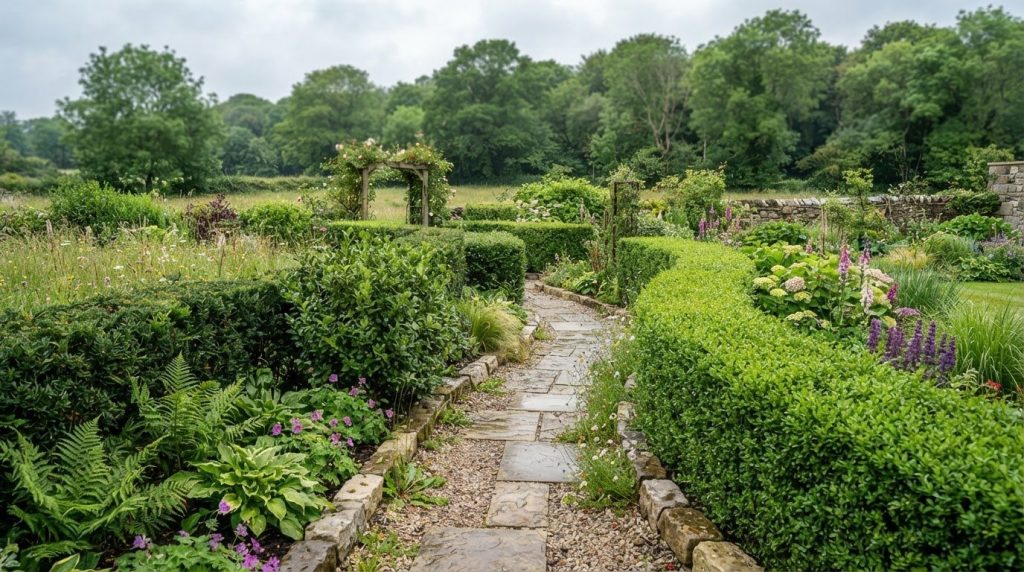
The best replacement for a box hedge may not be the plant that looks most like box. If box blight or box tree moth has damaged your hedge, it’s understandable to look for a tougher option, but appearance is only part of the decision. The right alternatives to box hedging depend on the hedge’s purpose, the height and shape you want, and how often you’re prepared to trim it.
In Ireland, box blight remains a persistent problem, and box tree moth is now widespread. A different plant can reduce reliance on box, but each choice has its own growth habit and care needs. This guide compares practical options for low hedges and edging, including yew, holly and privet, so you can weigh up foliage, clipping requirements and suitability for your site. You’ll also find the main points to consider before planting, from available space to the finished shape you want. Choose a hedge for the job it needs to do, not just its resemblance to box.
Key Takeaways
- Explore alternatives to box hedging by the job they need to do, whether that’s defining a path, edging a border or forming a clipped hedge.
- Compare yew, holly and privet for their appearance and upkeep before choosing a replacement.
- Match your choice to the finished shape you want, your garden conditions and the time you can give to clipping.
- Use a short checklist to assess the purpose and condition of your existing hedge, along with the space available for a new one.
- Explore Buds Nursery Cavan’s range of hedging plants, grown on 60 acres devoted to hedging, trees and shrubs.
Why look for alternatives to box hedging?
Box hedging is compact planting, usually Buxus, kept within a chosen outline through regular clipping. Its small leaves and dense growth suit low borders, path edges and formal patterns. The familiar green line can make a garden look orderly without taking attention away from flowers or other planting.
Gardeners in Ireland may consider alternatives for several reasons. Box blight can weaken or thin plants, whilst box tree moth caterpillars feed on the foliage and may cause visible damage. These are separate problems: one is a fungal disease, the other an insect pest. Neither means every box hedge is affected, so assess the condition of an existing hedge before deciding to replace it. Damp conditions can favour box blight; if you’re concerned about symptoms, consult current Irish horticultural guidance before taking action.
What makes box useful for low hedges and edging?
Box is often used to mark the edge of a border, frame a path or form a clipped pattern such as a knot garden. Regular trimming helps maintain a crisp outline, particularly where the hedge is intended to stay low and define a space rather than act as a screen. That neat, contained effect is often what gardeners want to retain, even if they choose a different plant.
A replacement can serve the same garden purpose, but it won’t be an exact match for box in leaf, shape or growth.
What are box blight and box tree caterpillar?
Box blight is a fungal disease that can cause leaf spots, browning and leaf loss, sometimes leaving stems bare. Box tree moth is an insect whose caterpillars feed on box foliage; webbing and chewed leaves can be signs of activity. For a general explanation of the disease, see Boxwood Blight: A Threat to Box Hedging. Check up-to-date Irish guidance to help identify symptoms and decide on next steps.
Before choosing among alternatives to box hedging, define the job the planting needs to do. A low border or edging calls for a plant that can be maintained at a small scale. A formal knot needs clipped definition and a willingness to shape it. A tall privacy hedge has a different purpose and needs room to develop into a screen. These roles aren’t interchangeable: a plant suited to one may not provide the form, coverage or upkeep you want for another.
Look at the whole hedge, too. If damage is limited, replacement may not be the only consideration. If plants are sparse or the intended shape no longer suits the garden, starting afresh could make sense. The useful question isn’t simply which plant resembles box most closely. It’s which choice fits the site, the finished outline and the time available for clipping. Compare those practical qualities across suitable plants before deciding.
Which plants can replace box hedging in an Irish garden?
The right choice depends on the shape and character you want, not simply on finding a plant that looks like box. Yew, holly and privet can all be clipped, but their foliage, growth habits and finished appearance differ. Lavender offers another option for a low border, though it creates a softer, flowering edge rather than a dense evergreen line. For a broader comparison, Exploring Alternative Shrubs for Hedging outlines useful selection factors; Irish garden conditions and each plant’s needs still matter.
Yew, holly and privet as clipped alternatives
These plants suit different hedge roles. Yew is an evergreen conifer with fine, dark foliage that can be clipped into a formal outline. Holly is evergreen and has a bolder leaf; many forms have prickly edges. Privet generally responds well to trimming, but green and golden types can vary in how much foliage they retain through winter. None should be expected to give box’s exact compact finish.
- Yew: Taxus baccata suits a formal hedge where dense, evergreen structure is wanted. It tolerates clipping, making it an option for a defined line, though the finished look differs from box.
- Holly: Holly’s larger, often spiny leaves give a hedge a stronger texture. It can be clipped to shape, but is less suited to recreating the fine-leaved look of a traditional box edge.
- Privet: Green and golden privet offer a more open-leaved appearance, with golden foliage adding a change in colour. It responds to clipping, but its seasonal foliage and growth pattern differ from those of yew or box.
Choose yew for a formal evergreen line, holly for a bolder clipped boundary and privet for a hedge with lighter texture or foliage colour. Clipping frequency depends on the plant’s growth and how sharp you want the outline to look. Allow for the plant’s natural form, then trim to guide it rather than expecting every type to hold the same tight shape.
When a softer edging plant may suit better
Lavender, including Lavandula angustifolia, suits a border where flowers, scent and a looser outline are welcome. It is not a direct substitute for a dense evergreen hedge or a formal knot. Lavender generally needs a sunny position and well-drained soil; trim it after flowering, and avoid cutting hard into old, woody growth.
That difference can be useful. If the aim is to edge a path with seasonal colour rather than maintain a solid green barrier, lavender may suit the garden better than a close-clipped shrub. For evergreen choices, Buds Nursery’s range of hedging plants includes yew, holly and privet to consider alongside box.
How do box hedging alternatives compare for appearance and upkeep?
A useful comparison starts with the finish you want and the work you’re prepared to do to maintain it. Fine foliage can create a closely detailed edge; larger leaves make a bolder line. Evergreen plants hold their structure through the year, whilst lavender brings flowers and a softer outline. The table compares the main options by role, rather than suggesting they’ll all produce the same result.
Plant
Form and evergreen character
Clipping and garden role
Yew
Fine, dark foliage; evergreen.
Can be clipped to shape. Consider it for a formal line or a taller boundary where there’s room for the plant to develop.
Holly
Evergreen foliage with a bolder, often prickly leaf.
Tolerates shaping, but its leaf texture gives a stronger-looking boundary than a close, fine-leaved edge.
Privet
Green or golden foliage; winter leaf retention varies by type and conditions.
Clipping helps maintain a defined outline. Its looser-looking foliage can suit a boundary hedge more than intricate edging.
Lavender
A softer, flowering border rather than a dense evergreen hedge.
Light pruning helps keep its shape. Use it for a path or border edge where seasonal flowers are welcome.
Match the plant to the shape and finish you want
For a straight, formal line, choose a plant that tolerates repeated shaping and consider how much time you can give to trimming. Yew and holly can be clipped, but their foliage creates a different finish from box. Privet also takes shaping, though its leaf size and seasonal appearance affect how crisp the hedge looks. Lavender suits a looser edge, not a solid green screen. Before choosing, look at mature examples of the plant and picture the texture from the distance where you’ll view it.
Low edging and taller screening aren’t the same job. A narrow border needs a manageable outline that won’t crowd paths or nearby plants. A screen needs enough space to form a deeper, continuous barrier. For a separate discussion of taller boundaries, see our guide to best hedging for privacy in Ireland.
Match the alternative to the garden site
Check the planting strip before settling on a choice. Note how much sun it receives, whether the soil stays wet or dries quickly, and how exposed the site is to wind. Allow for the plant’s eventual width as well as its position beside paving, walls and other planting. Conditions vary between gardens, so a plant that suits one site may struggle in another.
Judge alternatives to box hedging by both appearance and upkeep. Write down the desired shape, available space and trimming routine, then compare those needs with each plant’s foliage and suitability for the site. This gives you a clearer shortlist before making a planting decision.
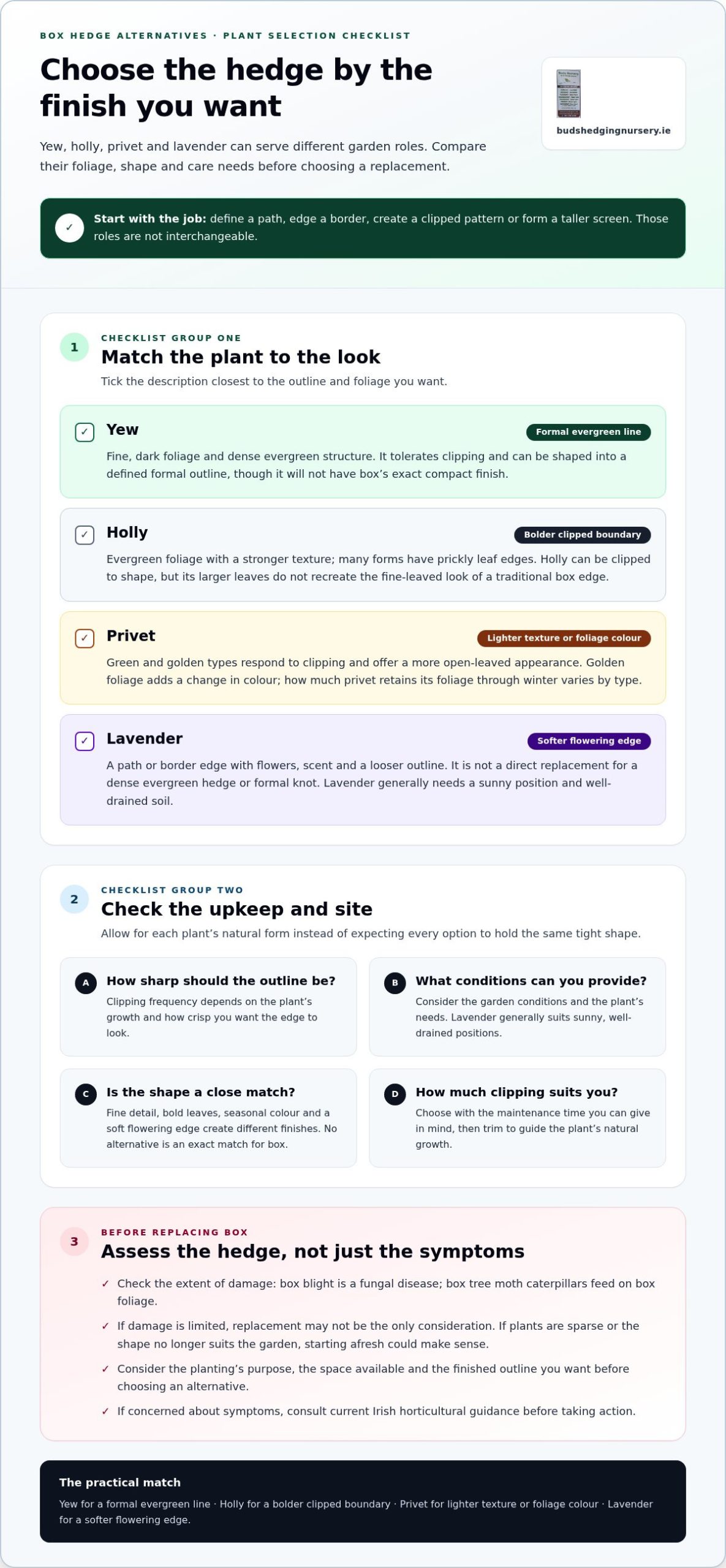
What should you consider before replacing a box hedge?
Before choosing among alternatives to box hedging, work through the practical details of the existing hedge and its site. Replacing a whole boundary is a significant change to the garden. A clear plan can help you avoid removing plants unnecessarily and choose a replacement you can maintain.
- 1. Define the purpose and finished form. Decide whether the hedge is edging a path, outlining a border, forming a formal feature or providing a screen. Note the height and shape you want to maintain.
- 2. Assess the existing hedge. Is it healthy but no longer suited to the garden, or are there areas of thinning, discolouration or leaf loss? Separate a design change from a response to suspected pest or disease damage.
- 3. Check the site. Consider light levels, soil type, drainage and exposure. These conditions can affect which plants establish well, so assess the actual planting strip rather than relying on a general description of a plant.
- 4. Measure the available space. Allow for the hedge’s eventual form, not just the width of the plants at planting. Check nearby paths, borders and structures that could be crowded as the hedge develops.
- 5. Be realistic about upkeep. Decide how often you can trim and whether you want a sharply defined line or a looser habit. Choose a plant whose care suits that routine.
- 6. Plan for planting and establishment. Timing depends on the plant type and season. Follow species-specific planting and watering guidance, especially while new plants are establishing.
Assess the existing hedge before choosing a replacement
A hedge that needs a different shape presents a design decision; one showing possible disease or pest damage needs careful assessment first. Look for changes across the whole planting and note where symptoms appear. Don’t assume that one bare or discoloured patch means every plant must be removed. Accurate identification matters, since different causes call for different responses. If you suspect box blight or box tree moth, use current trusted Irish horticultural advice to help diagnose the problem before deciding what to remove.
Plan for establishment and future maintenance
Think beyond the day of planting. A clipped hedge needs ongoing shaping, whilst a looser border may need less formal trimming but still requires care suited to its plant type. Check the recommended planting method and watering needs for the species you choose, then consider whether you can provide that care as it establishes. Don’t assume every alternative should be planted or pruned in the same way.
Once you’ve assessed the hedge and site, compare your preferred plant with the space and upkeep you can offer. Explore hedging plants at Buds Nursery as you narrow down a suitable choice.
Find a practical box hedging alternative with Buds Nursery
Choosing a replacement is easier when you compare plants by the role they need to fill. A low edge beside a path calls for a different form from a taller boundary, and the amount of clipping you can manage matters too. Buds Nursery’s hedging range includes yew, holly, green and golden privet, box and lavender, giving you several types to consider for different garden purposes.
Buds Nursery manages 60 acres devoted to hedging, trees and shrubs and has operated for more than 30 years. Its plant range and experience provide useful context when weighing up foliage, finished form and care. On-site guidance can help you compare plant types for your project. Bring a clear idea of the hedge’s purpose, desired height and shape, and the conditions in the planting area.
Compare suitable hedging plants with practical guidance
Start with the job the hedge needs to do. Yew may suit a formal evergreen line; holly offers a bolder leaf and a different texture; privet gives you green or golden foliage to consider. Box remains an option if you want to retain it in part of the garden, whilst lavender is better suited to a softer, flowering border than a dense clipped hedge.
Discuss the planting site as well as appearance. Light, soil, drainage, exposure and available space all affect whether a plant is a sensible fit. When comparing options through a specialist plant nursery in Ireland, these details help focus the conversation on more than leaf colour. Buds Nursery’s hedging and shrub range supports a practical comparison, while the final choice should reflect your garden and the care you can provide.
Choose a next step that fits your garden
Before visiting, note the approximate length of the hedge and the form you want to maintain. A photograph of the planting area can also help you explain its light and surroundings. Browse relevant hedging plants or visit the nursery to compare options in person. Plant types, planting requirements and seasonal considerations vary, so don’t treat one choice as a direct match for every garden.
For larger orders, delivery can be arranged. Choosing by garden role first helps narrow the options, whether you need a formal evergreen boundary, a clipped edge or a softer border. Explore the hedging plants at Buds Nursery and consider which type best fits your site and maintenance plans.
Plan a hedge that works for the garden ahead
Replacing a hedge is also a chance to decide how you want the garden to feel in the years ahead. A sharply edged border, a flowering boundary and a more substantial screen each create a different effect. Let that purpose guide the final choice, rather than trying to reproduce box in every detail.
Before taking the next step, make a simple note of the line you want the planting to follow and how you expect to use the space beside it. This gives you a practical starting point for comparing alternatives to box hedging and helps keep the decision focused on the garden, not just the plant.
Buds Nursery offers a range of hedging plants, on-site plant guidance and delivery options for larger orders. Explore hedging plants at Buds Nursery and take the next step towards a hedge that suits your garden and the way you care for it.
Frequently Asked Questions
What is the best alternative to box hedging?
There isn’t one best choice for every garden. Yew can suit a formal evergreen line, whilst holly gives a bolder texture and privet offers green or golden foliage. For a flowering edge rather than a clipped hedge, lavender is another option. To narrow down alternatives to box hedging, decide whether you need a close border, a defined boundary or a screen, then consider the space and trimming time available.
Can yew be clipped into a low hedge like box?
Yes, yew can be clipped into a low hedge, provided you’re happy with a different look from box. Its dark, fine needles create a close evergreen surface, rather than the small leaves of a box edge. Set out the intended line before planting and allow enough width for the hedge to develop. Regular, measured trimming can maintain the outline; check appropriate guidance before cutting back hard.
Is holly a good alternative to box hedging?
Holly can work as a clipped evergreen boundary, but it’s not usually the closest visual match for a fine box edge. Its leaves are larger and may have prickly margins, giving the hedge a more pronounced texture. Consider where people walk or work near the planting, especially along a narrow path. Holly may suit a boundary where a stronger foliage character is welcome, rather than a delicate, intricate pattern.
What causes box hedges to turn brown or lose leaves?
Several problems can cause browning or leaf loss, including box blight, box tree moth caterpillars, poor drainage, drought or other stress. Blight is a fungal disease; caterpillars chew foliage and may leave webbing. These symptoms can overlap with other damage, so look closely at leaves and stems and note whether the change is spreading. Don’t remove plants based on colour alone. Use current Irish horticultural guidance to help identify the cause.
Can privet be used for a small, formal hedge?
Privet can be clipped into a formal hedge, including a smaller boundary, if its growth and leaf character suit the finish you want. It won’t replicate box exactly, and green and golden forms create different effects. Keep the intended outline in mind as you trim, rather than cutting the hedge back heavily to force an especially tight shape. Check guidance for the particular privet type, as its seasonal appearance and care needs can vary.
How do I choose a box hedge replacement for my garden?
Start by measuring the planting strip and marking the desired line, including any corners or narrow sections. Then compare the plant’s natural form with the shape you can maintain. Check whether nearby paving, walls or other plants leave room for it to develop, and consider how much sun and moisture the site receives. A simple sketch or photograph can help you explain these details when comparing suitable hedging plants.
When is the best time to replace a box hedge in Ireland?
The best timing depends on the replacement plant, how it’s supplied and the state of the ground. Bare-root plants are generally planted during their dormant season, whilst container-grown plants have different planting considerations. Avoid planting into frozen, waterlogged or very dry soil, and follow the specific advice for your chosen plant. Plan ahead so you can water and monitor new plants as they establish, particularly if conditions turn dry after planting.