

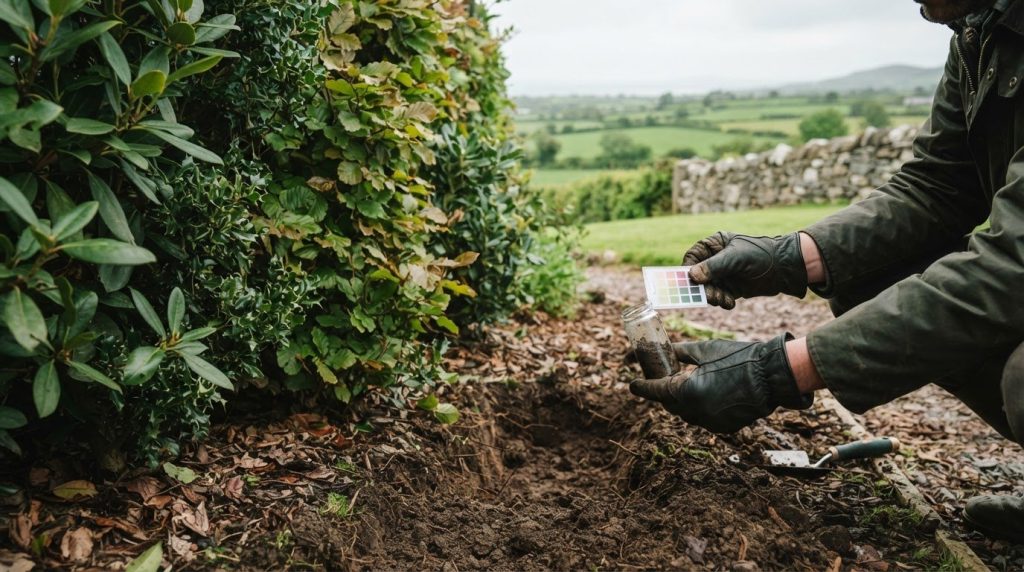
The hedge that promises the quickest screen may be the wrong choice for your soil. Before choosing hedging for acidic soil, test the ground and assess how well it drains. A pH reading below 7 indicates acidic soil, but it doesn’t tell you on its own which hedge will thrive.
It’s easy to focus on a plant’s appearance or screening qualities and leave soil suitability until later. A better starting point is to match the plant to the conditions along the planting line, then check that it will also do the job you want.
This guide explains how to assess soil pH, compare suitable hedging choices and weigh up drainage, exposure and purpose. You’ll see how options such as yew, holly and beech may fit different gardens, and why no species should be chosen on pH alone. Use the steps below to move from a soil test to a practical shortlist.
Key Takeaways
- Use a soil test as your starting point, then assess drainage, compaction and soil structure before choosing a hedge.
- For hedging for acidic soil, weigh up species-specific soil tolerance alongside screening needs and maintenance.
- Record the planting line’s exposure and available space to narrow your options to plants suited to the site.
- Compare evergreen and deciduous choices against your soil results and the purpose of the hedge.
Hedging for acidic soil: what soil pH tells you before choosing
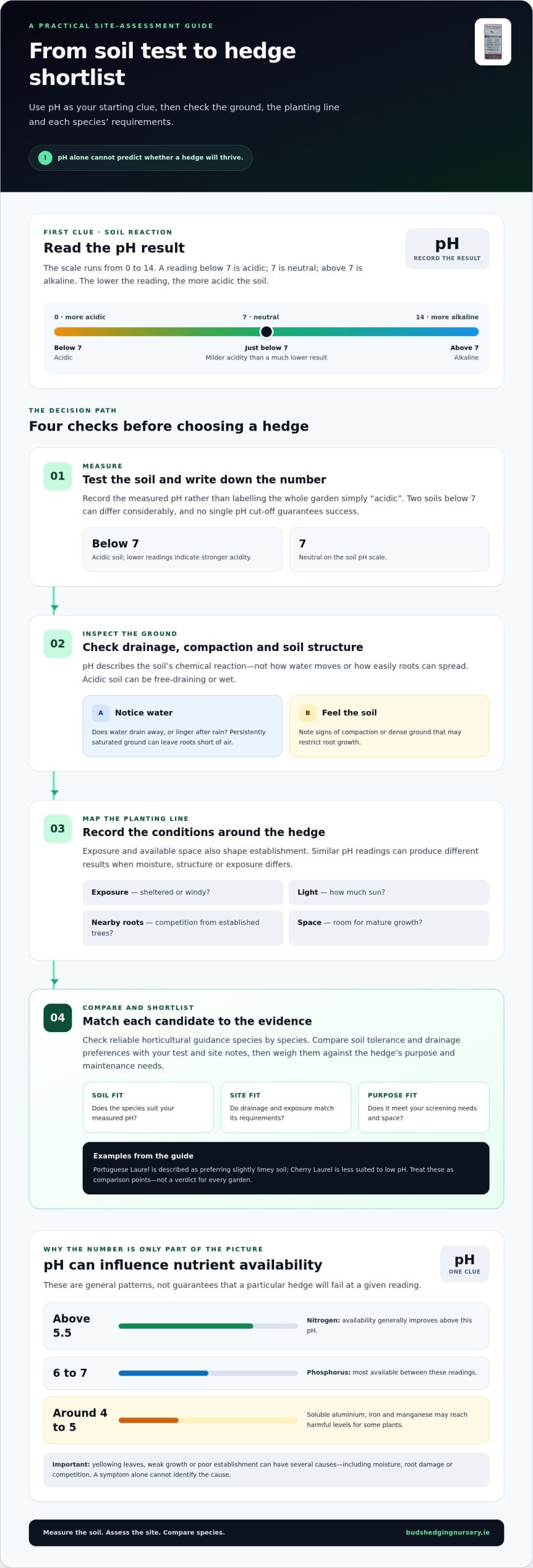
Soil pH measures how acidic or alkaline the soil is. The scale runs from 0 to 14: 7 is neutral, readings below 7 are acidic and readings above 7 are alkaline. The lower the reading, the more acidic the soil. A result just below 7 indicates milder acidity than a much lower result, but no single pH cut-off guarantees that a hedge will grow well.
What does an acidic soil reading mean?
Think of pH as one clue about the conditions a plant’s roots will encounter. It can affect how readily nutrients are available, so a plant suited to one soil reaction may perform less well in another. The Soil pH overview explains the scale and its relationship with nutrient availability. For choosing a hedge, record the test result rather than labelling the whole garden simply “acidic”.
Two soils can both test below 7 and still differ considerably in acidity. A reading nearer 7 indicates mild acidity; a much lower reading indicates stronger acidity. Tolerance varies by species, so don’t treat “acid-loving” or “acid-tolerant” as a blanket recommendation. Compare your measured pH with reliable horticultural guidance for each plant. If a source gives a preferred range, use that species-specific information rather than relying on a general rule.
Why pH is only part of the site assessment
A pH result doesn’t describe soil structure or how water moves through the ground. Heavy, compacted soil can restrict root growth, whilst poor drainage can leave roots sitting in wet ground. These are separate issues from acidity. A plant may suit the pH but still struggle if the soil stays saturated or is difficult for roots to penetrate.
Exposure and space matter too. A sheltered planting bed has different conditions from a windy spot beside a wall or under established trees. Light levels, competition from nearby roots and room for mature growth all affect how plants establish. Even gardens with similar pH readings can produce different results if their moisture, soil structure or exposure differs.
Use pH to narrow your options, not to make the final decision. Start a site record with the test result, whether water drains away or lingers, any signs of compaction, the amount of sun or shelter, and the available space. Then check candidate species against horticultural references for both soil tolerance and growing conditions. This gives you a sound basis for comparing hedging for acidic soil without assuming acidity alone determines success.
How acidic soil affects hedging growth, roots and plant choice
A hedge can struggle in acidic ground, but acidity isn’t a diagnosis in itself. Soil pH affects the availability of some nutrients to roots. If the pH falls outside a plant’s preferred range, it may be harder for that species to take up what it needs, which can affect growth and vigour. The effect depends on the plant and the degree of acidity.
Acidity, nutrients and establishment
Some nutrients become less available at particular pH levels. For example, nitrogen availability generally improves above pH 5.5, whilst phosphorus is most available between pH 6 and 7. At very low readings, around pH 4 to 5, soluble aluminium, iron and manganese may reach levels that are harmful to some plants. These are general patterns, not a prediction that every hedge will fail at a particular reading.
Visible stress can have several causes. Yellowing leaves, weak growth or poor establishment may relate to nutrient access, but can also reflect dry conditions, waterlogged roots, root damage or competition from nearby plants. A symptom alone can’t identify the cause. Test the soil and examine the planting site before deciding that acidity is responsible or changing the soil.
Soil pH alone cannot predict whether a hedge will thrive. Consider it alongside species tolerance and the physical condition of the ground. Acidic soil doesn’t automatically rule out commonly used hedges, but some species may be better suited than others. Portuguese Laurel, for instance, is described as preferring slightly limey soil, whilst Cherry Laurel is less suited to low pH. Use this guidance to compare options, not as a verdict on every garden.
How drainage changes the suitability picture
Acidity and drainage describe different things. pH indicates the soil’s chemical reaction; drainage describes how water moves through it. Moisture-retentive soil holds water plants can use, while persistently waterlogged ground remains saturated and can leave roots short of air. Soil can be acidic and free-draining, or acidic and wet. A pH result won’t tell you which.
Compaction and poor structure add further complications. Dense ground can make it harder for roots to spread, even where the pH suits the chosen species. Notice whether water lingers after rain and whether the ground is hard to work. Then compare each candidate’s drainage preferences with the conditions you’ve observed. Don’t assume all acidic soils have the same texture or moisture level.
For hedging for acidic soil, use evidence species by species. Check reliable horticultural references for pH tolerance, preferred drainage and exposure, then compare those requirements with your test result and site observations. If you’re considering evergreen and deciduous hedging plants, this comparison helps you focus on plants that fit both the ground and the purpose of the hedge.
Which hedging plants suit acidic soil? Compare species before you buy
There isn’t one best hedge for every acidic garden. Compare each plant’s soil tolerance with your pH result, drainage and screening needs. A plant may tolerate acidic conditions without preferring them, and a species suited to the pH may still be wrong for a wet or exposed site. Use the table as a starting point, not a guarantee of performance.
Evergreen hedging options to assess
Evergreen choices keep their foliage through the year, which can help provide consistent screening. The soil notes below indicate broad suitability, not exact pH limits. Check species-specific horticultural guidance against your test result before buying.
| Species | Soil note | Habit and screening | Buying consideration |
|---|---|---|---|
| Portuguese Laurel | Prefers slightly limey soil, so it is not the first choice for strongly acidic ground. | Evergreen; can be considered where year-round screening is wanted. | Compare your pH result carefully with its soil preference. |
| Cherry Laurel | Reported to suit a wider range of conditions than Portuguese Laurel, but dislikes low pH. | Evergreen; useful to assess for year-round screening. | Low pH and waterlogged ground are separate concerns. |
| Holly | Suitable for consideration in acidic soil. | Evergreen; offers foliage through the year. | Check the selected plant’s growth and pruning requirements for your space. |
| Taxus baccata | Suitable for consideration in acidic soil. | Evergreen; can be assessed for a lasting screen. | Compare its site needs and maintenance with the intended hedge height. |
Portuguese Laurel and Cherry Laurel shouldn’t be treated as interchangeable just because both are laurels. Their soil preferences differ. For more detail on its growing requirements, see the Portuguese Laurel guide.
Deciduous and mixed-hedge options to assess
Green Beech, Copper Beech and Hornbeam are deciduous options identified as suitable for acidic conditions. They won’t provide the same year-round foliage as evergreen choices, so consider how much screening you need in winter. Their suitability still depends on the site and species-specific guidance.
| Species | Soil note | Habit and screening | Buying consideration |
|---|---|---|---|
| Green Beech | Suitable for consideration in acidic soil. | Deciduous; seasonal screening. | Allow for the change in coverage through the year. |
| Copper Beech | Suitable for consideration in acidic soil. | Deciduous; seasonal screening with coloured foliage. | Check available space and planned hedge height. |
| Hornbeam | Suitable for consideration in acidic soil. | Deciduous; assess for a seasonal screen. | Match the choice to your required winter coverage. |
A mixed hedge may balance seasonal interest and screening, but every species still needs to suit the soil and planting conditions. Use the Beech hedging buying guide to compare Green Beech and Copper Beech further. For hedging for acidic soil, treat “suitable” as a shortlist signal, then check the specific pH guidance, drainage needs and mature size before choosing.
How to choose hedging for acidic soil: a practical site checklist
Work through the site in order rather than choosing a plant by name alone. Test the soil, assess drainage, define the hedge’s purpose, then compare species against reliable growing guidance. Keep a short record as you go. It makes the final choice easier to compare and explain.
Test the soil and understand the result
Take soil from the area where the hedge will grow. If the planting strip varies, a sample from one spot may not represent the whole line. Follow the instructions for your chosen test, including how to collect and prepare the sample. Record the pH result and where it was taken. If you test separate areas, keep their results distinct rather than combining them into one garden-wide reading.
Use the result to shortlist plants, not as a pass-or-fail label. Note any uncertainty about the reading and avoid making a major soil adjustment based on a single result alone. The next checks will help show whether the planting conditions suit your shortlisted species.
Match soil findings to the hedge’s purpose
Decide what the hedge needs to do before comparing plants. Is privacy the priority, or do you need a boundary, a habitat feature or seasonal colour? The purpose affects whether year-round foliage matters, how dense the screen needs to be and how much maintenance you’re prepared to undertake. For privacy-led decisions, compare the site requirements with these hedging choices for privacy in Ireland.
Check the ground and position along the whole planting line. Note whether water drains away or remains after rain, and look for compacted patches. Record whether the site is open or sheltered, how much sun it receives, and whether nearby trees or structures could affect light or root space. Measure the available width as well as the length, so the hedge has room to grow without obstructing paths or boundaries.
Use these notes to compare candidates against reliable horticultural guidance. Confirm each species’ pH tolerance, then check its drainage and exposure preferences separately. A plant suited to acidic soil may not suit a persistently wet bed or a very exposed position. If conditions vary along the line, consider whether one species will suit the whole site or whether the planting plan needs another approach.
Before buying, make a simple shortlist with four points for each option: soil fit, drainage fit, exposure fit and suitability for the hedge’s purpose. Check mature size and maintenance needs, too. Planting technique and spacing depend on the species and plant size, so follow species-specific guidance rather than relying on a single spacing rule.
Once your site notes are in place, explore hedging plants at Buds Nursery and compare the range with your garden’s conditions.
Choose your acidic-soil hedge with Buds Nursery
A useful shortlist starts with the garden, not the plant name. Bring together your soil result, observations about drainage and exposure, the room available for growth, and the job the hedge needs to do. This gives you a practical basis for comparing plants and avoiding assumptions based on a single soil reading.
Use a plant range to compare suitable choices
Buds Nursery Cavan sells a range of hedging plants, including Portuguese Laurel, Cherry Laurel, Green Beech, Copper Beech, Holly, Taxus baccata, Photinia Red Robin, Privet, Escallonia and Griselinia. These options have different growing requirements, so compare each species with your measured pH and site conditions before choosing.
Keep the purpose in view as you compare. Evergreen choices may suit a need for foliage through the year; deciduous choices offer a different seasonal appearance. Neither habit, by itself, confirms that a plant suits your soil. For each candidate, record the pH guidance, drainage preferences, exposure needs and expected maintenance. This helps distinguish a species that can tolerate your conditions from one that prefers them.
Buds Nursery Cavan manages 60 acres dedicated to plant production and has operated for over 30 years. Its range includes both evergreen and deciduous hedging, giving you different types of plants to compare once you understand what your garden requires. On-site plant guidance can help you work through the options using your site notes, rather than treating one soil reading as the whole answer.
Take the next step with a clear shortlist
Before browsing, write down the details that will shape your choice:
- Your soil pH result and where the sample was taken.
- Whether water drains away or remains after rain, and any areas of compacted ground.
- How exposed or sheltered the planting line is, and the light it receives.
- The available planting space and whether your priority is privacy, a defined boundary, wildlife value or seasonal interest.
Use these notes to compare species against their growing requirements. If your first choice doesn’t fit the site, return to the purpose of the hedge and consider another plant with suitable characteristics. This keeps the decision practical and helps you avoid choosing on appearance alone.
For hedging for acidic soil, a clear shortlist connects the test result to the real conditions in your garden and the outcome you want. Explore the hedging plants at Buds Nursery Cavan and use your site notes to guide your comparison.
Turn your site notes into a confident hedge choice
Your soil result is most useful when considered alongside the conditions the hedge will face. Compare pH tolerance, drainage needs and exposure with the purpose you have in mind. If a plant appeals but its growing requirements don’t match the site, keep looking. Another suitable plant may still provide the screening, boundary or seasonal interest you want.
Choosing hedging for acidic soil doesn’t mean guessing from one reading. Use the evidence you’ve gathered to make a practical comparison, then refine your choice with sound plant guidance. Buds Nursery’s 60-acre nursery and broad range of hedging plants and trees give you options to compare once you understand what your garden requires.
Explore the hedging range at Buds Nursery and use your site notes to guide your choice. For help comparing plants, visit the nursery for on-site guidance and plant selection.
Frequently Asked Questions
Is acidic soil the same as ericaceous soil?
No. Acidic describes the soil’s pH, whilst ericaceous usually describes plants that prefer acidic growing conditions. The terms are related, but they don’t mean that every acidic garden bed will suit every ericaceous plant. For example, soil may have an acidic reading but stay wet for long periods, which could be unsuitable for a plant that needs better drainage. Check the individual plant’s requirements as well as the pH.
Can rain make garden soil more acidic?
Rainfall can influence soil conditions over time, but it doesn’t determine pH on its own. The underlying material, drainage and other site factors also play a part. A garden that gets frequent rain isn’t automatically acidic, and leaf colour or surface appearance can’t confirm pH. If a test result seems at odds with how plants are growing, take a fresh sample from the hedge planting area and compare the findings before changing the soil.
Should I add lime before planting a hedge in acidic soil?
No, don’t add lime simply because a test shows acidic soil. Lime raises pH, which may work against plants that tolerate or prefer acidic conditions. First consider the result alongside the specific hedge you plan to grow. If reliable guidance indicates that a pH adjustment is needed, follow the lime product’s instructions and use it only as directed. Avoid treating the whole garden based on a result from one planting spot.
Can compost change the pH of soil around a hedge?
Compost can influence soil condition, but it isn’t a dependable, universal way to correct pH. Its effect depends on the material and how it is used, so don’t assume any compost will make acidic soil more suitable for a particular hedge. Read the product information and match it to the plant’s requirements. If pH needs adjusting, base that decision on a soil test and reliable guidance rather than adding compost as a substitute.
How do I test soil pH before buying hedging?
Use a soil test kit or laboratory service, following its instructions carefully. For a hedge line, gather soil from the ground where the roots will establish, rather than from a path edge, compost heap or unusually wet patch. If the planting area changes noticeably, keep samples from different sections separate. Record each result and the location it came from. That makes it easier to compare plant requirements with the part of the garden being planted.
Can I plant a hedge if I do not know my soil pH?
You can start considering the hedge’s purpose and the site, but buying without knowing the pH leaves one useful selection detail unresolved. A straightforward test can help rule options in or out before you commit to a row of plants. This matters if the ground has been altered with imported topsoil or previous amendments, since the current planting strip may differ from the surrounding garden. Avoid relying on a plant label alone.
Is acidic soil always poor for growing hedges?
No. Acidic soil doesn’t automatically prevent a hedge from establishing. Consider the result in relation to the chosen species and the rest of the planting conditions. A suitable pH won’t compensate for roots sitting in persistently saturated ground, whilst good drainage alone doesn’t prove that a plant will tolerate the soil reaction. Assess the particular site and plant together, rather than treating acidity as a simple good-or-bad verdict.